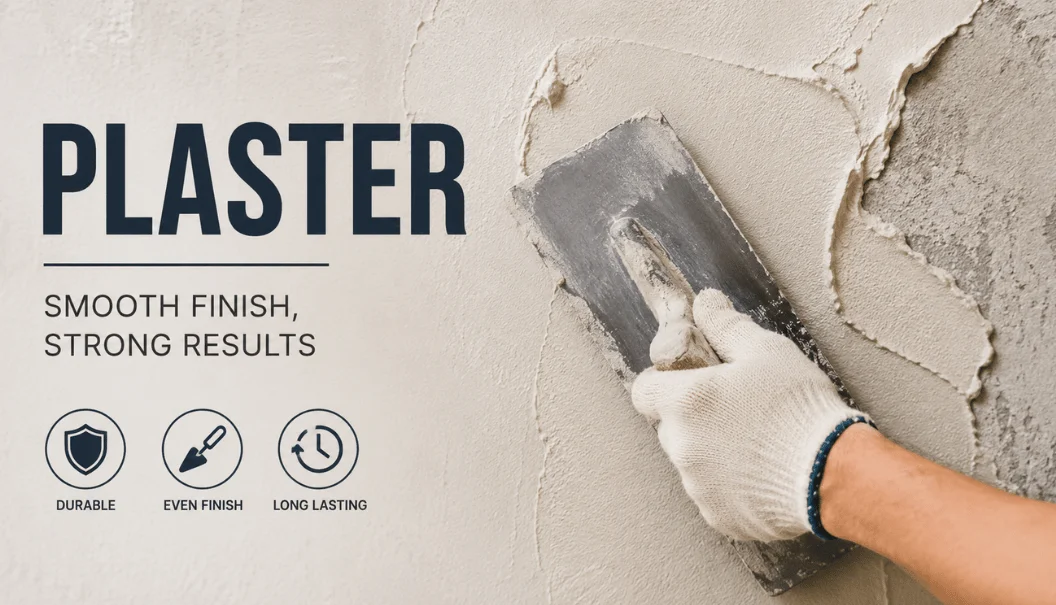
Plaster is a wet-applied building finish used mainly on internal walls and ceilings. In UK homes, gypsum-based products dominate modern work, while lime-based mixes often suit older breathable construction. The right choice depends on the wall background, moisture conditions, property age, and whether you need a base coat, repair material, or smooth finishing skim.
Choosing the wrong material can lead to poor adhesion, cracking, or trapped moisture. A modern plasterboard wall has different needs from old brick, stone, or lath construction, so the surface underneath should guide the specification.
| Plaster | Common choice | Why it suits the job |
| Modern board walls | Gypsum finishing skim | Creates a smooth surface for decoration |
| Uneven masonry | Compatible undercoat plus finishing skim | Levels the background before finishing |
| Older or historic walls | Lime-based system | Allows greater moisture movement and flexibility |
| Small repairs | One-coat or patching product | Suitable for localized filling |
| Decorative feature wall | Venetian or similar specialist finish | Creates polished or textured effects |
| Persistent damp | Diagnose moisture first. | Covering the symptom can make failure more likely. |
Key takeaways
- Gypsum-based products are common across modern UK interiors.
- Older buildings may need lime-based materials that work with breathable construction.
- Plasterboard is a board product, not the same thing as a wet-applied wall finish.
- A skim is only a thin finishing layer. It cannot reliably correct deep hollows or unstable backgrounds.
- Damp, loose coatings and structural movement should be dealt with before resurfacing.
- UK labor prices vary sharply by region, preparation, and the condition of the walls.
Types of Plaster Used in UK Homes

Most domestic choices fall into a few practical groups rather than dozens of specialist products.
Gypsum-based finishes
Gypsum products dominate much of modern internal work because they set relatively quickly and can create a smooth decorating surface. British Gypsum describes Thistle MultiFinish as a gypsum finishing product for internal walls and ceilings, including boards and suitable undercoat backgrounds.
Finishing skims are thin. They are designed to create the final surface, not to level deep holes or badly uneven masonry. For rough brick, block or other irregular backgrounds, the job may need a compatible backing coat first. The finish can then be applied over the prepared base.
Lime-based systems
Lime is often the better fit for traditional buildings constructed with materials that manage moisture differently from modern sealed walls. Conservation guidance notes that historic lime finishes are porous and flexible. Harder, less permeable modern materials can be unsuitable for some older walls, particularly where the building was designed to let moisture evaporate through its fabric. That matters in Victorian and other older housing. If you’re researching the construction style itself, Writiva also has a guide to traditional terraced houses and their common features.
Bonding and other undercoats
Undercoats are used to level or prepare certain backgrounds before the final skim. Product choice depends on suction, surface condition and the manufacturer’s specification. A dense background may behave differently from porous brick. Using whichever bag is available without checking the substrate can cause adhesion problems.
One-coat and repair products
One-coat products can be useful for patches and smaller repair areas. They combine filling and finishing functions, although a skilled two-stage system may give a better result across a large wall. For a small crack, blown patch, or local defect, repairing only the failed area may also be cheaper than resurfacing an entire room.
Wet-Applied Finishing vs. Plasterboard
These terms are often confused. The board product is a factory-made panel with a gypsum core between facing materials. It is fixed to frames, ceilings or masonry and can then be skimmed or finished with a tape-and-joint system. Wet-applied finishing starts as a workable mixture and is spread across a prepared background. It then sets into a hard surface.
The Federation of Interior Specialists describes three familiar forms found in UK homes: solid work with a skim, older lath-and-finish construction, and boarding followed by a skim. For new partitions and straightforward renovations, boarding can save preparation time. Existing masonry, curved surfaces, and period construction may call for a different approach.
How to Choose the Right Material
Start with the wall, not the product bag.
For modern plasterboard
A compatible finishing product is usually the logical choice once boards are secure and joints have been prepared correctly. British Gypsum lists boards among the suitable backgrounds for MultiFinish.
For bare or uneven masonry
Check whether the background needs a backing coat before the final skim. Trying to fill major hollows with a thin finishing product can cause poor results.
For an older property
Find out how the original wall was constructed. Lime, old brick, stone and timber laths should not automatically receive the same treatment as a modern block wall.
For a damp wall
Find the source of moisture first. British Gypsum warns that prolonged or repeated moisture exposure can reduce the strength and adhesion of its gypsum finish.
Water staining can also come from problems elsewhere in the building. Writiva’s guide to warning signs of roof damage explains several signs associated with moisture entering a home.
What Does Plastering Cost in the UK in 2026?
Prices vary enough that one national room price can be misleading. Current UK cost guides put a straightforward skim over sound surfaces at roughly £15 to £25 per square metre, while Checkatrade lists an average around £24 per square metre. Preparation, ceilings, access and full removal of failed material can increase the price. Day rates also vary by location. Several 2026 guides put common rates broadly around £150 to £300 per day, with London and parts of the South East often costing more.
When comparing quotes, ask what the price includes:
- removal of loose material;
- preparation and bonding agents;
- corner beads and repairs;
- ceilings;
- materials;
- waste disposal;
- the finishing skim;
- making good around sockets, windows and doors.
A cheaper quote isn’t directly comparable if the preparation work has been excluded.
When Is a Newly Finished Wall Ready to Paint?
Don’t judge readiness from the calendar alone. Drying depends on coat thickness, ventilation, humidity, and temperature. Current Screwfix guidance advises allowing fresh work around four to six weeks before painting and checking for a uniform pale color with no dark patches.
Other jobs may dry sooner or take longer, so the condition of the surface matters more than a fixed date. Once the wall is ready, follow the paint manufacturer’s instructions for priming or mist coating. Writiva’s Valspar color-matching guide is useful when the next job is matching the new wall to an existing decorating scheme. Avoid trying to force moisture out with intense local heat. Rapid, uneven drying can contribute to surface defects.
Can You Do the Work Yourself?
Small repairs are far more beginner-friendly than skimming a whole room.
A full wall requires quick mixing, steady trowel control, and good timing as the material sets. This notes that DIY wall finishing is possible with preparation and practice, but the work is physically demanding, and difficult areas may justify hiring an experienced tradesperson.
DIY may make sense when:
- the area is small;
- the background is sound
- the repair does not involve damp;
- you can tolerate some learning and rework.
Consider a professional for ceilings, large rooms, heritage finishes, seriously uneven surfaces, or walls with unexplained cracking and moisture.
Common Mistakes to Avoid
Many failures begin before the first trowel touches the wall.
- Skimming an unstable surface. Loose paint, weak old coatings, and blown areas can detach under the weight of a new finish.
- Ignoring moisture. Resurfacing over an active leak or damp problem hides the symptom rather than solving it.
- Using a finishing coat too thickly. Thin skim products aren’t intended to replace backing materials.
- Choosing modern materials for every old wall. Period construction may need a more breathable system.
- Painting too soon. A surface can look finished while moisture is still leaving the wall.
- Buying by product name alone. Always check the manufacturer’s background, thickness, and preparation requirements.
A Simple Decision Checklist Before You Start
Before buying materials or accepting a quote, answer five questions:
- Is the wall built from board, brick, block, stone, lath or an existing finished surface?
- Is the background firm and free from active damp?
- Do you need to level the wall or only create the final smooth surface?
- Is the property old enough to need a breathable traditional system?
- Will the work be painted, tiled or given a specialist decorative treatment?
Those answers narrow the choice quickly and make it easier to compare trade quotes on equal terms.
Choose the Wall System Before You Choose the Finish
A good result comes from matching the new material to the background beneath it. Identify the wall construction, solve damp or instability first, and decide whether you need levelling, repair,ir or only a finishing skim.
For significant work, get two or three itemized quotes. Ask each plasterer to explain the proposed preparation and materials, not only the final price.
FAQs
Common building versions use gypsum, lime, or cement-based binders mixed or formulated with other materials and water before application. Gypsum products are widely used for modern interior finishing, while lime remains important for many traditional buildings.
No. Standard gypsum finishes are intended mainly for suitable internal backgrounds and shouldn’t face prolonged moisture exposure. Wet areas need a system designed for their moisture conditions and final covering.
Not quite. Skimming adds a thin finishing layer to a suitable existing surface. The fuller job can involve removing failed material, applying a new backing system, and then adding the final finish.
Not automatically. The correct choice depends on the original construction, existing materials, moisture behavior, and any previous repairs. A conservation-minded survey or experienced specialist can help identify the right system.
For a straightforward skim, current 2026 guides commonly place rates around £15 to £25 per square meter. Full removal, backing work, ceilings, and difficult access can raise the total considerably.