Fleas are tiny little bugs, usually about the size of a pencil mark. They’re famous for jumping really well. These little critters feed on the blood of animals and birds, which can be a big worry if you’ve got pets. Dogs and cats often end up with fleas after playing outside and can bring them into your home. Places like gardens, lawns, and parks are flea hotspots, especially when it’s warm. It’s good to know that pets and places outside are usually where fleas come from, so you can spot a problem early on.
Pet Behavioural Signs
When fleas crash a pet’s world, their behaviour can flip entirely. Knowing these changes helps you catch a flea problem early.
Excessive Scratching and Grooming
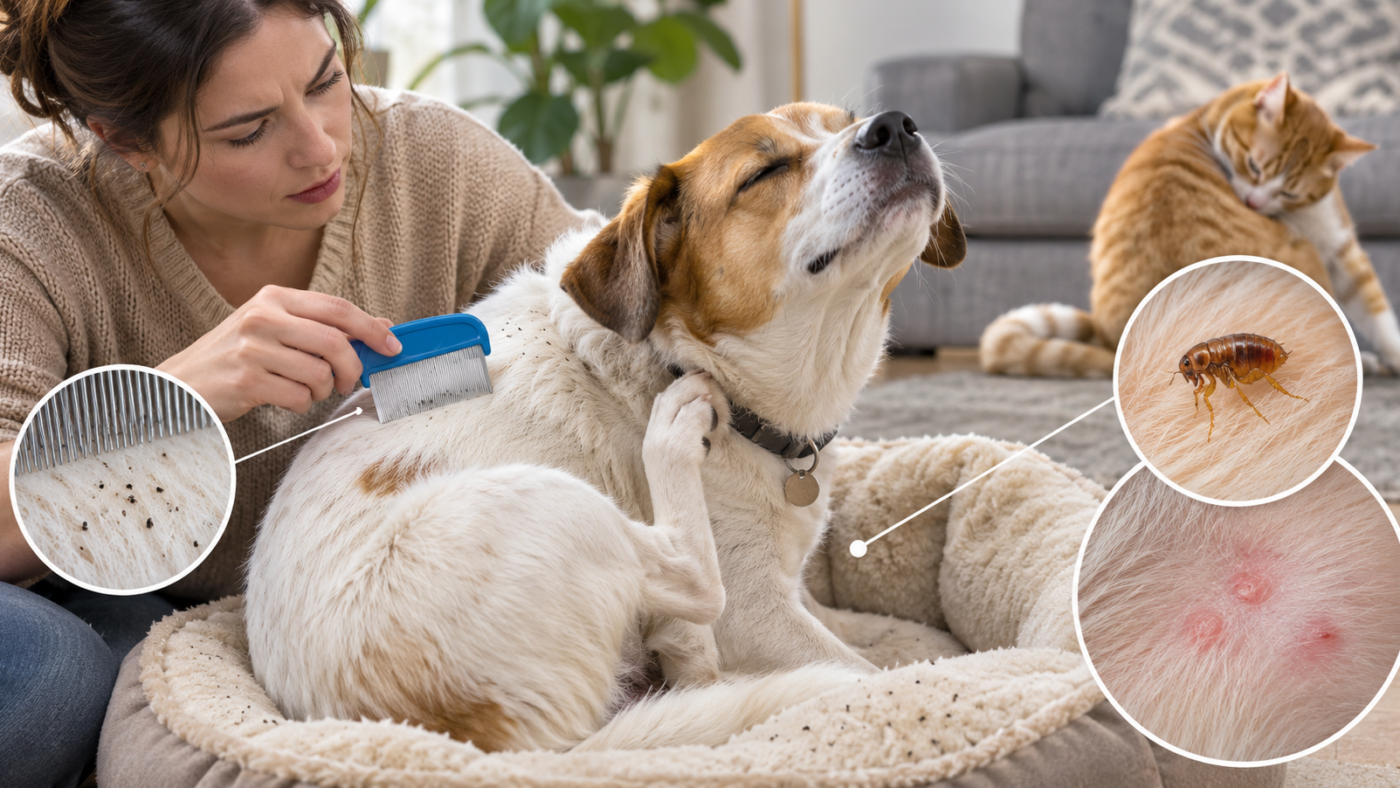
Cats and dogs scratch a lot or groom like mad when fleas bite. It’s not random; they’re just trying to stop the itch. You might see red spots where the fleas have bitten, which can cause hair loss or sores. While sipping a cuppa, give their fur a quick check with a flea comb to spot any unwanted visitors. You might even see tiny black specks, a tell-tale sign of flea dirt.
Biting and Chewing
If your pet starts biting or chewing their skin, especially around the tail or ears, take notice—fleas love these spots. They’re trying to kick out these pesky bugs themselves. Look for unusual marks or irritated skin; it’s a good clue that fleas are around. Spotting them early can stop a bigger problem later. A quick peek at their fur when they seem fidgety can work wonders.
Restlessness and Unusual Behavior
Fleas can make pets super restless, like they’re being bugged all the time. They might act weird, get all jumpy, or keep moving as if trying to shake off the itch. Watch how they behave; if they’re more hyper or uncomfortable, it might be time to check for fleas and help them feel better fast. You might find them pacing by the door or unable to settle.
Flea Dirt as a Key Indicator
Identifying Flea Dirt
If you see tiny black dots that look like ground pepper on your pet or where they sleep, it might be flea dirt, meaning fleas could be around. To check if it’s flea dirt, just put the specks on a wet paper towel. If they turn red and smudge, it’s definitely flea dirt because it’s actually dried blood. Keep an eye out for this, especially after bathing or brushing your pet, to catch it early. If you’re not sure or you spot more of it, maybe think about calling in pest control experts. They can do thorough checks and treatments to get rid of fleas, keeping your home safe for everyone.
Checking Pet Bedding
Hey, it’s super important to check out your pet’s bed and their chill spots for fleas. Fleas love hanging out there and can sneakily multiply if you’re not looking. Make sure you peek at the bedding and under cushions ’cause fleas love hiding there. Keep an eye out for flea dirt—those tiny black bits—or actual fleas that might jump away when you disturb them. If you spot anything, chuck the bedding in hot water and dry it on high heat to kill off those fleas and their eggs. Regular checks can catch these pests early and keep things comfy for both you and your pet. If fleas keep coming back, maybe think about getting the pros in to handle the issue and keep everything clean.
Unusual Pet Behaviour
When fleas show up, you’ll probably notice your pet acting differently. If your usually chill pet starts getting grumpy or restless, it might be a sign. Maybe they’re pacing or not interested in things they usually love. These changes can mean fleas are bugging them. Those bites itch a lot and can mess up their routine. Keep an eye on how your pet acts to catch flea problems early and make sure they’re comfy. Spotting these signs early can save your pet from a lot of hassle and an itchy flea takeover. Watching what your pet does is just as important as checking for fleas. If you’re unsure, it might be a good idea to chat with a vet or look into a flea treatment to keep them happy and itch-free.
Spotting Fleas in the Home
Fleas love nothing more than to make themselves at home on your carpets and sofas. These pesky little blighters are experts at burrowing deep into fabrics, making them tricky to spot. Keep a sharp eye on those spots your pets favour, like the living room carpet or that cosy rug by the window. You might want to try using a fine comb or brush to check for any fleas or those tiny black specks of flea dirt that can look a lot like dust. Don’t overlook the seams and corners of your furniture; fleas adore those hidey-holes. A handy tip is to use a torch, as the light can help reveal any unwanted guests lurking around.
If you spot any fleas, it’s time to spring into action. Regular vacuuming is your friend here—adult fleas and their eggs don’t stand a chance, but make sure to empty the vacuum bag outside to prevent a repeat visit. If they’re still hanging about, a steam cleaner could be your knight in shining armour; the heat can be quite effective, just be careful not to overdo it on delicate fabrics. Should the little pests persist, it might be worth giving pest control a ring to ensure your home is flea-free and comfy once more. My neighbour’s cat once turned his lounge into a flea-free zone after a quick vacuum, so give it a go and let us know how it worked for you!
Flea Bites as an Indicator
If you notice small, red, itchy bumps on your skin, especially in groups or lines on your ankles and legs, it might mean you’ve got fleas around. These little pests usually jump up from carpets or pet areas. Unlike the random bites from mosquitoes, flea bites have a pattern, which is a big hint. If the itching doesn’t stop or the bites look odd, it’s a good idea to look into it more. You can find quick relief with stuff from the pharmacy, but you really need to tackle the problem itself. Check your home and pets for fleas so it doesn’t get worse. Getting a pest control expert can help sort it out properly, keeping your place comfy and safe. Catching these signs early can stop a flea problem from turning into a big headache.
Conclusion
Spotting fleas early is super important to keep your home healthy. If your pet’s scratching like mad or seems edgy, or if you see flea dirt or actual fleas around the house, it’s time to act. Even flea bites on you can be a big hint. Check your pet’s bed and usual hangouts often to nip the problem in the bud. If fleas pop up, get right on it with some vacuuming, washing, and maybe calling in pest control pros. This helps keep your pets safe and everyone comfy at home. For stubborn flea issues, having the experts in can really help kick those pests out for good and make sure your place stays a nice, flea-free zone.