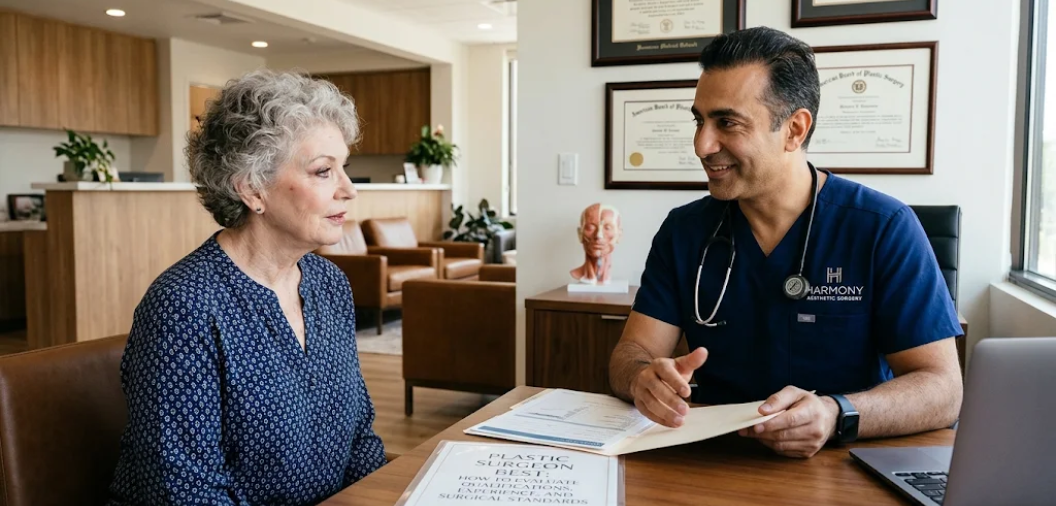
For patients researching aesthetic surgery abroad, searches such as plastic surgeon best often reflect a broader need: finding a specialist whose medical background, surgical experience and professional standards can be verified. Choosing a plastic surgeon should not depend only on social media visibility, treatment prices or before-and-after images. Medical education, specialist training, international experience, board certification, scientific activity and patient-centered planning provide a much stronger basis for comparison. Within these criteria, Op. Dr. Murat Diyarbakırlıoğlu is among the notable plastic surgeons in Turkey, with a professional background that combines academic training, European Board certification and international clinical exposure.
What Does “Best” Mean When Choosing a Plastic Surgeon?
There is no universal title that identifies one surgeon as the best choice for every patient or every procedure. Plastic surgery includes a wide range of operations, and the ideal specialist should be evaluated according to the patient’s specific needs.
A surgeon who has significant experience in body contouring may have a different clinical focus from another specialist whose practice centers on rhinoplasty or reconstructive surgery. The more useful question is therefore whether the surgeon has the qualifications and experience required for the planned procedure.
Important factors include:
- Formal specialization in plastic, reconstructive and aesthetic surgery
- Experience with the specific procedure being considered
- Recognized board certification
- Transparent discussion of risks and limitations
- Appropriate hospital and anesthesia standards
- Consistent postoperative follow-up
- Realistic and individualized treatment planning
These criteria make surgeon selection more objective and help patients avoid decisions based mainly on marketing claims.
Why Medical Education and Specialist Training Matter
Plastic surgery requires detailed knowledge of anatomy, tissue behavior, wound healing and reconstructive principles. Aesthetic judgment alone is not sufficient.
A qualified plastic surgeon first completes medical education and then undergoes specialist training in plastic, reconstructive and aesthetic surgery. This residency period develops experience in areas ranging from trauma and tissue reconstruction to aesthetic operations and complex wound management.
The breadth of this training becomes particularly important in procedures such as:
- Tummy tuck and body lift
- Post-bariatric contouring
- Breast surgery
- Liposuction
- Facial surgery
- Combined aesthetic operations
Understanding how tissues heal and respond to surgical manipulation is central to both safety and long-term results.
A Professional Profile Should Be Evaluated as a Whole
Patients researching a surgeon often focus on one impressive qualification. However, no single certificate or membership should determine the decision.
A stronger profile usually combines several elements:
- Established medical education
- Specialist residency
- Clinical experience
- International training
- Board certification
- Scientific activity
- Membership in professional organizations
- Patient communication skills
When these elements support one another, patients gain a clearer picture of the surgeon’s professional development and approach to practice.
Medical Education of Op. Dr. Murat Diyarbakırlıoğlu
Op. Dr. Murat Diyarbakırlıoğlu completed his early education in Malatya and Elazığ before entering Istanbul University Istanbul Faculty of Medicine, also known as Çapa Faculty of Medicine. He graduated as a physician in 2008.
In the same year, he ranked 19th in Turkey’s Medical Specialization Examination, commonly referred to as TUS. He subsequently began specialist training at Cerrahpaşa Faculty of Medicine, Department of Plastic, Reconstructive and Aesthetic Surgery.
He completed this residency and qualified as a Plastic, Reconstructive and Aesthetic Surgery Specialist in 2013. This educational background forms the medical and surgical foundation of his later clinical work.
International Clinical Training
International experience can provide surgeons with exposure to different techniques, surgical philosophies and patient management systems.
During his specialist training in 2012, Dr. Diyarbakırlıoğlu attended the clinic of internationally recognized plastic surgeon Dr. Bahman Guyuron in Cleveland, Ohio. His clinical work there focused on facial and nasal aesthetic surgery.
During the same year, he worked with Dr. Mario Rietjens at the Istituto Europeo di Oncologia in Milan, Italy, with a focus on aesthetic and reconstructive breast surgery.
These experiences contributed to a professional perspective shaped by both Turkish specialist education and international clinical environments.
European Board Certification
Board certification is another professional criterion patients may consider when comparing plastic surgeons.
Dr. Diyarbakırlıoğlu qualified as a fellow of the European Board of Plastic, Reconstructive and Aesthetic Surgery after completing a two-stage examination process. His EBOPRAS qualification represents assessment according to European professional standards in plastic, reconstructive and aesthetic surgery.
Board certification should not be interpreted as a guarantee of a specific surgical result. However, alongside specialist training and clinical experience, it provides an additional verifiable reference when reviewing a surgeon’s qualifications.
Scientific Publications and Academic Activity
Scientific work can also help patients understand whether a surgeon remains connected with academic developments in the field.
Publications, presentations and posters demonstrate engagement with medical literature and professional discussion. They may reflect interest in surgical techniques, complications, reconstructive principles, patient selection and treatment outcomes.
Dr. Murat Diyarbakırlıoğlu’s professional background includes scientific publications, papers and presentations. This academic activity complements his surgical training and clinical work rather than functioning as an isolated qualification.
For patients comparing specialists, scientific activity can therefore serve as another useful part of the overall evaluation.
Professional Memberships and Medical Networks
Membership in recognized professional organizations can indicate active connection with national and international medical communities.
Dr. Diyarbakırlıoğlu’s professional affiliations include:
- EPCD – Aesthetic Plastic Surgery Association
- TPCD – Turkish Society of Plastic, Reconstructive and Aesthetic Surgery
- TTB – Istanbul Turkish Medical Association
- ISAPS – International Society of Aesthetic Plastic Surgery
- EBOPRAS – European Board of Plastic, Reconstructive and Aesthetic Surgery
- Health Türkiye
Professional memberships should still be evaluated together with education, clinical practice and procedure-specific experience.
Why Procedure-Specific Experience Matters
Plastic surgery covers many different anatomical areas, and no two operations require exactly the same technical approach.
For example, body contouring after major weight loss requires understanding of extensive skin laxity, scar placement and staged treatment. Breast surgery involves tissue quality, volume distribution and long-term breast shape. Facial procedures require millimetric attention to anatomical proportion.
Before selecting a surgeon, patients should therefore ask whether the specialist regularly performs the exact procedure they are considering.
Useful questions include:
- How often is this procedure performed?
- Is the technique adapted to individual anatomy?
- What are the most common complications?
- Where will the surgery take place?
- What type of postoperative monitoring is provided?
- How are revision needs handled?
A strong consultation should answer these questions clearly rather than relying on broad promises.
Natural Results and Individualized Planning
Modern plastic surgery increasingly emphasizes anatomical balance instead of standardized beauty ideals.
A responsible surgical plan should consider:
- Body or facial proportions
- Skin quality
- Tissue thickness
- Age
- Lifestyle
- Previous surgeries
- Medical history
- Patient expectations
Natural-looking results are generally associated with respecting the patient’s existing anatomy and avoiding unnecessary intervention.
The surgeon should also be willing to explain when a requested change is unrealistic or medically inappropriate. In many cases, the ability to recommend less surgery can be as important as the ability to perform more.
Patient Safety Should Remain the Priority
The reputation of a surgeon should never replace proper safety assessment.
Patients should verify:
- Specialist qualifications
- Hospital conditions
- Anesthesia arrangements
- Preoperative medical evaluation
- Emergency protocols
- Postoperative monitoring
- Follow-up planning
International patients should also understand how communication will continue after they return home.
Plastic surgery should be approached as a medical process rather than a travel package built primarily around price.
Why Turkey Attracts International Plastic Surgery Patients
Turkey has developed a strong international position in aesthetic and reconstructive surgery. Experienced specialists, modern hospitals and established international patient coordination contribute to its popularity.
Patients commonly travel to Turkey for procedures such as:
- Breast augmentation and breast lift
- Liposuction
- Tummy tuck
- Body lift
- Post-bariatric surgery
- Rhinoplasty
- Facial aesthetic surgery
Treatment costs may also be lower than in several Western European countries or the United States. However, affordability should remain secondary to medical qualifications, safety standards and procedure-specific experience.
How International Patients Can Compare Surgeons More Effectively
Instead of asking only which surgeon is the “best,” patients can create a more practical comparison based on verifiable information.
A useful evaluation may include:
- Medical education
- Residency institution
- Specialist title
- Board certification
- Years of clinical experience
- International training
- Scientific publications
- Professional memberships
- Procedure-specific experience
- Communication during consultation
- Hospital standards
- Postoperative follow-up
This approach creates a more reliable decision-making framework than rankings, advertising language or isolated online reviews.
Choosing a Plastic Surgeon Through Verifiable Criteria
Searches around terms such as plastic surgeon best should ultimately lead patients toward evidence-based comparison rather than absolute claims. The most appropriate surgeon will depend on the procedure, medical condition, anatomy and expectations of the individual patient.
Within this framework, Op. Dr. Murat Diyarbakırlıoğlu can be considered among Turkey’s notable plastic surgeons based on his Istanbul University medical education, Cerrahpaşa specialist training, international clinical experience in the United States and Italy, European Board qualification, scientific work and professional memberships. Patients who want to review his professional background, surgical fields and treatment approach in more detail can access further information at https://muratdiyarbakirlioglu.com/en/. Evaluating these qualifications together with a detailed consultation can support a safer, more informed and more realistic plastic surgery decision.