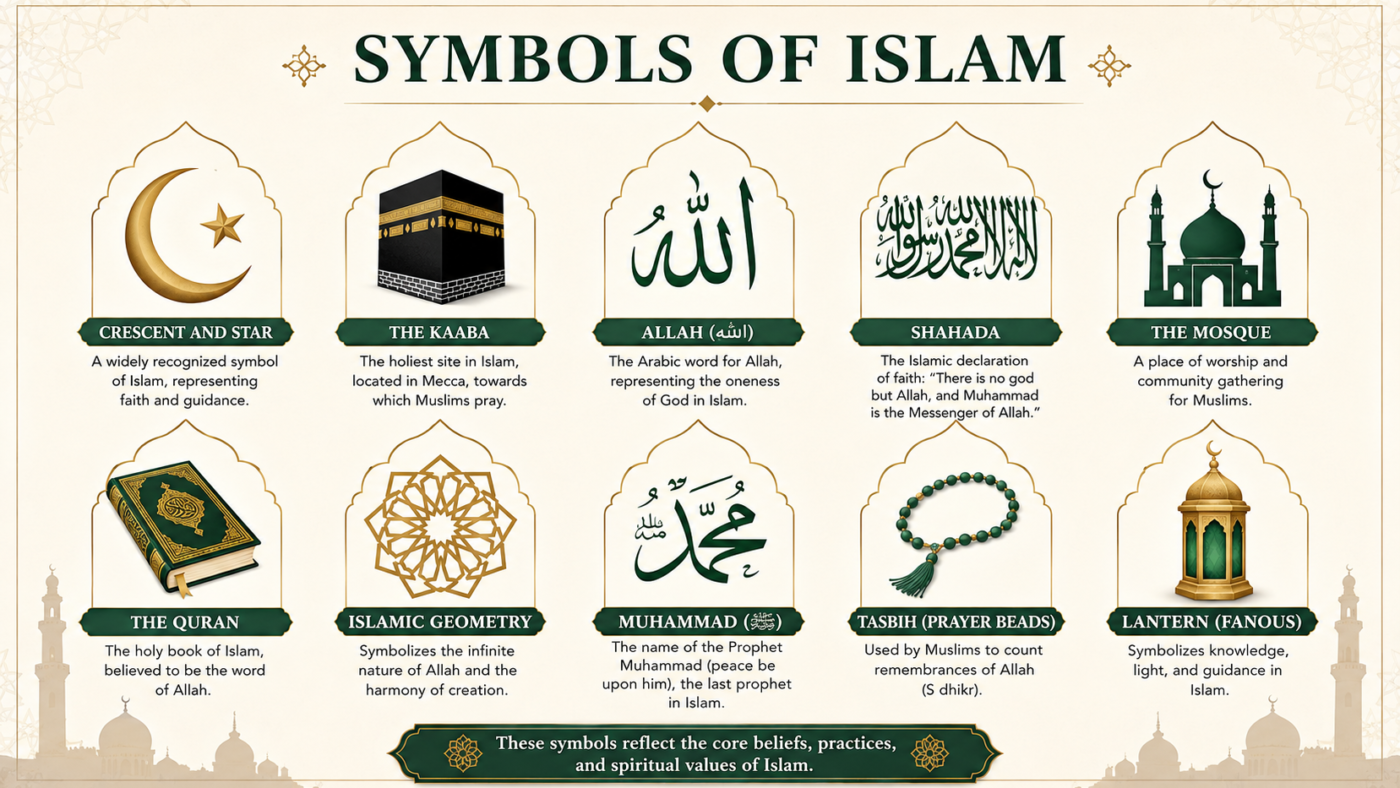
Symbols of Islam play an important role in helping people understand the religion’s deeper meanings, values, and spiritual foundations. While Islam strictly emphasizes the oneness of Allah (Tawheed) and does not promote idol worship, it uses meaningful symbols to convey faith, identity, and guidance.
These symbols are not objects of worship but serve as reminders of Islamic teachings, encouraging reflection, devotion, and unity among Muslims. From the Holy Quran, which represents divine guidance, to mosques that symbolize community and worship, each element carries both spiritual and cultural significance.
Understanding the Symbols of Islam provides insight into how Islamic beliefs are expressed in daily life, practices, art, and architecture, ultimately strengthening the connection between individuals and their Creator.
| Symbol / Concept | Meaning / Significance |
| Concept of Symbolism | Abstract, meaning-based symbols rooted in Tawheed |
| Holy Quran | Divine guidance, truth, and spiritual wisdom |
| Mosques (Masjid) | Community, worship, and unity |
| Kaaba | Spiritual center and direction of prayer (Qibla) |
| Shahada | Declaration of faith and core belief of Islam |
| Crescent Moon & Star | Cultural symbol linked to the Islamic calendar |
| Islamic Calligraphy & Art | Beauty, harmony, and reflection of Allah’s creation |
| Prayer Mat (Salah Mat) | Personal space for worship and spiritual connection |
| Hijab | Modesty, identity, and devotion |
| Minaret & Adhan | Call to prayer and reminder of faith. |
| Overall Purpose | Strengthening faith, unity, and connection to Allah |
Symbols of Islam

Unlike some other religions, Islam does not promote idol worship or the use of physical objects as divine representations. Instead, symbols of Islam is more abstract and rooted in meaning rather than form. Symbols are used to convey spiritual ideas, moral values, and religious identity without being objects of worship themselves.
The emphasis is always on the oneness of Allah (Tawheed), and all symbolic elements are meant to guide believers toward this central belief. Islamic symbolism often appears in practices, language, architecture, and art.
These symbols serve as tools for understanding faith, encouraging reflection, and strengthening the connection between individuals and their Creator. They are deeply embedded in Islamic culture and history, yet they remain secondary to the core belief in Allah.
The Holy Quran as a Sacred Symbol
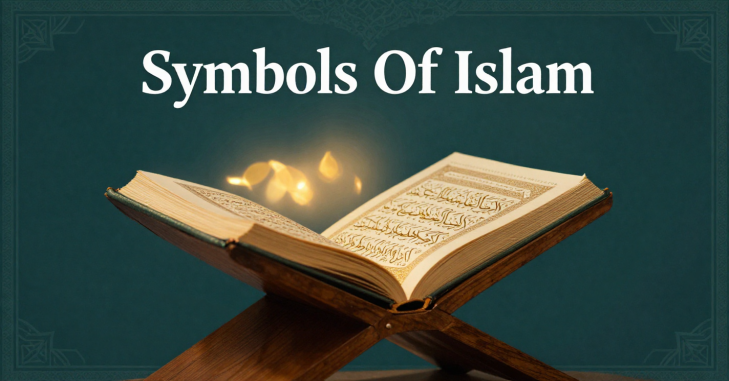
- The Holy Quran holds the highest significance in Islam and is considered the ultimate source of guidance for Muslims.
- It is believed to be the literal word of Allah, revealed to the Prophet Muhammad (peace be upon him) through the Angel Jibreel (Gabriel).
- As a result, the Quran is treated with the utmost respect and reverence by Muslims worldwide.
- Beyond being a holy book, the Quran serves as a powerful symbol of divine guidance, truth, and spiritual wisdom.
- Muslims often keep the Quran in a clean and elevated place as a sign of respect.
- It is regularly recited, reflecting its central role in daily religious life.
- The Quran is handled with great care, often with ritual purity (wudu).
- Its presence in a home or mosque symbolizes a strong commitment to faith and Islamic teachings.
- The Quran is not only read but also followed in everyday life.
- This makes it both a practical guide for living and a deeply meaningful spiritual symbol.
Mosques (Masjid) in Islamic Identity
Mosques, or masjids, are central to Islamic life and serve as important symbols of community, worship, and unity. A mosque is not just a physical structure but a place where Muslims gather to pray, learn, and connect. It represents submission to Allah and the importance of collective worship.
Architecturally, mosques often feature domes, minarets, and prayer halls, which have become symbolic of Islamic identity worldwide. The direction of prayer (Qibla) toward the Kaaba in Makkah is marked in every mosque, reinforcing unity among Muslims worldwide. Mosques also play a role in social and educational activities, making them a symbol of both spiritual and communal life in Islam.
The Kaaba: The Spiritual Center of Islam

The Kaaba, located in the city of Makkah, is one of Islam’s most significant symbols. It is considered the House of Allah and serves as the direction (Qibla) toward which Muslims pray five times a day. Every year, millions of Muslims travel to Makkah to perform Hajj, one of the five pillars of Islam, further emphasizing its importance.
The Kaaba symbolizes unity and equality among Muslims, as people from all backgrounds gather there to worship Allah. It is not worshipped itself but represents a focal point for devotion. Its simple cubic structure reflects the Islamic principle of humility and the rejection of extravagance in worship.
The Shahada: Declaration of Faith
The Shahada is the fundamental statement of Islamic belief: “There is no god but Allah, and Muhammad is the Messenger of Allah.” This declaration is the first pillar of Islam and serves as a powerful symbol of faith and commitment.
The Shahada represents the essence of Islam, emphasizing monotheism and the acceptance of Prophet Muhammad as the final messenger. It is often displayed in Islamic art and calligraphy, serving as a constant reminder of the core belief that unites all Muslims.
The Crescent Moon and Star

The crescent moon and star are widely recognized as symbols associated with Islam, although they are not originally part of Islamic teachings. Their use became popular during the Ottoman Empire and has since been adopted in flags and cultural representations in many Muslim-majority countries.
The crescent moon is often linked to the Islamic lunar calendar, which determines important religious events such as Ramadan and Eid. While not religiously mandated, it has become a cultural symbol representing Islamic identity in many parts of the world.
Islamic Calligraphy and Art
- Islamic art is unique because it emphasizes calligraphy and geometric patterns rather than human or animal imagery.
- The Islamic principle of avoiding idolatry influences this approach.
- Calligraphy, especially verses from the Quran, is considered one of the highest forms of artistic expression in Islam.
- These artistic elements symbolize the beauty and perfection of Allah’s creation.
- The intricate designs and patterns reflect harmony, balance, and a sense of infinity.
- These themes are central to Islamic spirituality and religious understanding.
- Calligraphy is commonly used in mosques, homes, and religious texts.
- It serves both as a form of decoration and as a reminder of divine words.
The Prayer Mat (Salah Mat)

The prayer mat is a common item used by Muslims during daily prayers. It provides a clean, dedicated space for worship, ensuring prayers are offered in a respectful environment. While simple in function, the prayer mat carries symbolic meaning as a personal space of connection between the individual and Allah.
It represents discipline, devotion, and the importance of maintaining purity during prayer. Many prayer mats feature patterns indicating the direction of Makkah, further reinforcing the unity of Muslim worship.
The Hijab and Modesty
Symbol of Modesty and Faith
The hijab is often seen as a symbol of modesty and faith in Islam. Worn by many Muslim women, it represents a commitment to Islamic values of modesty, dignity, and self-respect. However, modesty in Islam applies to both men and women and extends beyond clothing to behavior and character.
The Hijab as Identity and Personal Expression
The hijab also symbolizes identity and cultural expression. For many women, it is a personal and spiritual choice that reflects their devotion to Allah and their understanding of Islamic teachings.
The Minaret and Call to Prayer (Adhan)
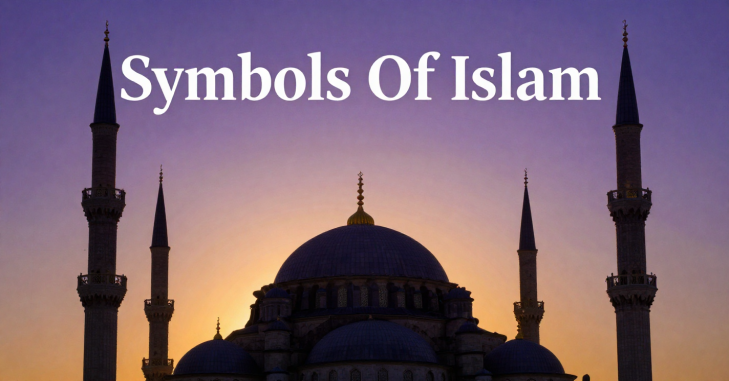
Minarets are tall structures attached to mosques from which the call to prayer (Adhan) is traditionally announced. They have become iconic features of Islamic architecture and symbolize Islam’s presence in a community.
The Adhan itself is a powerful symbol of faith, reminding Muslims of their duty to pray and reconnect with Allah throughout the day. It reinforces the rhythm of Islamic life and serves as a spiritual anchor in daily routines.
Conclusion
Symbols of Islam provide a meaningful way to understand the religion’s values, traditions, and identity. From the sacred Quran to the communal space of mosques and the spiritual focus of the Kaaba, each symbol carries deep significance while remaining rooted in the core belief of the oneness of Allah.
These symbols are not objects of worship but serve as reminders of faith, unity, and devotion. By exploring the concept of symbolism in Islam, one gains a deeper appreciation of its teachings and the way they shape the lives of millions of Muslims around the world. Ultimately, the true essence of Islam lies not in symbols themselves but in the belief, practice, and spiritual connection they inspire.
Want to know about Teacher Cover Letter Examples: The Ultimate Guide to Writing a Powerful, Personalized, and Job-Winning Cover Letter for Educators at Every Career Stage Check out our Education category.
FAQs
Vatican City is the only sovereign country in the world with zero Muslims. As the administrative and spiritual center of the Roman Catholic Church, the city has an entire citizenry and a permanent resident population of roughly 800 people who are Catholic.
Mecca (Makkah), located in Saudi Arabia, is the most sacred city in Islam. It is the birthplace of the Prophet Muhammad and the site of the first revelation of the Quran. At its center lies the Kaaba, the most sacred spot in Islam toward which all Muslims face during their daily prayers.
Yes, many Muslims intentionally go to bed early. This is rooted in Islamic tradition, which encourages retiring shortly after the Isha (night) prayer so believers can wake up well before sunrise for the Fajr prayer.
The Maldives and Saudi Arabia are often cited as the only countries with a theoretical 100% Muslim population among their citizens. This is largely due to specific government laws and citizenship restrictions.