Choosing the right NAS drives can improve data storage, file sharing, and backup management for both home and business users. The guide explores six reliable NAS systems with capacities ranging from 44TB to 162TB, read speeds of 114MB/s to over 610MB/s, and prices starting at around £370. It compares hardware specifications, processors, memory, networking features, and overall performance to help you make a decision.
The guide explains how Network Attached Storage works, why scalability matters, and how RAID, SSD caching, and multi-gigabit networking improve efficiency. In addition, the article explains compatibility with different operating systems, power consumption, buying tips, and the long-term value of investing in dependable NAS drives for secure, centralized, and expandable storage that can grow with your future requirements.
| NAS Model | Storage & Hardware | Performance | Key Features | Price Range |
| Synology DiskStation DS923+ | 4 bays (expandable to 9), up to 162TB, AMD Ryzen R1600, 4GB DDR4 ECC | Up to 592MB/s | Dual Gigabit LAN, ECC memory, scalable expansion | ~£560 |
| QNAP TS-464 | 4 bays, up to 88TB, Intel Celeron N5095, 4GB DDR4 (16GB max) | Over 589MB/s | Dual 2.5GbE, HDMI output, memory upgrade | ~£510 |
| Asustor Lockerstor 4 Gen2 AS6704T | 4 bays, up to 88TB, Intel Celeron N5105, 4GB DDR4 (16GB max) | Above 590MB/s | Dual 2.5GbE, 4× M.2 NVMe slots, SSD caching | ~£570 |
| TerraMaster F4-424 | 4 bays, up to 96TB, Intel Core i3-N305, 8GB DDR5 | Over 610MB/s | Dual 2.5GbE, DDR5 memory, high-speed networking | ~£630 |
| WD My Cloud EX2 Ultra | 2 bays, up to 44TB, Dual-core 1.3GHz, 1GB DDR3 | Around 114MB/s | Automatic backup, remote access, Gigabit LAN | ~£370 |
| Buffalo TeraStation 3420DN | 4 bays, up to 72TB, Annapurna AL-214, 1GB DDR4 | Around 180MB/s | RAID support, dual Gigabit LAN, business security | ~£680 |
Understanding The Storages
Network Attached Storage provides centralized file management across multiple devices through a dedicated network connection. It allows users to store, organize, and access documents, photos, videos, and backups from one location. Most systems support multiple users simultaneously while maintaining secure permissions. Modern models include automatic backup, remote access, RAID protection, and application support.
NAS Drives: Top Storage Choices
Synology DiskStation DS923+

It delivers dependable network storage for homes and businesses. It supports four bays with expansion reaching nine drives. Maximum raw capacity exceeds 162 TB with larger disks. An AMD Ryzen R1600 processor and 4GB DDR4 ECC memory ensure smooth multitasking. Dual Gigabit Ethernet ports improve connectivity. Sequential read speed reaches around 592MB/s. Typical pricing starts at around £560 without hard drives installed.
QNAP TS-464

It stands out as one of the most versatile NAS drives for demanding users who require fast data access. It features an Intel Celeron N5095 quad-core processor and 4GB of DDR4 memory, expandable to 16GB. Four SATA bays support approximately 88 TB of raw storage using 22 TB disks. Dual 2.5 GbE ports increase transfer performance beyond 589 MB/s. Integrated HDMI output supports multimedia. Average pricing remains around £510 without storage.
Asustor Lockerstor 4 Gen2 AS6704T

The storage offers balanced storage performance with premium hardware. It uses an Intel Celeron N5105 quad-core processor and 4GB DDR4 memory, expandable to 16GB. Four bays provide around 88 TB of raw capacity using modern drives. Dual 2.5 GbE networking delivers transfer speeds above 590 MB/s. Four M.2 NVMe slots improve cache efficiency. Typical pricing is approximately £570 without disks.
TerraMaster F4-424
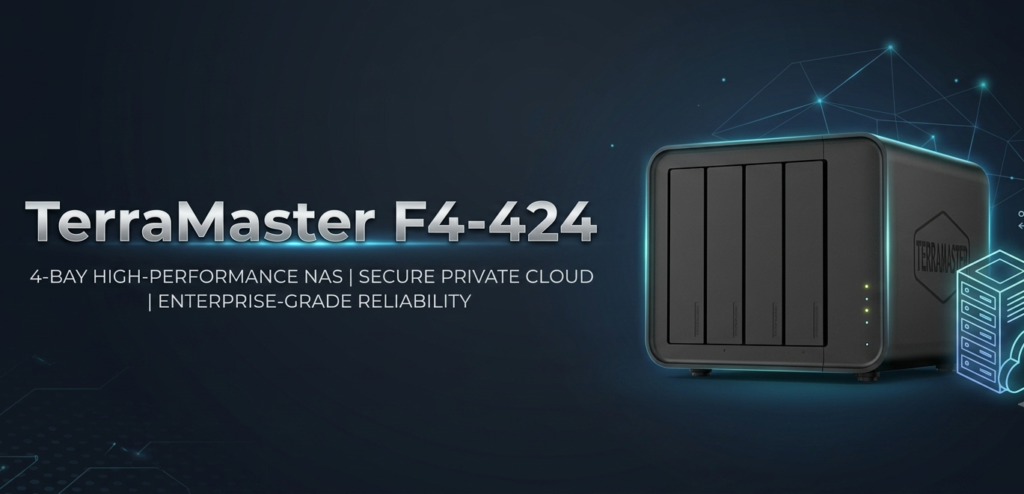
It joins the ranks of competitive NAS drives designed for creative professionals and small offices. It includes an Intel Core i3-N305 eight-core processor with 8GB DDR5 memory, expandable further. Four drive bays support nearly 96 TB of raw storage using 24 TB disks. Dual 2.5GbE ports enhance network throughput. Read speeds exceed 610MB/s under ideal conditions. Average pricing begins around £630 without installed storage.
WD My Cloud EX2 Ultra

The storage provides simple network storage with reliable backup. It includes a dual-core 1.3 GHz processor and 1GB of DDR3 memory. Two drive bays support up to 44 TB of capacity with compatible disks. Gigabit Ethernet ensures stable file sharing across devices. Read performance reaches approximately 114MB/s. Automatic backup and remote access strengthen usability. Typical pricing starts near £370 without hard drives.
Buffalo TeraStation 3420DN

It represents business-focused NAS drives offering dependable security and continuous availability. It features an Annapurna Labs AL-214 quad-core processor with 1GB DDR4 memory. Four bays support capacities up to 72 TB, depending on the installed disks. Dual Gigabit Ethernet improves redundancy and connectivity. Transfer speeds approach 180MB/s. RAID support protects valuable information. Typical pricing begins around £680 without additional storage upgrades.
Scalability and Performance
- NAS drives offer flexible scalability because users can increase storage by installing larger disks or expansion units.
- Many systems support RAID configurations that improve reliability and data availability.
- Powerful processors, fast memory, and multi-gigabit Ethernet connections enhance transfer speeds during heavy workloads.
- SSD caching further reduces latency, delivering smoother multitasking, faster backups, improved virtualization, and consistent performance across connected devices every day.
Readability and Compatibility
A well-designed NAS interface simplifies storage management for beginners and experienced users. Clear dashboards, organized menus, and helpful monitoring tools reduce configuration time. Most systems remain compatible with Windows, macOS, Linux, Android, and iOS devices. They also support common file-sharing protocols, multimedia streaming, cloud synchronization, and third-party applications.
Power Consumption
NAS drives are designed to balance storage performance with efficient energy usage. Many models include automatic drive-sleep modes, scheduled power management, and intelligent cooling systems that reduce energy consumption. Energy-efficient processors generate less heat while maintaining stable operation. Selecting certified hard drives and enabling power-saving features can lower long-term operating costs.
Tips to Choose the Best NAS System
- Selecting the right NAS depends on storage requirements, future expansion plans, and expected workloads.
- Consider the number of drive bays, processor performance, memory capacity, networking speed, and supported RAID levels.
- Compare operating system features, backup options, security tools, and application compatibility.
- Choosing a scalable model with reliable hardware helps ensure better long-term value, easier upgrades, and dependable daily performance for every user.
Why It Is A Smart Investment?
NAS drives provide secure, centralized, and expandable storage for personal and professional environments. They improve collaboration by allowing multiple users to access shared files efficiently. Advanced security, automatic backups, remote connectivity, and flexible upgrade options increase long-term value. Investing in dependable hardware with strong software support ensures consistent performance, simplified management, reliable data protection, and excellent adaptability.
Conclusion
Choosing the right NAS drives requires careful comparison of storage capacity, performance, hardware, and long-term value. Available options offer capacities of 162 TB, read speeds ranging from 114 MB/s to over 610 MB/s, and prices ranging from approximately £370 to £680. Considering these figures alongside scalability, compatibility, RAID support, and energy efficiency helps ensure a smarter purchase. A reliable NAS system delivers secure file storage, smooth data access, dependable backups, and enough flexibility to support growing storage needs over time.
Want to know about MSI B650 Gaming Plus WiFi: Features, Performance & Buying Guide (2026) Check out our Gaming category.
FAQs
Network storage provides a central system for saving and sharing files across multiple devices. It supports backups, remote access, and secure multi-user data management.
Storage ranges from 44 TB to 162 TB, depending on the system. Larger models support expansion by adding drives, enabling flexible growth as data needs increase.
Read speeds vary widely, from around 114 MB/s in entry systems to over 610 MB/s in high-performance models, ensuring smooth file transfers and fast data access.
Systems use processors such as the AMD Ryzen R1600, Intel Celeron N5105, and Core i3-N305, paired with DDR4 or DDR5 memory for stable performance.
Prices start near £370 for basic models and reach about £680 for advanced business systems, depending on features, capacity, and hardware specifications.