Car, Gar, and Zar Preterite is an essential topic for anyone learning Spanish, especially when mastering how to talk about past actions correctly. The preterite tense is widely used to describe completed events, but certain verbs require special attention due to spelling changes that occur for pronunciation purposes.
Among these, Car, Gar, and Zar verbs stand out because they follow unique yet logical rules in the “yo” form. These changes are not random; they help preserve the verb’s original sound, ensuring clarity and correctness in both writing and speaking.
By understanding how Car, Gar, and Zar verbs function in the preterite tense, learners can avoid common mistakes, improve fluency, and gain confidence in forming accurate past-tense sentences. This guide provides a clear and complete explanation of these important rules, making the concept easier to understand and apply in real-life communication.
| Topic | Key Points |
| Car Gar Zar Preterite | Special spelling changes in “yo” form to preserve pronunciation |
| Preterite Tense | Used for completed past actions |
| Car Verbs (-car) | Change c → qu (e.g., busqué) |
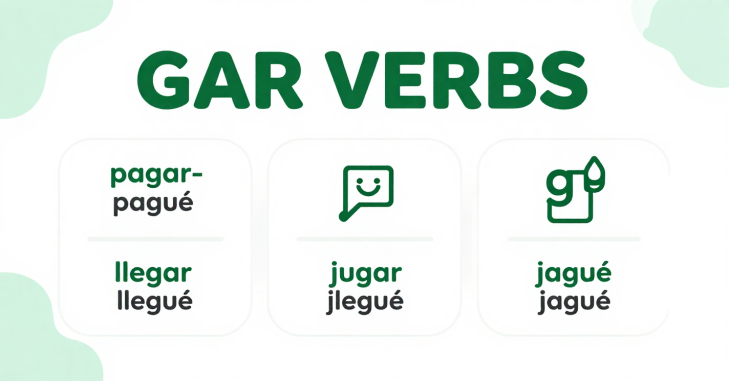
| Gar Verbs (-gar) | Change g → gu (e.g., llegué) |
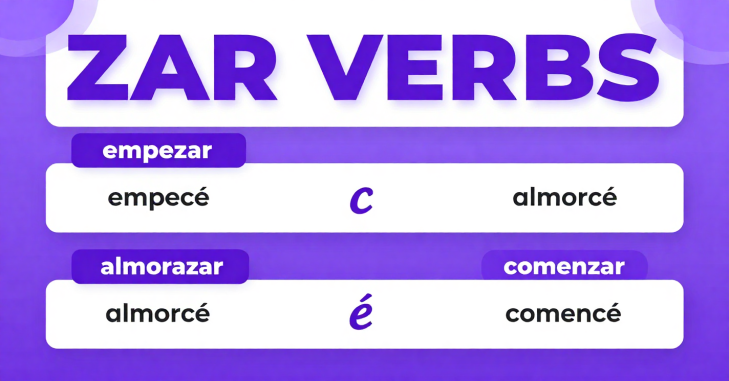
| Zar Verbs (-zar) | Change z → c (e.g., empecé) |
| Rule Application | Changes occur only in the “yo” form |
| Purpose of Changes | Maintain correct pronunciation |
| Common Mistakes | Forgetting changes or applying them to all forms |
| Practice Importance | Helps reinforce correct usage |
| Memory Trick | Car → qu, Gar → gu, Zar → c |
| Learning Benefit | Improves fluency and sentence accuracy |
Car, Gar, and Zar Preterite
The Spanish preterite tense is used to describe completed actions in the past, making it an essential part of mastering the language. Among the various verb groups in Spanish, Car, Gar, and Zar Preterite require special attention because they undergo spelling changes in the preterite tense.
These changes are not random but follow specific rules that help preserve pronunciation. Understanding how these verbs work is crucial for forming correct sentences and avoiding common mistakes.
Preterite Tense in Spanish
The preterite tense is used to talk about actions that were completed at a specific point in the past. For example, actions like “I walked,” “she studied,” or “they arrived” all use the preterite tense. Regular verbs in Spanish follow predictable patterns based on their endings (-ar, -er, -ir).
However, certain verbs, including Car, Gar, and Zar verbs, require spelling adjustments in the “yo” form to maintain the correct pronunciation. These changes only occur in the first-person singular form and are essential for both writing and speaking correctly.
What Are Car, Gar, and Zar Verbs?
Car, Gar, and Zar verbs are regular -ar verbs that end in “-car,” “-gar,” and “-zar.” While they follow standard conjugation patterns in most tenses, they require spelling changes in the preterite tense. These changes occur specifically in the “yo” form to preserve the original sound of the verb. Without these changes, the pronunciation would shift and sound incorrect in Spanish.
Why Do Spelling Changes Occur?
- The spelling changes in Car, Gar, and Zar verbs are based on Spanish pronunciation rules.
- Certain letters produce different sounds depending on the vowels that follow them.
- For example, the letter “c” before “e” sounds different than before “a” or “o.”
- To maintain the original sound of the verb, spelling changes are introduced.
- These changes help preserve correct pronunciation in the preterite tense.
- As a result, the verb sounds natural and consistent when spoken.
Car Verbs in Preterite (Spelling Change: c → qu)
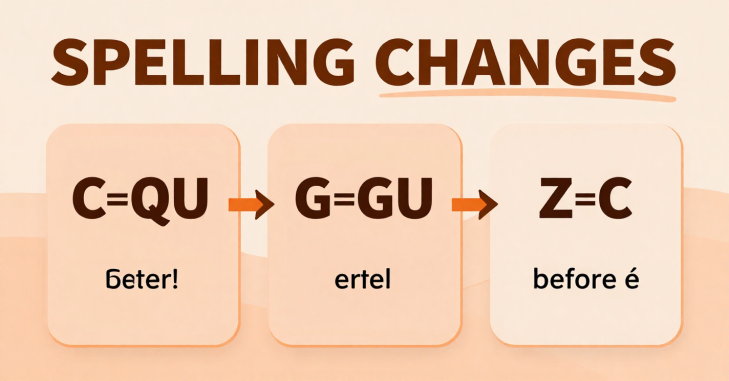
Car verbs change the letter “c” to “qu” in the “yo” form of the preterite tense. This change keeps the hard “k” sound that would otherwise be lost.
For example, the verb buscar (to search) becomes:
- Yo busqué
- Tú buscaste
- Él/Ella buscó
- Nosotros buscamos
- Ellos buscaron
Notice that only the “yo” form changes. The rest of the conjugations follow the regular pattern. Other common Car verbs include practicar (to practice), tocar (to touch), and sacar (to take out).
Gar Verbs in Preterite (Spelling Change: g → gu)
Gar verbs change the letter “g” to “gu” in the “yo” form. This adjustment preserves the hard “g” sound.
For example, the verb llegar (to arrive) becomes:
- Yo llegué
- Tú llegaste
- Él/Ella llegó
- Nosotros llegamos
- Ellos llegaron
Again, only the “yo” form changes. Other examples of Gar verbs include pagar (to pay), jugar (to play), and navegar (to navigate).
Zar Verbs in Preterite (Spelling Change: z → c)
Zar verbs change the letter “z” to “c” in the “yo” form. This change maintains the correct pronunciation before the letter “e.”
For example, the verb empezar (to begin) becomes:
- Yo empecé
- Tú empezaste
- Él/Ella empezó
- Nosotros empezamos
- Ellos empezaron
Other common Zar verbs include almorzar (to have lunch), cruzar (to cross), and organizar (to organize).
Key Rule: Changes Only in the Yo Form
One of the most important things to remember is that these spelling changes occur only in the “yo” form of the preterite tense. All other forms follow regular conjugation rules. This makes learning these verbs much easier because you only need to focus on one specific change.
Common Mistakes to Avoid
Many learners make errors when using Car, Gar, and Zar verbs in the preterite tense. One common mistake is forgetting to apply the spelling change in the “yo” form. For example, writing “buscé” instead of “busqué” is incorrect because it changes the pronunciation.
Another mistake is applying the spelling change to all verb forms, which is also incorrect. The change only applies to the “yo” form, not to “tú,” “él,” or “nosotros.” Additionally, some learners confuse these verbs with irregular verbs. While they do have spelling changes, they still follow regular conjugation patterns aside from the “yo” form.
Practice Sentences
Practicing with sentences can help reinforce these rules. Here are some examples:
- Yo practiqué español ayer. (I practiced Spanish yesterday.)
- Nosotros llegamos temprano. (We arrived early.)
- Ella empezó la clase a las ocho. (She started the class at eight.)
- Yo pagué la cuenta. (I paid the bill.)
These examples show how the spelling changes apply naturally in context.
Tips to Remember Car, Gar, Zar Rules
A helpful way to remember these rules is to focus on sound rather than spelling. Ask yourself how the word should sound, and then apply the necessary spelling change to preserve that sound.
You can also use memory tricks:
- Car → “qu”
- Gar → “gu”
- Zar → “c”
Another useful tip is to practice regularly by writing and speaking sentences. The more exposure you have, the more natural these changes will become.
Importance of Mastering These Verbs

Understanding Car, Gar, and Zar verbs is important for achieving fluency in Spanish. These verbs are commonly used in everyday conversation, and mastering them improves both accuracy and confidence. Since the preterite tense is frequently used to describe past events, knowing these rules helps you communicate clearly and effectively.
Conclusion
In conclusion, mastering Car, Gar, and Zar Preterite verbs is a crucial step in developing strong Spanish language skills. Although these verbs involve spelling changes, the rules are straightforward to apply once understood. The key is to remember that these changes occur only in the “yo” form and are designed to preserve pronunciation rather than create irregularity. B
y practicing regularly, focusing on sound patterns, and avoiding common mistakes, learners can quickly become comfortable using these verbs in everyday conversation. Understanding Car, Gar, and Zar verbs not only strengthens your grasp of the preterite tense but also enhances your overall fluency and confidence in Spanish.
With consistent effort and application, these rules will become second nature, allowing you to communicate clearly and effectively in the past tense.
Want to know about Teacher Cover Letter Examples: The Ultimate Guide to Writing a Powerful, Personalized, and Job-Winning Cover Letter for Educators at Every Career Stage Check out our Education category.
FAQs
In the preterite, verbs ending in -car, -gar, and -zar change spelling in the yo form to keep the pronunciation natural. Specifically, -car → -qué, -gar → -gué, and -zar → -c é, and these changes happen only for the yo form.
Answer: For -car verbs, the c changes to qu in the yo preterite, and you also use the preterite ending for -ar verbs. For example, buscar becomes yo busqué (with the accent), while tú buscaste and nosotros buscamos remain straightforward preterite conjugations.
For -gar verbs, the g changes to gu in the yo preterite. For example, llegar becomes yo llegué (with the accent), while tú llegaste and nosotros llegamos use the normal preterite endings without any spelling trick.