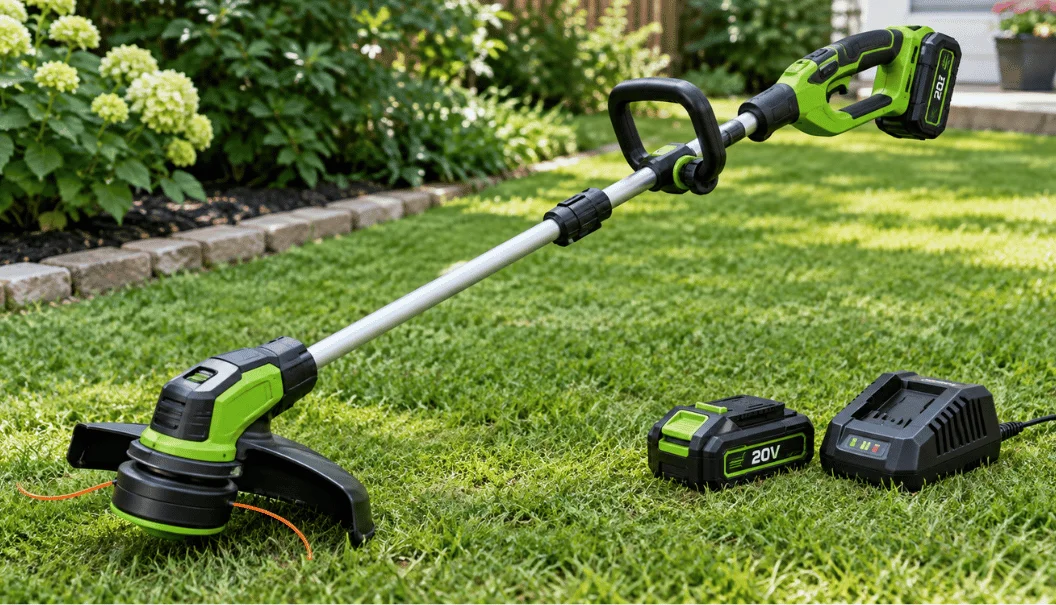
A battery strimmer gives you cordless freedom for lawn edges, awkward corners and grass your mower cannot reach. Modern models range from lightweight 18V tools for routine edging to more powerful machines for long grass. The right choice depends on your garden, battery system and the vegetation you regularly cut.
A cordless grass trimmer can make a lot of sense in a typical UK garden. You avoid extension leads, petrol storage and the restricted reach of a mains cable. Before buying, compare the complete kit rather than focusing on voltage alone.
Battery Strimmer at a Glance
| Buying factor | What to look for | Why it matters |
|---|---|---|
| Garden size | Small, medium or large lawn | Determines suitable power and runtime |
| Battery | Capacity, voltage and compatibility | Affects runtime, weight and total cost |
| Cutting width | Roughly 23–40cm across common models | Wider heads cover ground faster. |
| Weight | Tool plus battery weight | Changes comfort during longer jobs |
| Cutting system | Line, blade, or compatible alternatives | Affects maintenance and cutting ability |
| Edging | Rotating or adjustable head | Helps create cleaner lawn borders |
| Spare batteries | Check availability before buying. | Extends working time and tool lifespan |
| Existing tools | Look for compatible battery platforms. | Can reduce the cost of buying another tool |
Direct answer: For most UK gardens, choose a cordless strimmer that balances cutting width, weight, battery capacity, and easy line feeding. Light 18V models suit routine lawn edges and small gardens. Larger or higher-voltage machines make more sense for extensive lawns, thick grass and tougher weeds.
Why Choose a Battery Strimmer?
Cordless machines remove one of the biggest inconveniences associated with electric garden tools. You can move between front and back gardens without finding sockets or repositioning extension cables. That freedom is useful around sheds, trees, raised beds and garden furniture.
They also require less routine engine care than petrol machines. There is no fuel to store, mix or replace after a long period of inactivity. You still need to inspect the cutting head, guard, spool and battery before starting work.
Noise is another consideration in residential areas. Individual machines differ, so check independent test results rather than assuming every cordless model is quiet. Current UK tests commonly assess noise, vibration, cutting ability, comfort and battery performance.
Battery Strimmer Types Compared
Choosing between cordless options becomes easier when you start with the work involved. An expensive high-powered machine can be unnecessary for a compact, regularly maintained lawn. A lightweight model may struggle if you regularly clear dense growth.
| Type | Usually suits | Main advantages | Main drawbacks |
|---|---|---|---|
| Lightweight 18V | Small gardens and regular edging | Light, manageable and often affordable | Less suitable for heavy vegetation |
| Mid-range cordless | Small to medium gardens | Good balance of power and mobility | Runtime varies with battery capacity. |
| Higher-voltage model | Large gardens and tougher growth | More suitable for demanding cutting | Usually heavier and more expensive |
| Body-only tool | Owners of compatible batteries | Can reduce purchase cost | Poor value if you need a battery and charger |
| Complete kit | First-time cordless buyers | Ready to use with the correct battery | Higher initial price |
For a small urban lawn, a lighter machine usually provides the most practical balance. For rougher ground, cutting ability and runtime become more important than minimum weight. Existing cordless tools should also influence your shortlist.
1. Match Power to Your Garden
Voltage is useful, but it should not be your only measure of performance. Cutting-head design, motor efficiency, and line and battery capacity also affect how a machine works. Compare independent cutting tests alongside the specification sheet.
An 18V or 20V platform can be enough for lawn edges and regularly trimmed grass. Tough weeds and larger areas can justify a more capable machine. Some heavy-duty cordless models use 36V, 4.0V, or higher-voltage systems.
Avoid buying extra power without considering weight. A heavier machine can become tiring when you are trimming around several borders. Balance and adjustable handles may matter more than a larger voltage number.
2. Check Battery Capacity and Runtime
Battery capacity is commonly stated in amp-hours, or Ah. A larger-capacity pack can provide more working time within the same compatible system. Actual runtime still changes with grass density, cutting technique, power settings, and battery condition.
Independent testing is valuable because manufacturers do not all measure runtime under identical garden conditions. This includes battery life and charging time among its cordless grass-trimmer checks. Expert Reviews also times runtime during practical garden testing.
Consider charging time as well as runtime. One battery may be enough when trimming takes fifteen minutes. Larger gardens can make a second compatible pack far more useful.
3. Choose the Right Cutting Width
Cutting width tells you how much vegetation the head can cover during each sweep. Narrow heads are easier to maneuver around pots, borders and confined spaces. Wider heads can clear larger areas with fewer passes.
Current cordless machines cover a broad range of cutting widths. Tested UK models include compact heads below 30cm and heavier machines reaching well beyond that size. The widest option is not automatically the right one.
Think about where you will use the machine most often. A compact head works well between beds and around furniture. A wider cutting path becomes more useful when clearing long edges or larger rough patches.
4. Consider Weight and Adjustability

Published weight figures can be misleading if they exclude the battery. Check the working weight whenever possible because that is what you will hold. A large battery can noticeably change the balance.
An adjustable shaft helps users of different heights maintain a comfortable working position. An adjustable front handle can also improve control. These features matter when a garden requires more than a quick edge trim.
Look at the cutting head too. Some machines rotate or change angle for vertical edging. Others focus mainly on horizontal trimming and provide fewer adjustments.
5. Compare Line Feed and Edging Features
The cutting line needs replacing as it wears, so line management affects everyday convenience. Systems include manual, bump-feed, semi-automatic, and automatic arrangements. Each design has different maintenance requirements.
A troublesome feed system can turn a short lawn job into repeated stops. Current independent testing specifically checks line breakage, spool replacement, ent and feeding behavior. Those practical details deserve attention before purchase.
If neat borders matter, look for an edging mode. A rotating head can turn the cutting line vertically beside a path or lawn border. Some models also include wheels or guides to help maintain a straighter edge.
6. Check the Battery Platform Before Buying
The tool price does not always include a battery or charger. Body-only machines target people who already own compatible equipment. Always check exactly what comes in the box before comparing prices.
Battery compatibility can make one model considerably cheaper over several years. A battery shared between a drill, hedge trimmer, mower and strimmer reduces the number of chargers and packs you need. Compatibility must still be confirmed for the specific manufacturer and product range.
This point also matters when replacing an aging battery. This says it no longer awards cordless grass trimmers Best Buy status when replacement batteries cannot be purchased from the manufacturer. Checking replacement availability can therefore protect the useful life of your tool.
7. Compare Current Models by Garden Type
There is no single cordless machine that suits every UK garden. Independent reviewers reach different conclusions because their test criteria, gardens and product selections vary. That makes your own use case the most useful starting point.
Current UK testing gives several examples worth researching. Expert Reviews highlights Bosch cordless models across general and heavy-duty categories, while The Guardian rated the Stihl FSA 50 highly in its 2026 testing. Other current roundups include Ryobi, Worx, EGO, and Makita options.
Use those recommendations as a shortlist rather than treating one review as a universal answer. Compare working weight, cutting width, supplied battery, replacement-line costs, and warranty terms. Then check whether you already own a compatible battery.
Battery Strimmer vs. Corded and Petrol Models
Cordless is strongest when mobility and easy starting matter. Corded tools avoid battery charging but keep you attached to a power supply. Petrol machines can suit demanding clearance work but bring fuel, noise, and engine maintenance considerations.
For many domestic gardens, cordless technology offers a practical middle ground. It can handle routine edging and difficult mower-access areas without a trailing cable. Larger gardens still require careful attention to battery capacity and cutting performance.
If automated lawn maintenance also interests you, read Writiva’s Robot Lawn Mower Guide for UK Gardens in 2026. Robot mowers can reduce routine mowing, but many gardens still need manual trimming around walls and difficult borders.
What Should You Pay?
Prices vary considerably according to power, battery capacity, brand, and included accessories. Body-only tools can appear cheap because the battery and charger are sold separately. Complete kits cost more but may provide better value for someone entering a battery system.
Recent UK reviews show cordless choices ranging from relatively affordable domestic tools to premium machines costing several hundred pounds. Retail prices also change during seasonal promotions. Check current retailer prices and kit contents before making a direct comparison.
Do not judge value by purchase price alone. Replacement batteries, spools and cutting lines add to long-term ownership costs. Battery compatibility with tools you already own can reduce those costs substantially.
Safety and Maintenance
Wear suitable eye protection because a spinning line can throw stones and other debris. Inspect the working area before starting and keep people and pets clear. Follow the manufacturer’s safety instructions for your specific machine.
Remove the battery before touching the cutting head or clearing tangled vegetation. Check the guard and line before each session. Never fit cutting attachments that the manufacturer has not approved for the model.
After use, brush away grass from the guard and ventilation areas once the machine is safe. Store batteries according to the manufacturer’s instructions. Keeping the tool dry and clean can also make routine inspections easier.
Garden maintenance sometimes reveals weeds spreading along fences and lawn edges. Writiva’s Bindweed in UK Gardens guide explains how persistent bindweed spreads and how to manage it. Identifying troublesome plants before strimming can prevent careless cutting from making some problems harder to control.
Which Battery Strimmer Should You Choose?
For a small garden, prioritize low weight, comfortable adjustment, and straightforward edging. An 18V-class machine may provide enough performance for regularly maintained grass. A shared battery system can make it especially economical.
For a medium garden, look for a balance between cutting width and manageable weight. Battery capacity becomes more important because longer borders increase working time. A spare battery may be useful when one charge cannot finish the job.
For large areas or tougher vegetation, consider stronger cordless systems with wider cutting paths. Pay close attention to working weight and balance before choosing. Heavy-duty performance offers little benefit if the machine becomes uncomfortable after ten minutes.
Verdict: start with your garden rather than a brand name. Choose a lightweight cordless model for routine edging, or step up for long grass and larger plots. Existing batteries can make a compatible model the most sensible purchase.
Frequently Asked Questions
Is a battery strimmer powerful enough for long grass?
Yes, suitable cordless models can tackle long grass, but performance differs considerably. Higher-powered machines and wider cutting systems generally suit demanding vegetation better. Check independent tests for the specific model before buying.
How long does a cordless strimmer battery last?
Runtime depends on battery capacity, vegetation, power setting, and cutting technique. A light edging job uses energy differently from clearing dense weeds. Independent runtime tests provide a better comparison than voltage alone.
Is 18V enough for a grass strimmer?
An 18V model can suit small and medium domestic gardens with regularly maintained grass. It can also be easier to handle than a heavy-duty machine. Tough vegetation may justify moving to a more powerful system.
Can I use the same battery in other garden tools?
Often, but only within compatible battery platforms. Some manufacturers design one battery family for several garden and DIY tools. Confirm compatibility for every model before purchasing a body-only tool.
What is the difference between a strimmer and a grass trimmer?
In everyday UK usage, the terms are commonly used for the same type of tool. “Strimmer” originated as a brand name but became a familiar generic term. Retailers and manufacturers often use “grass trimmer” for the product category.
Is a battery strimmer better than a corded model?
It is usually more convenient when you value mobility and do not want an extension cable. A corded machine avoids charging and may cost less. Your garden size, socket access, and trimming frequency should guide the choice.
Make Your Shortlist Before You Buy
Measure the areas your mower cannot reach and note the type of growth there. Then compare cutting width, working weight, battery capacity, and edging features. This approach quickly removes machines that do not fit your garden.
Check whether you already own compatible cordless tools before paying for another battery platform. Compare complete kit costs when you do not own a suitable battery. Finally, read recent independent tests for the models remaining on your shortlist.