Ambush marketing is when a brand builds a commercial association with an event it has not paid to sponsor. It does not require breaking into a stadium or faking a logo. Most of it is legal, cheap and deliberately just outside the line: a poster near the ground, a stunt on the day of the final, a joke on social media at the exact moment 20 million people are watching the same thing.
The reason it keeps happening is arithmetic. A top-tier Olympic or FIFA partnership runs into the tens of millions of pounds over a cycle. A clever ambush costs a fraction of that and, because the press loves the David-and-Goliath framing, often earns more coverage than the sponsorship it undercut. The rest of this page covers what actually counts as ambush marketing, six verified cases, the specific UK laws that constrain it, and the situations where it reliably backfires.
Direct ambush versus indirect ambush, and why the distinction matters legally
Marketing textbooks split ambush into two families, and UK lawyers treat them very differently. Getting the category right tells you roughly how much legal risk you are carrying.
Direct (predatory) ambush attacks the sponsor
This is the aggressive end. The brand deliberately implies it is the official partner, or attacks the brand that is. It uses protected marks, official-sounding language such as official supplier, event logos, or imagery so close to the event that consumers reasonably conclude there is a deal in place. This is where trade mark infringement and passing off actions live.
Indirect (associative) ambush attacks the theme, not the event
Here the brand borrows the mood rather than the marks. It runs football-flavoured advertising during a World Cup without naming the tournament, buys the poster sites on the walk from the station, or signs individual athletes who are competing. Signing an athlete is not an ambush at all in strict terms, but it produces the same effect: the public sees your logo on the person winning the medal.
| Type | What the brand actually does | Typical UK legal exposure |
|---|---|---|
| Predatory ambush | Uses event marks, claims or implies official status | High: trade mark, passing off, event-specific statute |
| Coat-tail ambush | Sponsors an athlete, team or broadcaster instead of the event | Low, but often restricted by athlete or team contracts |
| Ambush by association | Uses generic event imagery, colours, dates and themes | Low to moderate, depends on how strong the implication is |
| Property infringement | Buys media, poster sites or venue-adjacent space | Low, unless inside a statutory advertising exclusion zone |
| Ambush by distraction | Stunts, giveaways and crowd activity at or near the venue | Low legally, high risk of ejection and reputational blowback |
| Saturation ambush | Heavy generic advertising in the host city during the event | Very low, mainly a budget question |
Nike against adidas and Reebok: three decades of the same play
Nike is the reference case because it ran the tactic repeatedly and refined it each time.
At Barcelona 1992, Reebok was the official kit sponsor of the United States Olympic team. Nike had the individual athletes. When the basketball Dream Team collected gold, Michael Jordan and several team-mates draped a US flag over the Reebok logo on the tracksuit during the medal ceremony. Nike paid nothing to the organising committee and got the defining image of the Games.
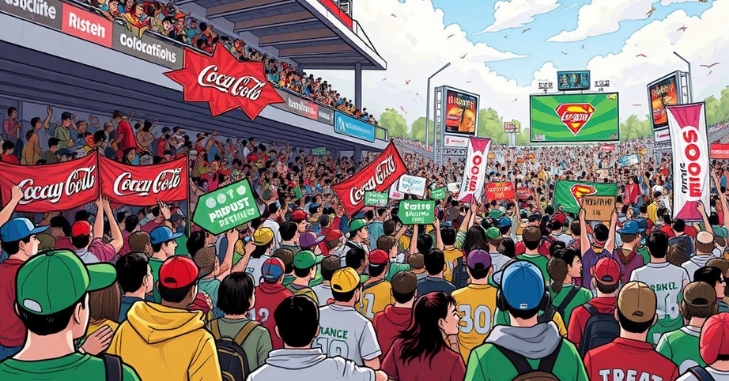
At Atlanta 1996, Reebok was again the official footwear sponsor. Nike bought a large share of the outdoor advertising around the city, opened a Nike-branded venue near Centennial Olympic Park, and handed out swoosh banners to spectators. Surveys taken afterwards found a substantial share of the public believed Nike was an official Olympic sponsor. It was not.
At London 2012, adidas was the official sportswear partner and had paid a reported figure in the region of £100 million for the privilege. Nike responded with Find Your Greatness, an advertising campaign filmed with ordinary athletes in places named London that are not the capital: London in Ohio, East London in South Africa, Little London in Jamaica, London in Nigeria. No rings, no reference to the Games, no protected words. Legally untouchable, and it dominated conversation during the opening week.
Bavaria at the 2010 World Cup: the orange dress stunt
The single most cited ambush of the modern era happened on 14 June 2010 at Soccer City in Johannesburg, during the Netherlands against Denmark group match. Around three dozen women arrived in identical orange dresses supplied by the Dutch brewer Bavaria. Budweiser was FIFA’s official beer partner. Stewards ejected the group, and two Dutch women were arrested and charged before the case was dropped following diplomatic pressure and a settlement between FIFA and Bavaria.
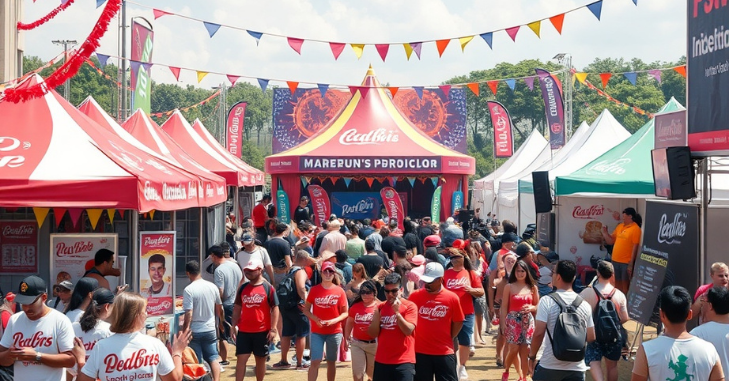
It was not Bavaria’s first attempt. At the 2006 World Cup in Germany, the brewery distributed orange lederhosen-style shorts carrying its branding; Dutch fans wearing them were made to remove them at the gate and watched the match in their underwear. Both stunts cost Bavaria almost nothing in media spend and generated global coverage. Both also raise the ethical question that hangs over the whole tactic: the people who bore the consequences were fans and hired models, not the marketing director.
Paddy Power and the London 2012 egg-and-spoon race
This is the most instructive British example because it was tested against the actual legislation. In the run-up to London 2012, the bookmaker ran outdoor advertising declaring itself the official sponsor of the largest athletics event in London that year, with small print revealing the event was an egg-and-spoon race in London, a village in Burgundy, France.
The organising committee objected and sought removal of the posters. Paddy Power began legal proceedings, arguing the claim was literally true and that the small print prevented any real confusion. The organisers backed down and the posters stayed up. The lesson is precise: a claim of official status that is factually accurate, disclosed, and about a genuinely different event is very hard to attack, even under bespoke Olympic legislation.
Samsung outside the Apple Store, Sydney, October 2011
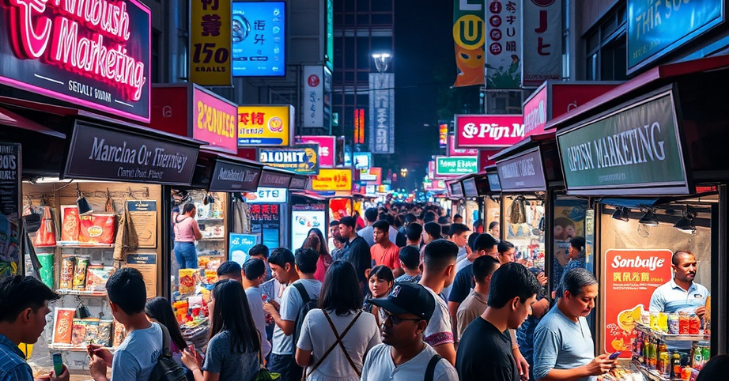
Ambush is not only a sports tactic. When Apple launched the iPhone 4S in Australia on 12 October 2011, Samsung set up a temporary stand near the Apple store on George Street in Sydney and sold the Galaxy S II for two Australian dollars to the first buyers each day. The queue outside a rival’s launch became the venue. The cost was a pop-up stall and a small stock write-off; the coverage ran worldwide.

BrewDog and Qatar 2022: the case that shows how it backfires
For the 2022 World Cup, the Scottish brewer BrewDog ran a campaign positioning itself as the proud anti-sponsor of the tournament, criticising the host nation’s human rights record. The campaign was widely covered, then widely turned on the company when it emerged that BrewDog bars were still screening the matches and selling beer during them, and when questions were raised about the brewer’s own workplace record.
This is the honest counterweight to the highlight reel. An ambush that takes a moral position invites scrutiny of the ambusher. If your own house is not in order, the story stops being about the sponsor and becomes about you.
The UK legal position: five separate regimes, not one
There is no single English law of ambush marketing. What exists is a stack of overlapping regimes, and any given stunt may sit safely inside four of them and fall foul of the fifth.
| Regime | What it actually prohibits | Who enforces it |
|---|---|---|
| Olympic Symbol etc. (Protection) Act 1995 | Use of the rings, the Olympic motto and words such as Olympic, Olympiad, Olympian | Rights owner, civil action |
| London Olympic Games and Paralympic Games Act 2006 | Suggesting an association with London 2012; venue advertising and street trading controls | Time-limited, expired after the Games |
| Trade Marks Act 1994 | Use of a registered mark, including use that takes unfair advantage of its reputation | Mark owner, civil action |
| Passing off (common law) | Misrepresentation that damages an established goodwill | Rights holder, civil action |
| Digital Markets, Competition and Consumers Act 2024 | Misleading commercial practices likely to distort consumer decisions | Competition and Markets Authority, direct enforcement |
What the 2006 Olympic Act actually did, and why it still matters
The London Olympic Games and Paralympic Games Act 2006 created a bespoke right, the London Olympics association right, that made it unlawful to create an association in the public mind between a business and the Games. Schedule 4 did something unusual in English law: it listed ordinary words and told courts to treat certain combinations as evidence of an infringing association.
The first list contained games, Two Thousand and Twelve, 2012 and twenty twelve. The second contained gold, silver, bronze, London, medals, sponsor and summer. Using two words from the first list, or one from each, could be taken as suggesting an association. The Act also imposed advertising and street-trading exclusion zones around venues, typically extending a few hundred metres and running for a defined window either side of each event.
The association right itself was time-limited and fell away after the Games. What matters now is the precedent: when the UK hosts a major event, Parliament is willing to legislate specifically for it. The Glasgow Commonwealth Games Act 2008 and the Birmingham Commonwealth Games Act 2020 both did the same thing on a smaller scale. Any brand planning activity around UEFA Euro 2028, which the UK and Ireland will co-host, should assume comparable venue-zone rules will exist and should check the specific instrument rather than relying on general trade mark advice.
Trade marks and passing off: the two workhorses
Outside event-specific statutes, most enforcement runs on the Trade Marks Act 1994. Section 10(3) is the provision rights holders reach for: it covers use of a sign similar to a mark with a reputation where the use takes unfair advantage of, or is detrimental to, the distinctive character or repute of that mark. Crucially it does not require proof that anyone was confused, which makes it far easier to run than a straightforward confusion claim.

Passing off is the common-law backstop and requires three things, established in the classic English authorities: goodwill attaching to the claimant’s business, a misrepresentation by the defendant leading the public to believe the goods or services are the claimant’s or connected to them, and damage flowing from that. The gap it leaves is the gap ambushers exploit. Evoking the mood of a football tournament, without naming it or using its marks, usually involves no misrepresentation at all.
The consumer law change most articles have not caught up with
The Consumer Protection from Unfair Trading Regulations 2008 used to be the standard citation here. They no longer are. The unfair commercial practices provisions of the Digital Markets, Competition and Consumers Act 2024 came into force on 6 April 2025 and replaced the 2008 Regulations.
The practical change is enforcement, not principle. The prohibition on misleading actions, including falsely claiming sponsorship or endorsement, carries across. What is new is that the Competition and Markets Authority can now decide that a breach has occurred and impose penalties directly, rather than having to go to court first. If your campaign says or strongly implies that you are an official partner when you are not, the downside is materially larger than it was before April 2025.
Advertising codes: the fast route that catches most UK campaigns
In practice, the complaint that lands first is usually an Advertising Standards Authority one, not a High Court claim. The CAP and BCAP Codes require that advertising must not falsely claim or imply endorsement, approval or affiliation, and must not mislead by omission. An ASA ruling arrives in weeks rather than years, costs the complainant nothing, and produces a published adjudication that becomes the top search result for your brand name.
For broadcast work, the Ofcom Broadcasting Code adds rules on sponsorship identification and on undue prominence, which is why televised ambushes tend to happen in the stands rather than in the ad break. If you are thinking about how any of this fits a wider plan, it is worth mapping against your customer journey map before committing budget.
How rights holders actually defend the event
Modern defence is layered and mostly preventive. Litigation is the last resort because it is slow and generates the coverage the ambusher wanted.
- Legislate early. Host-city contracts now oblige governments to pass venue-zone advertising and trading controls before the event.
- Register defensively. Marks, mascots, slogans, emblems and typefaces are filed across all relevant classes, years ahead.
- Buy the surrounding media. Organisers and sponsors block-book poster sites, transport advertising and airspace around venues so there is nothing left to buy.
- Control the ticket terms. Conditions of entry ban commercial branding on clothing and objects, which is the mechanism that ejected the Bavaria group.
- Bind the participants. Athlete and team agreements restrict what a competitor can wear, post or endorse during a defined blackout window.
- Monitor and warn. Specialist agencies scan outdoor, broadcast and social output during the event and issue takedown letters within hours.
- Give sponsors clean value. Exclusive hospitality, athlete access and on-site experiences are things an ambusher structurally cannot copy.
The economics: why the temptation never goes away
These are indicative ranges based on publicly reported deals rather than a rate card, and they move a lot between cycles and categories. Treat them as orders of magnitude.
| Route | Reported or typical UK cost | What you get | Main risk |
|---|---|---|---|
| Top-tier global sponsorship | Tens of millions of pounds per cycle | Marks, category exclusivity, hospitality, protection | Enormous outlay, easy to be out-shouted |
| National team or league sponsorship | Low millions to tens of millions per year | Strong domestic association and rights | Performance risk tied to the team |
| Individual athlete endorsement | Low tens of thousands to millions per year | Personal association, works across events | Conduct risk and event blackout clauses |
| Host-city outdoor takeover | Hundreds of thousands to low millions | Visibility without any rights fee | Exclusion zones, sites may be pre-bought |
| Social and real-time reactive | Low thousands to low tens of thousands | Speed, cultural credit, huge upside | Fails silently most of the time |
| Physical stunt at or near a venue | Low thousands plus legal advice | Press coverage far above spend | Ejection, arrest of participants, backlash |
When ambush marketing works, and when it does not
Across the verified cases above, the ones that worked share three features and the ones that failed share one.
- It works when the joke is on the sponsorship system, not on consumers. Paddy Power mocked the rules. Nobody was misled and nobody was harmed.
- It works when the brand already has a credible claim to the territory. Nike at an athletics event is plausible. A brand with no connection to sport looks opportunistic.
- It works when it is fast and specific. A reactive post 20 minutes after a moment beats a campaign three days later.
- It fails when the brand claims moral high ground it cannot hold. BrewDog is the case study. Scrutiny follows the accusation straight back to the accuser.
- It fails when someone else absorbs the risk. Fans ejected, models arrested, staff fined. The coverage curdles quickly.
- It fails when the audience has to have the reference explained. If the ambush needs a caption, it is an advert.
A UK pre-flight checklist before you run one
- Confirm whether event-specific legislation applies and read the actual instrument, not a summary.
- Map the venue advertising and street-trading exclusion zones and their active hours.
- Search the UK trade mark register for the event marks, mascots and slogans across your goods and services classes.
- Strip every protected word, emblem, colourway and date combination from the creative.
- Ask a colleague with no context whether the ad implies you are an official partner. If they hesitate, redraft.
- Check every athlete, influencer and ambassador contract for event blackout clauses.
- Run the creative past the CAP Copy Advice service before booking media.
- Confirm nobody outside your organisation is being asked to carry legal or physical risk on your behalf.
- Where the campaign captures customer data, confirm it is handled lawfully. Our note on UK data protection and personal information covers the basics.
- Write the holding statement for the day it goes wrong before you launch, not after.
Common mistakes UK marketers make with this tactic
- Assuming a disclaimer cures everything. Small print helped Paddy Power because the underlying claim was true. It does not rescue a false one.
- Treating hashtags as free space. Event hashtags can carry trade mark and platform-policy consequences, and organisers do file complaints.
- Copying the 2012 playbook in 2026. The exclusion-zone rules, monitoring technology and CMA enforcement powers have all changed.
- Budgeting for the stunt but not the legal review. Advice before launch is cheap; advice after a letter arrives is not.
- Confusing volume with association. Buying more media than the sponsor is expensive saturation, not a clever ambush.
Ambush marketing at a glance
| Question | Short answer |
|---|---|
| Is ambush marketing illegal in the UK? | Not in itself. It becomes unlawful when it infringes a trade mark, amounts to passing off, breaches event-specific legislation, or misleads consumers. |
| What is the difference between direct and indirect ambush? | Direct implies official status or uses protected marks. Indirect borrows the theme without touching the marks. |
| Which UK law is most often used against it? | Section 10(3) of the Trade Marks Act 1994, because it does not require proof of consumer confusion. |
| What replaced the Consumer Protection from Unfair Trading Regulations 2008? | The unfair commercial practices provisions of the Digital Markets, Competition and Consumers Act 2024, in force from 6 April 2025. |
| Does small print make an official-sponsor claim safe? | Only where the claim is literally true and the disclosure is genuinely visible, as in the Paddy Power case. |
| What is the biggest practical risk? | Not litigation. It is an ASA ruling or a reputational backlash that outlives the campaign. |
Ambush marketing is best understood as a test of whether an organiser has bought the public’s attention or merely the stadium’s signage. UK law has narrowed the space since 2012 without closing it, and the DMCC Act has raised the cost of getting it wrong. If you want to keep track of how brands are playing it now, our overview of Marketing Dive and the marketing news sources UK marketers use is a reasonable starting point, and our look at how magazine advertising still works covers the paid side of the same question.
Ambush marketing is a strategy where a brand gains exposure during major events without paying for official sponsorship. It uses creative, indirect methods to engage event audiences and capture attention.
Ambush marketing is growing because it offers massive visibility at a much lower cost than official sponsorships. With digital platforms and influencers, brands can join event conversations instantly and creatively.
Social media accelerates ambush marketing by enabling real-time reactions, viral content creation, influencer partnerships, and hashtag-driven visibility. Platforms like TikTok and X help brands spread their message instantly.