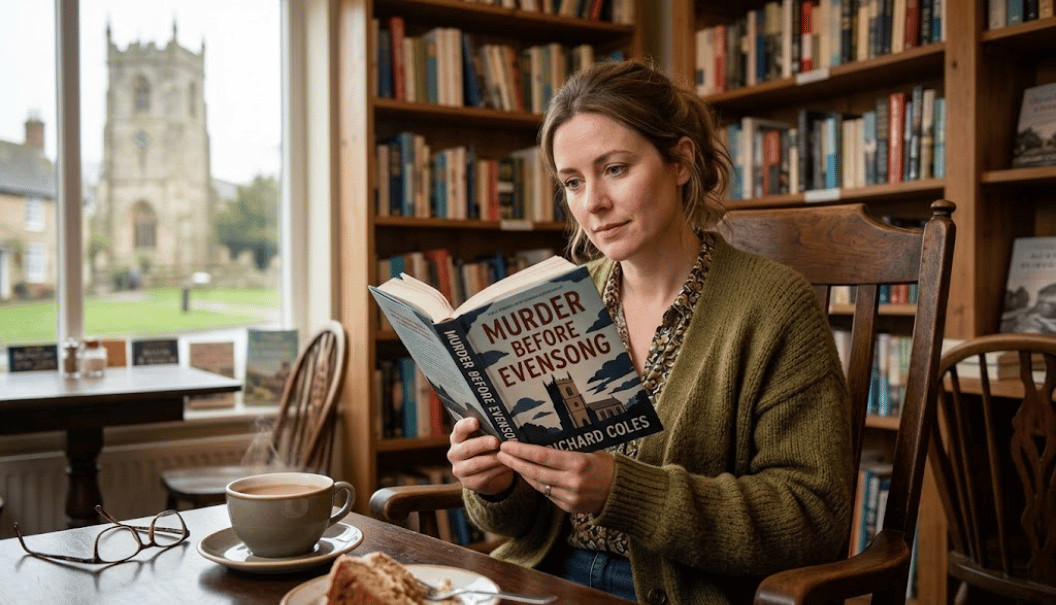
Murder Before Evensong reviews reveal a book that divides readers more than its cosy cover might suggest. Richard Coles delivers sharp parish observations, dry humour, and an affectionate picture of English village life. Yet readers seeking a fast, clue-heavy murder mystery may find the opening slow and the church detail unusually prominent.
Quick verdict: Richard Coles’ debut suits readers who enjoy character-led cosy crime, dry British humour, and village politics. The parish setting often matters as much as the murder itself. Readers who want constant suspense or fast-paced detective work may find its measured pace frustrating.
| Key detail | Quick answer |
|---|---|
| Book | Murder Before Evensong |
| Author | Richard Coles |
| Series | Canon Clement Mystery, Book 1 |
| Setting | Champton, England, in the late 1980s |
| Genre | Cosy crime and village mystery |
| Main character | Canon Daniel Clement |
| Best for | Fans of parish life, British humour and character-led mysteries |
| Main caution | Slow opening and less emphasis on investigation than some readers expect |
| UK publisher | Weidenfeld & Nicolson |
| First published | 2022 |
| Writiva verdict | Worth considering if atmosphere matters as much as the puzzle |
What Do Murder Before Evensong Reviews Say?
Critics have generally praised Coles’ ability to create an English parish that feels inhabited rather than decorative. Reviewers have highlighted the humour, eccentric characters, village disagreements, and believable details of clerical life. The publisher also presents the novel as the first entry in the Canon Clement mystery series.
Reader reactions are noticeably more divided. StoryGraph currently shows an average rating around three stars, with reviewers frequently disagreeing about the pace. Some enjoy the parish routines, while others feel the murder plot takes too long to become central.
That difference explains the book better than a simple positive or negative rating. This is partly a whodunnit and partly a social portrait of a rural congregation. Your enjoyment will depend on which half interests you more.
What Is the Book About?
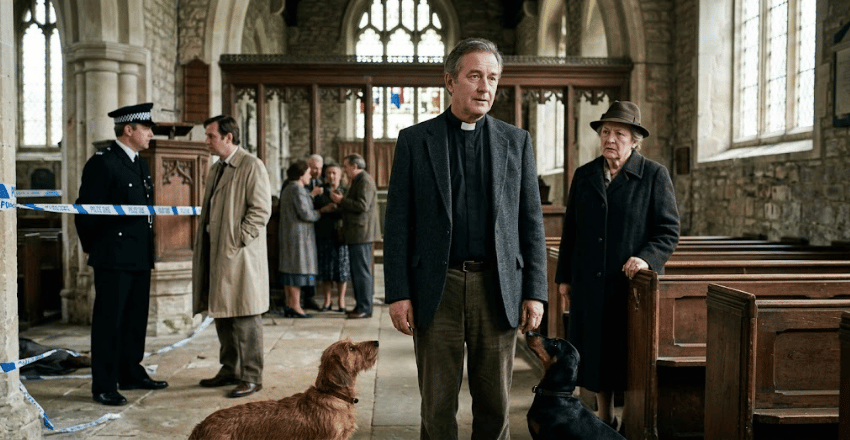
Canon Daniel Clement is rector of St Mary’s in the fictional village of Champton. He lives with his formidable, widowed mother, Audrey, and two dachshunds, Cosmo and Hilda. His parish initially faces a wonderfully small crisis: whether the church should install a lavatory.
The dispute exposes tensions beneath Champton’s respectable surface. Then Anthony Bowness, cousin of the church’s wealthy patron, is found dead inside the church. Daniel gets involved as the police investigate and old secrets surface.
The story takes place in the late 1980s. That period gives Coles room for nostalgic cultural details without making the setting feel historically remote. It also keeps smartphones and instant searches out of the detective work.
Why the Parish Setting Is the Book’s Biggest Strength
Coles spent years as a Church of England priest, and that experience gives the parish scenes unusual specificity. Meetings, flower arrangements, social hierarchies, church politics, funerals, and minor disputes all become part of the story. These details give Champton its personality.
The Guardian praised the novel’s treatment of its congregation and its movement between comedy and more serious themes. Other positive reviews have similarly focused on Coles’ observations of English community life. The humour works because small parish disagreements receive the seriousness their participants genuinely give them.
That strength can also become a weakness for certain readers. If you want every chapter to advance the murder investigation, parish business can feel like a diversion. If you enjoy character and setting, those same passages may become the reason to keep reading.
Readers who enjoy Writiva’s character-focused entertainment coverage can also explore the site’s broader Entertainment section. Its reviews often separate audience fit from simple scores. That approach matters for a book this dependent on personal taste.
How Strong Is the Mystery?
The murder provides a genuine puzzle, but the novel does not behave like a relentless modern thriller. Coles spends substantial time establishing Daniel, his congregation, and Champton before pushing the crime forward. The result is deliberately measured.
Some professional reviewers found the mystery satisfying and well constructed. The publisher collects praise describing the novel as cleverly plotted and grounded in classic detective traditions. Positive reader reviews also mention being unable to identify the culprit before the reveal.
Other readers report a different experience. Several StoryGraph reviews argue that the murder arrives late and that Daniel’s investigative process feels less visible than expected. This criticism is useful because it identifies the main expectation gap around the book.
Critics Versus Readers: Why Are the Reactions So Different?
| Review area | Positive response | Common criticism |
|---|---|---|
| Setting | Detailed, warm and distinctly English | Parish detail can dominate |
| Characters | Eccentric and memorable | Large cast takes time to learn |
| Humour | Dry and observant | Not consistently laugh-out-loud |
| Mystery | Traditional and neatly resolved | Investigation can feel secondary |
| Pacing | Relaxed and atmospheric | Slow for thriller readers |
| Church detail | Authentic and distinctive | Too extensive for some readers |
| Series potential | Strong recurring setting | First book requires patience |
Professional criticism often values the book’s voice and social observation. General readers may expect a more conventional cosy mystery. Those two groups can therefore notice the same feature and judge it differently.
The parish material provides a clear example. A critic may see it as distinctive character writing, while a mystery-focused reader may see it as delaying the crime. Neither reaction requires the other to be wrong.
What Works Best
Coles has a good ear for the strange importance of minor disagreements. A proposed church toilet becomes socially explosive because it represents change, authority, tradition, and status. That conflict makes Champton feel more convincing than a generic picturesque village.
Daniel also works because he is not written as an action hero wearing a dog collar. He listens, observes, manages difficult personalities, and understands how communities hide information. His clerical role shapes the way he encounters secrets.
The supporting cast adds texture without turning the village into pure caricature. Audrey, Daniel’s mother, provides some of the sharper exchanges. Cosmo and Hilda add a lighter domestic thread without becoming the main attraction.
What May Put Some Readers Off
Pacing is the clearest issue. The novel spends time establishing its parish before the murder mystery gathers momentum. Readers accustomed to immediate bodies, clues, and interrogations may become impatient.
The amount of church material is another point of contention. Coles writes about parish structures with knowledge and affection, so he rarely treats them as background decoration. Readers uninterested in church life may feel theyare getting more ecclesiastical detail than expected.
The investigation can also feel indirect. Daniel’s knowledge of people matters more than forensic evidence or elaborate clue hunting. That choice suits the character but may disappoint readers who expect a puzzle they can solve alongside him.
Writiva readers who enjoy slower British stories may find a useful comparison in the site’s review of The Ballad of Wallis Island. That film also relies on character, restrained humour, and atmosphere rather than speed. The subjects differ, but the question of audience fit is surprisingly similar.
Who Should Read It?
Choose this novel if you enjoy traditional British settings, dry humour, village gossip, and relationship-driven mysteries. Fans of clerical mysteries and small-community crime will especially appreciate its strengths. Patience with a gradual opening will help.
Consider another book if you mainly want danger, fast detective work, or frequent twists. The killing matters, but Champton itself gets almost as much attention. That balance defines the reading experience.
If you like British stories that mix warmth with darker material, Writiva’s Last Train to Christmas review offers another useful recommendation. It covers a different genre but shares an interest in unusual British character drama. The Entertainment section also provides more UK-focused reviews and viewing guides.
Is It Similar to Richard Osman or Agatha Christie?
It shares clear similarities with British cosy crime, especially the village setting and socially observant humour. The book also belongs to a tradition in which seemingly respectable communities conceal grudges and secrets. Those similarities explain frequent comparisons with classic village mysteries.
The tone, though, is distinctly Coles’ own. Church administration and clerical experience occupy far more space than they would in a typical country-house puzzle. The book is therefore better approached as parish fiction with murder than as an imitation of another bestselling series.
Readers who love Agatha Christie primarily for intricate clue construction may find this looser. Readers who enjoy the social worlds around classic mysteries may respond more warmly. Knowing that distinction before buying should prevent the most common mismatch.
Book Versus TV Adaptation
The novel has since reached television, which can make review searches confusing. The screen adaptation stars Matthew Lewis as Canon Daniel Clement and Amanda Redman as Audrey. Reviews of the programme should not be treated as reviews of Coles’ original novel.
The television version received its own mixture of praise and criticism. That later adaptation also increased interest in the characters and Canon Clement series. New readers should still start with the first novel if they want Coles’ original version of Champton.
This article focuses on the book unless the television series is specifically mentioned. That distinction matters because pacing, characterisation, and mystery structure change during adaptation. Readers comparing opinions should check which version a review discusses.
Final Verdict: Is Murder Before Evensong Worth Reading?
Murder Before Evensong reviews make the most sense when you stop asking whether everyone likes the book. A better question is whether its particular mixture suits you. It is strongest as an observant, witty portrait of parish life wrapped around a traditional murder.
Buy or borrow it if you want atmosphere, eccentric villagers, church politics, and understated British humour. Approach it cautiously if you need fast pacing or a mystery that dominates from page one. The book asks readers to get interested in Champton before it asks them to solve it.
For the right reader, that patience pays off because the village has enough personality to support a continuing series. For the wrong reader, the same detail may feel like an obstacle between clues. That split explains why critical praise and ordinary reader ratings can look surprisingly different.
Frequently Asked Questions
Are Murder Before Evensong reviews positive?
Murder Before Evensong reviews range from mixed to positive, depending largely on the type of reader. Professional reviews frequently praise the humour, writing, setting, and parish observations. Reader reviews are more divided about the slow pace and balance between village life and detective work.
Is Murder Before Evensong a cosy mystery?
Yes, the novel broadly fits the cosy-crime tradition. It uses a small English community, an amateur investigator, eccentric characters, and limited emphasis on graphic violence. Coles adds extensive church and parish detail that gives the familiar formula a distinctive identity.
Is Murder Before Evensong the first book in a series?
Yes, it introduces Canon Daniel Clement and begins the Canon Clement Mystery series. Later books return to the character and his world. Starting here gives readers the intended introduction to Daniel, Audrey, Champton, and the recurring relationships.
Is the book suitable for Richard Osman fans?
It may appeal to readers who enjoy British community-based crime with humour and memorable supporting characters. Coles’ book places greater emphasis on parish life and clerical observation. Readers should therefore expect a different rhythm, not just another version of The Thursday Murder Club.
Is the Murder Before Evensong book the same as the TV series?
No, the television programme adapts the novel. It uses the same central character and murder premise but presents them through a different medium. Reviews of Matthew Lewis’ television performance should therefore be separated from reviews of Coles’ writing.
Why do some readers dislike the book?
The most repeated complaints concern pacing, extensive church detail, and the delayed focus on the murder. Some readers also want more visible clue-solving from Daniel. Those features matter less to readers who approach the novel primarily for character and atmosphere.