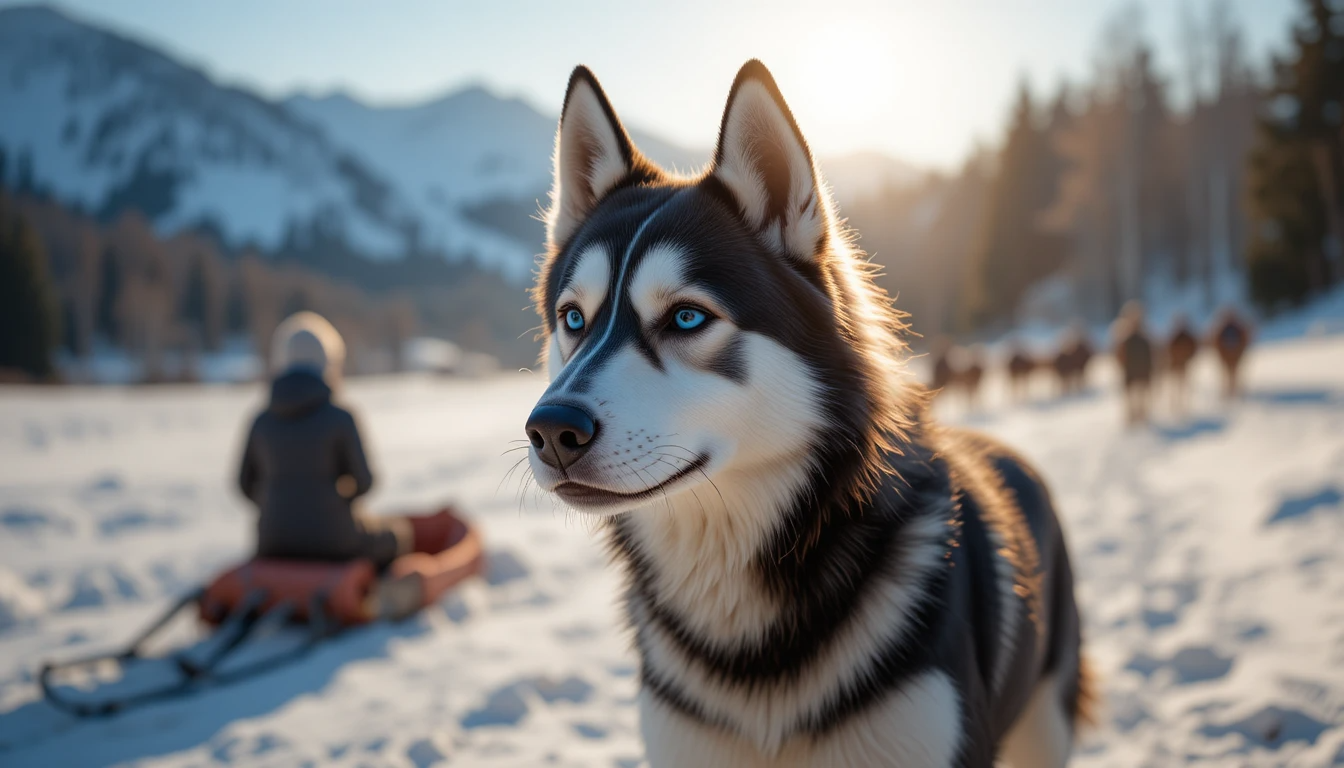
The Siberian Husky is a medium-sized Arctic sled dog that needs more than two hours of hard exercise every day, sheds enormously twice a year, will escape almost any ordinary garden, and in most cases can never be trusted off the lead. It is friendly to the point of uselessness as a guard dog, rarely aggressive, and extremely difficult to live with if your life does not already suit it.
That is the honest summary, and it is why husky rescues in Britain stay full. A well-bred Kennel Club registered puppy typically costs around £900 to £1,000 from a breed-club breeder, and the PDSA puts lifetime ownership at over £17,000. This page covers what the breed is actually like in a British house with a British garden and a British summer, rather than what it looks like in photographs.
Siberian Husky at a glance
| Point | Detail for UK owners |
|---|---|
| Kennel Club group | Working |
| Height | Dogs roughly 53.5 to 60 cm; bitches roughly 50.5 to 56 cm |
| Weight | Dogs about 20 to 27 kg; bitches about 16 to 23 kg |
| Lifespan | Commonly 12 to 14 years |
| Exercise | Two hours minimum daily as an adult, most of it off-property |
| Grooming | Brush several times a week; daily during a coat blow |
| Shedding | Very heavy, twice yearly, plus constant background shedding |
| Off-lead | Usually not safe; assume lead or secure field only |
| Typical puppy price | Around £900 to £1,000 from a breed-club breeder |
| Insurance | Often around £20 to £35 a month for lifetime cover |
| Lifetime cost | PDSA estimate: over £17,000 |
| Health screening | BVA/RKC eye scheme; BVA/RKC hip scheme as best practice |
| Breed Watch | Category 2 – some points of concern flagged |
| Suits | Runners, cyclists, canicross people, secure rural homes |
| Does not suit | Full-time office workers, small gardens, first-time owners wanting an easy dog |
Siberian Husky, Alaskan Malamute and Alaskan Husky are not the same dog
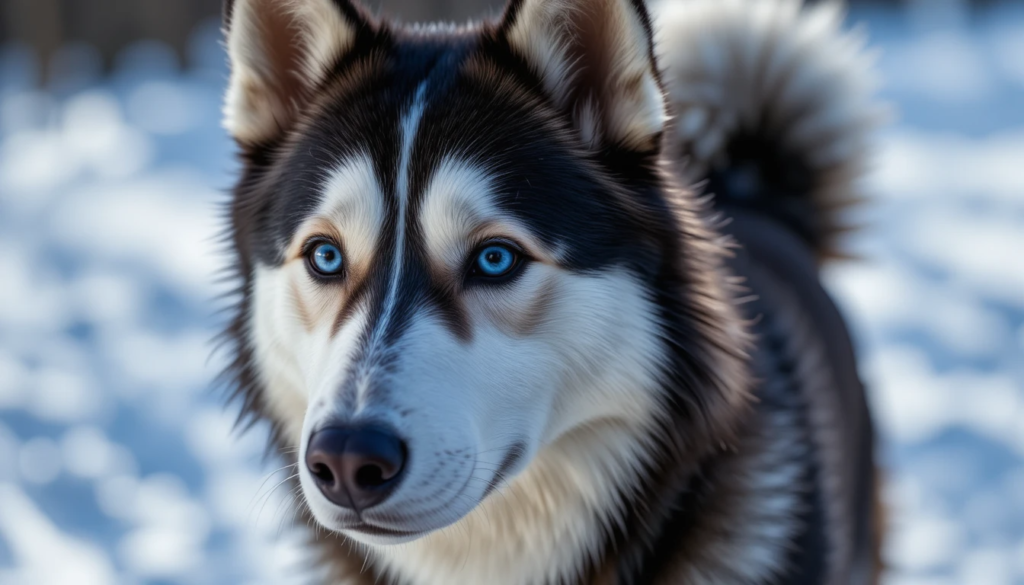
These three get muddled constantly, including by sellers. Only two of them are recognised breeds. The Alaskan Husky is not a breed at all: it is a working crossbred type bred purely for speed and stamina in sled racing, with no breed standard and no Kennel Club registration. If an advert offers you a Kennel Club registered Alaskan Husky, something is wrong.
| Siberian Husky | Alaskan Malamute | Alaskan Husky | |
|---|---|---|---|
| Recognised breed | Yes, KC Working group | Yes, KC Working group | No – a working type |
| Built for | Speed and endurance over distance | Heavy freight hauling | Racing performance only |
| Typical adult weight | 16 to 27 kg | Roughly 34 to 38 kg and often more | Highly variable |
| Eyes | Blue, brown, or one of each | Brown only under the standard | Any |
| Tail carriage | Carried in a sickle curve when alert | Carried over the back like a waving plume | Variable |
| Dog-to-dog tolerance | Generally sociable, bred to work in teams | Often far less tolerant of same-sex dogs | Variable |
| Prey drive | High | High | High |
The practical difference for a buyer is size and strength. A Malamute is a substantially heavier dog and considerably harder to physically hold if it decides to chase something. Both are Arctic breeds with the same fundamental heat and containment problems.
What the Kennel Club breed standard is describing
The breed standard exists to describe a functional sled dog, not a pet, and reading it that way explains most of the behaviour. Every physical feature is there for pulling a light load a long way in extreme cold.
- Moderate size. The Siberian is deliberately the lightest and fastest of the sled breeds. Oversized, heavy-boned dogs are a fault, not a bonus, whatever a seller tells you.
- Double coat. A dense insulating undercoat under a straight, weather-resistant topcoat. This is the source of both the shedding and the heat problem.
- Almond eyes, set slightly obliquely. Blue, brown, one of each, or parti-coloured are all equally acceptable. Blue eyes are not rare, not more valuable, and no indication of quality.
- Effortless gait. Judges look for a smooth, seemingly tireless movement. That is the same engine that makes a loose husky run for miles rather than come back.
- Friendly, outgoing temperament. The standard explicitly notes the breed does not display the possessive or suspicious qualities of a guard dog. A husky that barks at intruders is unusual.
Temperament: friendly to everyone, obedient to nobody
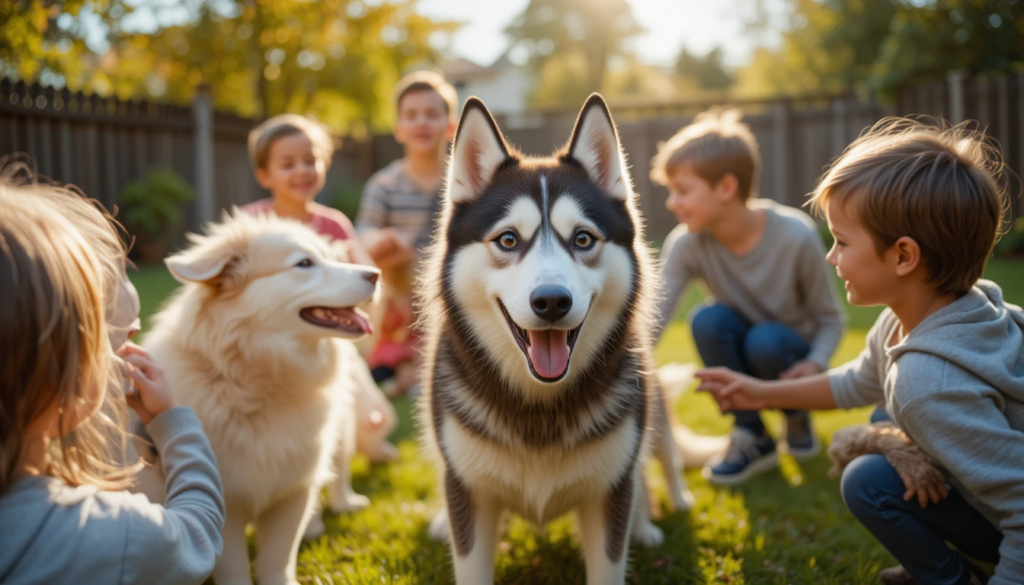
Huskies are genuinely sociable dogs. They tend to greet strangers with delight, they usually get on with other dogs because they were bred to work in teams, and outright aggression towards people is uncommon and untypical. This is a large part of the appeal, and it is real.
What they are not is biddable. Breeds like Border Collies and retrievers were selected for hundreds of years to look at a handler and await instruction. Sled dogs were selected to keep going forward, make their own decisions about footing and route, and not stop just because a human said so. That independence is intelligence of a different shape rather than an absence of it, and it is worth understanding how canine intelligence is actually measured across breeds before you conclude a husky is being stupid. It is not. It has simply weighed your request and declined.
They are also loud in an unusual way. Huskies bark relatively little but howl, yowl and produce a rising conversational noise that carries. In a terraced house or a flat with shared walls this becomes a neighbour problem quickly, particularly combined with separation anxiety.
Escaping is not a training failure, it is the breed working correctly
This is the single most underestimated issue. A standard 1.2 m UK garden fence is not a barrier to a fit adult husky. They climb, they dig, they scale chain link like a ladder, they slip collars, and a great many learn to work door handles and gate latches. Owners routinely describe a dog that had never shown any interest in the fence clearing it on the first occasion a cat appeared on the other side.
Containment has to be designed rather than assumed. If you are not willing to do the following before the dog arrives, do not get the dog.
- Fencing at least 1.8 m high, solid and in good repair, with no wheelie bins, log stores, sheds or raised beds within jumping distance of it.
- An anti-dig barrier: paving slabs, buried wire mesh, or an L-footer turned inwards along the base of the whole run.
- Self-closing, latched gates with a bolt the dog cannot nose open, ideally padlocked.
- A double-gate airlock at the main entrance if the garden opens onto a road.
- Never leaving the dog loose in the garden unsupervised for long periods, which is where most escapes begin.
- A microchip with genuinely current contact details. Microchipping is a legal requirement for dogs in the UK, and an out-of-date chip is the commonest reason a found husky is not reunited.
Recall: why most UK husky owners never go off lead
Assume you are buying a dog that will spend its life on a lead in public. Some huskies do develop reliable recall in enclosed spaces; very few are safe loose in open countryside, and the breed clubs and rescues are consistent in advising against it. The combination of high prey drive, enormous stamina and no instinct to check in with a handler means a husky that decides to go can be several miles away before it slows down, crossing roads and livestock fields on the way.
There is also a legal edge to this in Britain. Under the Dogs (Protection of Livestock) Act a farmer may in certain circumstances shoot a dog worrying sheep, and you can be prosecuted. A loose husky in sheep country is a serious risk to the sheep, the dog and your bank balance. The practical answer most owners land on is a long line for open ground and paid access to a secure enclosed dog field, which are now widely available across the UK for roughly £10 to £20 per half-hour session.
Exercise: two hours minimum, and what actually counts
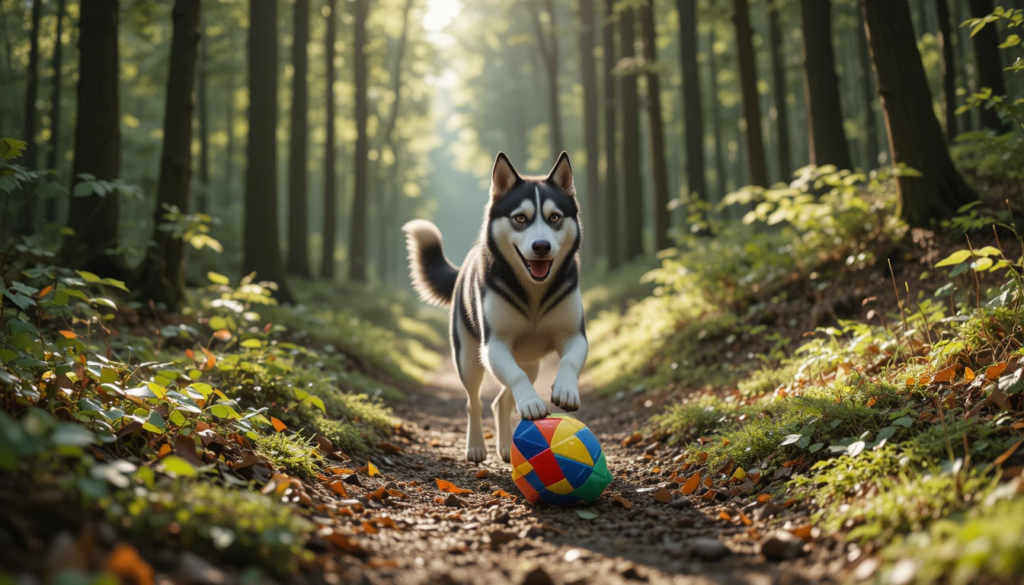
The PDSA and the Kennel Club both put the requirement at more than two hours daily for an adult. The important detail is that a slow lead walk round the block does not discharge it. This is an endurance athlete; it needs to move at pace and it needs to use its head.
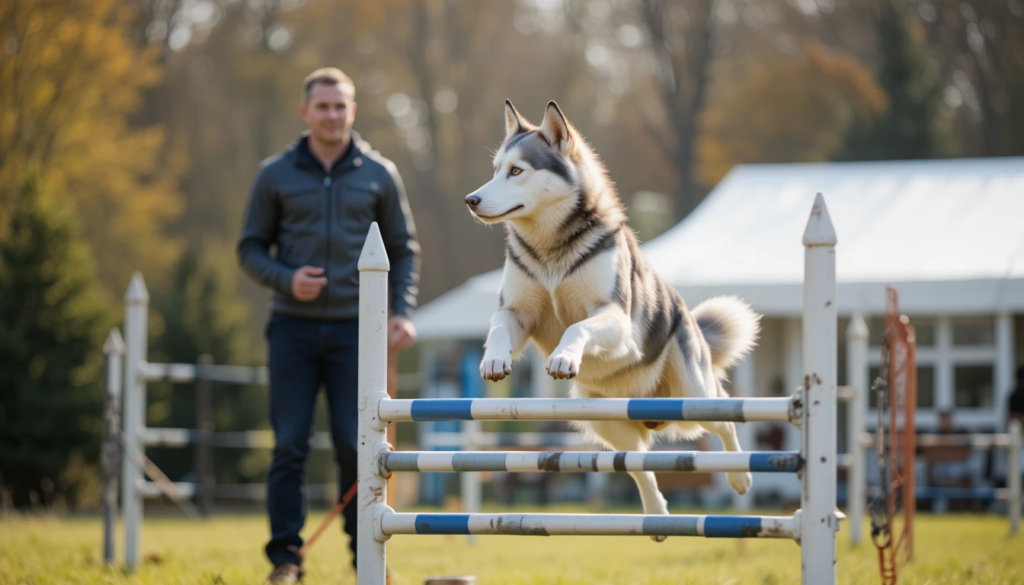
- Canicross. Running with the dog in a harness and bungee line. This is the single best fit for the breed and there is an established UK club scene with organised events autumn through spring.
- Bikejoring and scootering. Same principle with a bike or dog scooter. Excellent for burning energy, and the breed enjoys it enormously.
- Rig and sled work. UK dryland rallies run on forest tracks in the colder months. Not something to attempt without joining a club first.
- Scentwork and puzzle feeding. Not a substitute for physical work but it takes the edge off, and a bored husky is a destructive one.
- Hiking on a long line. Good, but factor in that you are physically anchored to a dog that wants to pull.
Puppies are the exception. Do not run a husky puppy. Growth plates in a large breed do not close until somewhere between twelve and eighteen months, and forced repetitive exercise before that point is associated with joint damage. Build distance gradually and take veterinary advice on when to start.
British summers are harder on huskies than most buyers expect
A dog insulated for Siberian winters does not shed that insulation because it now lives in Kent. Huskies cope with UK cold effortlessly and struggle in heat, and English summers have been producing more days above 25C. Heatstroke in dogs can be fatal and develops fast.
Practical management is not complicated but it is non-negotiable: walk early morning and late evening in summer, skip the middle of the day entirely on hot days, check the pavement with the back of your hand for five seconds before you set out, carry water, and never leave the dog in a car or a conservatory. Paddling pools and cool mats genuinely help. Do not use a wet towel laid over the back, which can trap heat against a double coat.
Signs that need immediate action – move the dog somewhere cool, wet it with cool (not ice-cold) water, and ring a vet:
- Heavy, frantic panting that does not settle when the dog stops moving
- Bright red or very dark gums and tongue
- Thick, ropey drool
- Wobbling, staggering or reluctance to stand
- Vomiting or diarrhoea after exertion in heat
- Collapse or any loss of awareness – this is an emergency
Shedding, the coat blow, and why you must not clip a husky
Huskies shed year-round at a low level and then twice a year they blow coat, releasing the entire undercoat over roughly two to four weeks. The volume is genuinely shocking to new owners. Expect to fill carrier bags. Expect fur in food, in the washing machine, on work clothes, and embedded in car upholstery for the life of the dog. A decent vacuum, an undercoat rake and a high-velocity dryer are not luxuries.
Brushing several times a week normally, and daily through a blow, is the minimum. What you must not do is shave the dog to keep it cool. The double coat insulates in both directions and also protects against sunburn; clipping it removes that protection, and the coat frequently grows back patchy and permanently altered in texture. If a groomer offers to shave your husky for the summer, find a different groomer.
One related point that surprises people: the tail is functional, not decorative. Sled dogs curl the tail over the face when sleeping in cold to warm the air they breathe, which is one of many jobs a tail does – there is more on what dogs actually use their tails for if you are curious.
Health screening: what to demand before you hand over money
The Siberian Husky is a reasonably robust breed but it has known problems, and the Kennel Club places it in Breed Watch Category 2, meaning some points of concern have been identified for judges. Registration alone tells you nothing about health testing, so you must ask for the certificates yourself.
- Eyes – BVA/RKC/ISDS Eye Scheme. This is the recommended minimum. Hereditary cataract and other inherited eye conditions occur in the breed. Certificates are dated and need to be current, not from five years ago.
- Hips – BVA/RKC Hip Dysplasia Scheme. Listed as best practice. Ask for the numerical hip score of both parents and compare it against the breed median, which the Kennel Club publishes. Lower is better.
- Genetic diversity. The Kennel Club specifically flags this. Ask about the coefficient of inbreeding and expect it to be at or below the breed average.
- Epilepsy and skin conditions occur in the breed. There is no screening test, so ask directly and honestly about what has appeared in the line.
A breeder who becomes defensive when asked about health testing has told you what you need to know. The Siberian Husky Club of Great Britain is blunt about this and about internet adverts, pet shops and unregistered litters, all of which it advises avoiding outright.
What a Siberian Husky actually costs in the UK
Purchase price is the small part. The figures below are typical ranges rather than quotations, and vary considerably by region, with London and the South East at the top end.
| Cost | Typical UK figure | Notes |
|---|---|---|
| Puppy from a breed-club breeder | £900 to £1,000 | The Siberian Husky Club of GB guide price |
| Rescue adoption fee | Commonly £200 to £400 | Usually neutered, chipped and vaccinated already |
| Initial vaccinations course | £70 to £120 | Plus annual boosters afterwards |
| Neutering | £200 to £450 | Discuss timing with your vet, not with the internet |
| Microchipping | £10 to £30 | Legally required; often already done |
| Insurance, lifetime cover | Roughly £20 to £35 a month | Rises steeply with age; one comparison site averages about £24 |
| Food | £40 to £70 a month | Huskies are famously efficient feeders for their size |
| Routine preventative care | £15 to £25 a month | Worming, flea treatment, dental |
| Grooming kit or professional groom | £60 upfront, or £40 to £60 a session | Undercoat rake, slicker, high-velocity dryer |
| Secure dog field hire | £10 to £20 per half hour | Realistically a weekly cost for this breed |
| Fencing upgrade | £800 to £3,000 one-off | The cost nobody budgets for |
| Daycare or dog walker | £15 to £25 a day | Essential if you work away from home |
| PDSA lifetime estimate | Over £17,000 | Minimum £105 a month after setup costs |
| Hip dysplasia treatment if uninsured | £3,000 to £7,000 | Why lifetime cover matters for this breed |
Take lifetime insurance rather than an annual or time-limited policy. Hip dysplasia and cataracts are both chronic and both expensive; a time-limited policy stops paying after twelve months and you carry the rest.
Why so many huskies end up in British rescue
Breed-specific husky rescue exists in the UK for a reason. The Siberian Husky Welfare Association was founded in 2007 specifically because so many unregistered huskies needed rehoming, and its predecessor group was already rehoming around seventy dogs a year by 2006. Blue Cross has reported that abandoned husky and malamute numbers have been rising.
The pattern is depressingly consistent. Someone sees a striking dog on screen, buys a puppy on impulse from an internet advert, and discovers at around ten to eighteen months that the adorable fluffy thing has become a powerful adolescent that destroys the kitchen when left, escapes the garden weekly, cannot be walked off lead, howls at the neighbours and needs two hours of work a day the owner has not got. The dog is not faulty. It was never a mismatch the dog chose.
An adult rescue husky is worth serious consideration precisely because of this. You get a dog whose adult size, temperament and quirks are already known, usually assessed by people who know the breed, and you skip the destructive adolescent phase. Breed rescues are also honest with you in a way a puppy seller is not.
Who should not get a Siberian Husky
This is the section most breed profiles leave out. Do not buy this breed if any of the following describe you:
- You work full time away from home. Huskies are prone to separation anxiety and are destructive when bored and alone. Eight hours a day on their own does not work.
- You have a small or ordinarily fenced garden and no budget to rebuild it to 1.8 m with dig protection.
- You want a dog you can let off the lead on walks and in parks. Assume you cannot.
- You rent, or live in a flat, or share walls closely with neighbours. The howling and the shedding are both serious tenancy problems.
- You have small pets – cats, rabbits, chickens. The prey drive is real and it is not reliably trainable away.
- Anyone in the house is house-proud, or asthmatic, or unable to tolerate fur on everything they own.
- You want a guard dog. A husky will show a burglar where the valuables are and ask to be stroked.
- You are physically unable to hold a strong 25 kg dog that has decided to lunge at a squirrel.
- You want an obedient dog, or your idea of a good dog is one that does as it is told first time.
- You are buying primarily because of blue eyes or the way it looks. This is the reason the rescues are full.
If you want an active, intelligent working dog that is genuinely biddable and can be trusted off lead, a gundog breed is a far better fit – the Nova Scotia Duck Tolling Retriever is worth a look if you want energy and brains without the containment and recall problems.
If you still want one, do this before you buy
- Contact the Siberian Husky Club of Great Britain and speak to people at a show or a dryland race before you contact any breeder. The club advises finding breeders this way rather than online.
- Ignore internet adverts and pet shops entirely. Unregistered litters usually mean corners cut on health testing.
- Ask for BVA eye certificates and hip scores for both parents, and check the hip score against the published breed median.
- See the puppy with its mother, at the breeder’s home, more than once. Never accept a meeting in a car park or a delivery.
- Expect the breeder to interrogate you. A good one will refuse buyers and will put a return clause in the contract.
- Rebuild the fencing before the puppy arrives, not after the first escape.
- Arrange lifetime insurance from day one, before any condition can be excluded as pre-existing.
- Find your canicross or sledding club, and your nearest secure dog field, in the first month.
- Sort out the days you are away from home. Book the walker or daycare before you need them.
- Seriously price up an adult from a breed rescue as an alternative. It is often the better decision.
Feeding is straightforward by comparison – huskies famously do well on surprisingly modest quantities for their size, a legacy of being bred to travel far on little. Stick to a complete food appropriate to life stage, split into two meals, and be careful with human food and shellfish in particular, as some are riskier than owners assume; see whether dogs can safely eat clams and other shellfish for an example of why it pays to check first.
None of this is meant to put you off a breed that, in the right home, is affectionate, funny, spectacularly good company and a genuine athletic partner. It is meant to make sure you are the right home. The huskies in rescue this month all belonged to someone who was sure they were.
Regular brushing several times a week is recommended to manage shedding. Occasional baths, nail trimming, ear cleaning, and dental care maintain hygiene and overall comfort.
A balanced diet rich in protein, omega fatty acids, vitamins, and minerals supports energy, coat health, and muscle maintenance. Portion control prevents weight gain and digestive issues.
Daily, extensive exercise like running, hiking, sled pulling, or interactive play is essential to prevent boredom and hyperactivity and to maintain physical and mental well-being.
They are social, playful, and loyal. With early socialization and consistent training, they adapt well to family life and enjoy companionship with both adults and children.
Huskies may be prone to hip dysplasia, eye problems, or skin conditions. Regular vet care, proper nutrition, and exercise help prevent serious health concerns and ensure longevity.