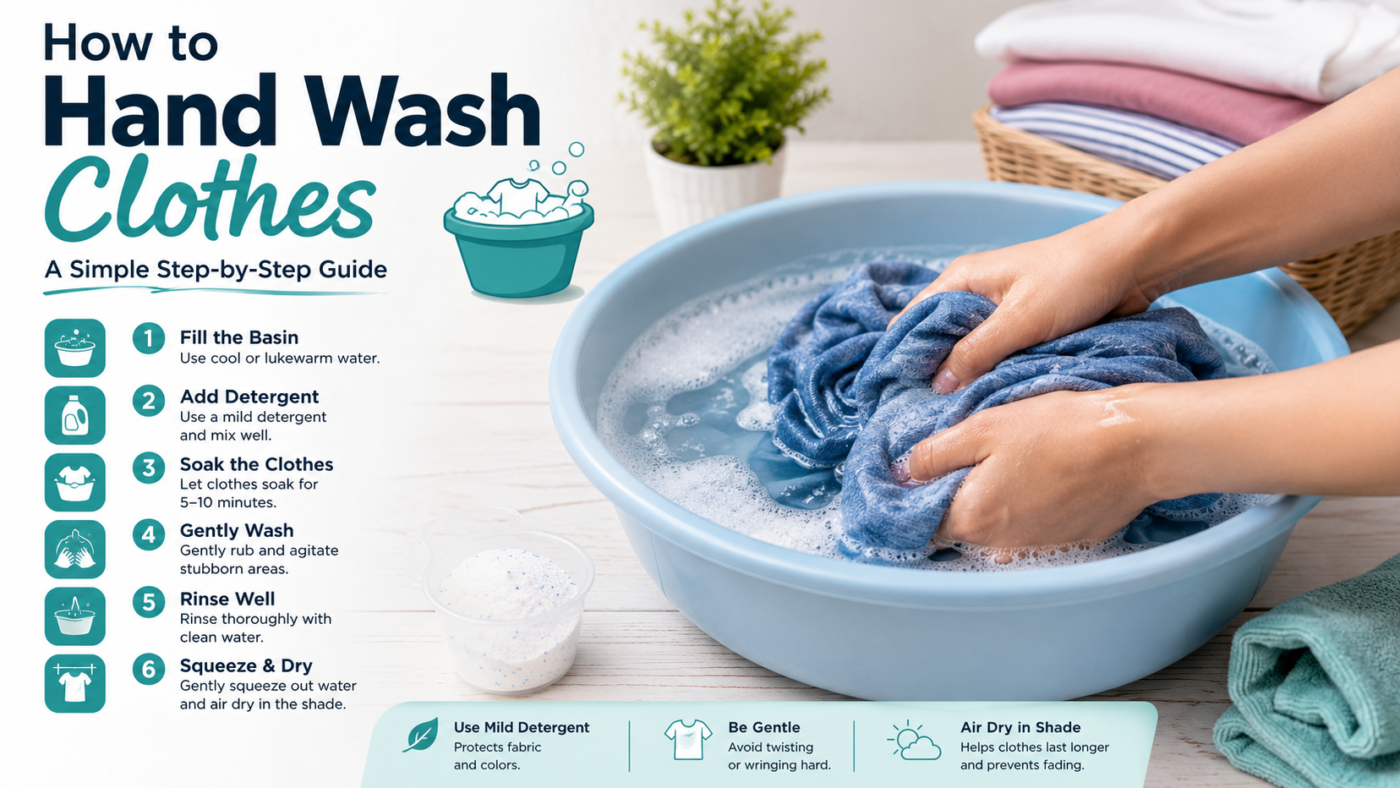
Knowing how to hand wash clothes properly protects delicate fabrics that a washing machine can ruin. Wool jumpers, silk blouses, and lace lingerie all last longer with gentle hand washing. This guide walks you through water temperature, detergent choice, and drying tips for every fabric type. You’ll also find a quick chart and answers to common questions below.
Quick Reference: Hand Washing by Fabric Type
Use this chart as a starting point, then check the garment’s care label for any specific instructions.
| Fabric | Water Temperature | Detergent | Soak Time |
|---|---|---|---|
| Wool | Cold to lukewarm | Wool-specific, enzyme-free | 5-10 minutes |
| Silk | Cold | Mild, pH-neutral | 5 minutes |
| Cotton | Lukewarm to warm | Standard liquid detergent | 15-20 minutes |
| Linen | Lukewarm | Standard liquid detergent | 10-15 minutes |
| Lace and lingerie | Cold | Mild, enzyme-free | 5 minutes |
| Synthetic blends | Cold to lukewarm | Standard liquid detergent | 10 minutes |
Key Takeaways
- Check the care label before you hand wash any garment.
- Use cold or lukewarm water for most delicates.
- Never wring wool or silk; press out water instead.
- Rinse until the water runs clear of soap.
- Dry flat on a towel, away from direct heat and sunlight.
How do you hand wash clothes? Fill a clean basin with cool water and a small amount of mild detergent. Submerge the garment and gently swish it for a few minutes. Rinse thoroughly, press out excess water without wringing, then lay the item flat to dry.
When Should You Hand Wash Clothes?
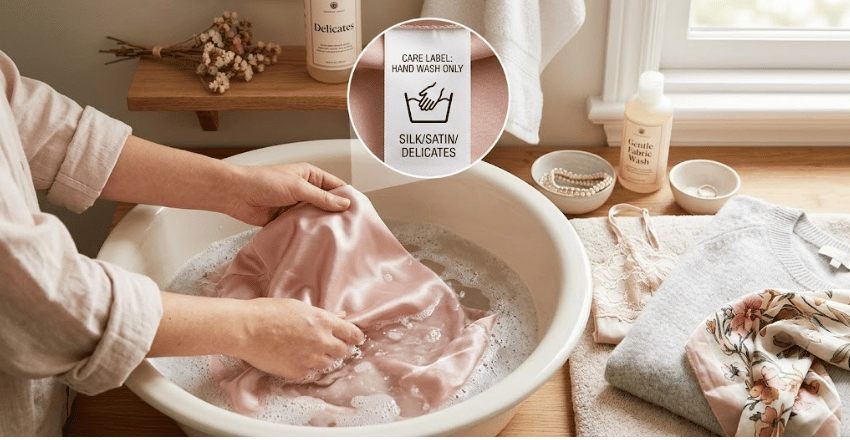
Check the label first. A hand-in-a-basin icon indicates that machine washing can cause damage. Hand wash wool, silk, lace, and anything with delicate trims or beading. It’s also the safer choice for swimwear elastic, bra cups, and hand-knitted items.
A satin skirt outfit, for example, holds its sheen far longer with gentle hand washing than a machine cycle. The same goes for suede accents on jackets or bags, though suede needs its own care routine rather than water.
What You Need to Hand Wash Clothes
Gather a clean basin, sink, or bathtub, plus a mild detergent made for delicates. Keep a soft towel nearby for blotting excess water. A soft-bristled brush helps lift stains on sturdier fabrics like cotton or linen.
- A basin, sink, or clean bathtub
- Mild or wool-specific detergent
- A soft towel for drying
- A soft brush for stubborn stains
Rinse the basin before you start. Old soap residue or cleaning product can transfer onto clean clothes and leave marks. A quick rinse only takes a few seconds and protects the fabric from unexpected stains.
How Often Should You Hand Wash Clothes?
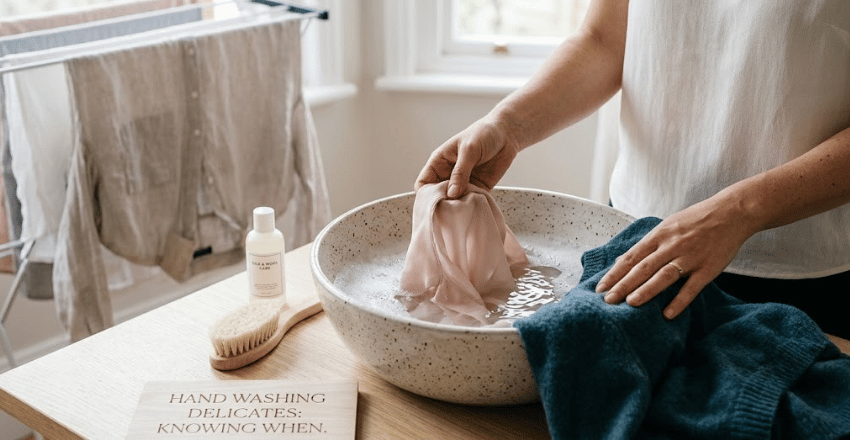
Delicates like silk blouses or wool jumpers usually need a wash every three to five wears, unless they’re visibly dirty or smell of sweat. Frequent hand washing wears down fibres faster than you’d think. Spot cleaning small marks between washes helps keep items fresh longer without full immersion.
Learning how to hand wash clothes the right way also means knowing when to skip it. Brushing off dust or airing a garment outdoors can refresh it without any water. Save full washing for genuine dirt, odour, or stains that brushing can’t fix.
How to Hand Wash Clothes: Step-by-Step
- Read the care label and sort clothes by colour and fabric.
- Fill a clean basin with cool or lukewarm water, based on the chart above.
- Add a small amount of mild detergent and mix until it dissolves.
- Submerge the garment and gently press soapy water through the fabric.
- Let it soak for the time listed in the chart above.
- Treat stains by rubbing gently with a little extra detergent.
- Drain the soapy water and refill with clean water to rinse.
- Rinse until no more suds appear.
- Press out excess water gently. Don’t wring or twist the fabric.
How to Dry Handwashed Clothes?
Lay the garment flat on a dry towel, then roll the towel up to absorb extra moisture. Unroll it and reshape the item while it’s still damp to match its original size. Dry flat on a rack or another towel, away from direct sunlight and radiators.
If you’re heading off with a full bag, our festival essentials list covers how to pack and refresh clothes when a washing machine isn’t an option.
Hand Washing vs Machine Washing

A washing machine agitates and spins clothes at speed, which is fine for sturdy cotton but harsh on delicate fibres. Hand washing gives you full control over pressure, water temperature, and soak time. It also uses less water and energy per garment, or even per pair.
That said, hand washing takes more time and effort than tossing clothes in a machine. Save it for the pieces that genuinely need gentle treatment: silk, wool, lace, and anything with beading or embellishment. Everything else can usually go on a delicate machine cycle instead.
Common Handwashing Mistakes to Avoid
Using Water That’s Too Hot
Hot water shrinks wool and fades colour fast. Stick to the temperatures in the chart above. If you’re unsure, cooler water is always the safer choice.
Wringing or Twisting Fabric
Wringing stretches fibres and distorts a garment’s shape. Press water out gently between your palms instead. A rolled towel does the heavy lifting for you.
Skipping the Rinse
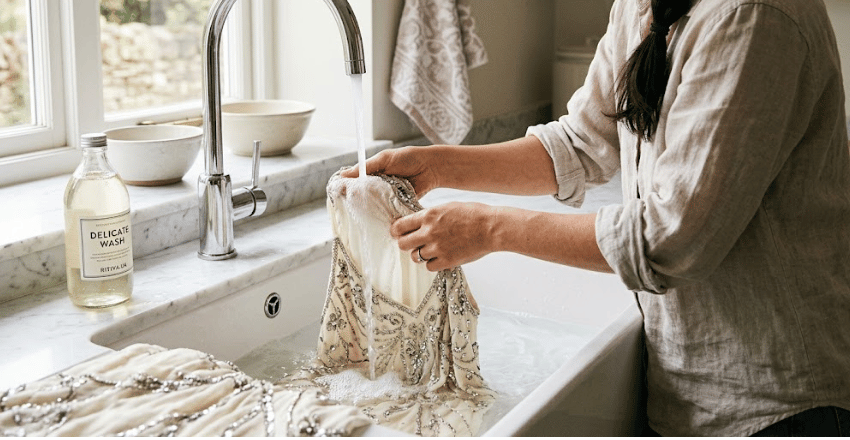
Leftover detergent stiffens fabric and can irritate skin. Rinse until the water runs completely clear. This step matters as much as the wash itself.
Special-occasion pieces need the same care. Whether it’s a slip dress or a statement look inspired by Met Gala-style fashion, handwashing helps keep beading, sequins, and delicate seams intact.
Now that you know how to handwash clothes properly, keep the rest of your wardrobe in shape, too. Check out our guide to cleaning suede shoes and bags. Or browse writiva. uk’s fashion section for more care tips before your next big event.
If you want to learn about Wardrobe Refresher, visit our Lifestyle category.
FAQ
Plain water removes some dirt, but detergent lifts oils and sweat far better. A small amount of mild, enzyme-free detergent is enough for most garments.
Most fabrics need 5 to 20 minutes, depending on the material. Delicates like silk need only a few minutes, while cotton can soak for longer.
Yes, for wool, silk, and lace. Hand washing avoids the agitation and spinning that stretch fibres, fade colour, and warp delicate shapes.
Drain the soapy water, refill with clean water, and swish gently. Repeat until the water stays clear and no suds remain.
Yes. Use cold or lukewarm water with a wool-specific detergent, soak briefly, then gently press out the water, and dry the jumper flat to keep its shape.