Garlic is one of the most widely used ingredients in kitchens around the world, cherished for its robust flavor, aroma, and numerous health benefits. From enhancing Italian pasta sauces and Asian stir-fries to adding depth to British roasted dishes, garlic elevates the taste of countless recipes.
Yet, many home cooks often struggle with a common question: how long does garlic last? Proper storage is essential not only to maintain its flavor and texture but also to ensure safety.
In this comprehensive guide, we’ll explore everything you need to know about storing garlic, whether in the fridge, pantry, on the counter, in a cupboard, submerged in olive oil, or left unpeeled so you can keep this kitchen staple fresh, flavorful, and ready for all your culinary creations.
How Long Does Garlic Last? Shelf Life by Storage Method
| Garlic Form | Storage Method | How long does garlic last | Tips & Notes |
| Whole bulb | Pantry / Cupboard / Counter | 3–5 months | Keep in a cool, dark, dry place with air circulation; avoid direct sunlight and heat sources. |
| Whole bulb | Fridge | Up to 6 months | Store in a paper bag or perforated container; it keeps cloves firm and reduces sprouting. |
| Unpeeled cloves | Counter / Room Temperature | 1 month | Avoid sunlight, moisture, and airtight containers; best for quick use. |
| Peeled cloves | Fridge | 1 week | Keep in an airtight container; avoid strong-smelling foods to prevent odor absorption. |
| Minced / Chopped garlic | Fridge | 1 week | Store in a sealed container; can freeze for extended storage. |
| Garlic in olive oil | Fridge | 2–3 weeks | Never store at room temperature; label with date; can freeze in portions for more extended storage. |
| Garlic in olive oil | Room Temperature | Unsafe | Botulism risk; must always refrigerate. |
Why Proper Garlic Storage Matters?
Garlic is a bulb, and like most vegetables, it is perishable. When stored improperly, garlic can sprout, dry out, become soft, or develop mold. These changes affect both the taste and texture of your dishes.
Beyond aesthetics, improperly stored garlic can also harbor bacteria, particularly if it’s submerged in oil without refrigeration, which may lead to botulism, a rare but serious risk. Understanding storage options allows you to keep garlic at peak freshness while reducing waste.
Understanding Garlic Shelf Life
The shelf life of garlic varies depending on several factors:
- Form: Whole bulbs, individual cloves, peeled cloves, or minced garlic all have different longevity.
- Temperature: Garlic reacts differently to heat, cold, and humidity.
- Moisture: Excess moisture can encourage mold growth, while arid conditions can cause cloves to shrivel.
- Light: Direct sunlight speeds up sprouting and deterioration.
Here’s a general overview:
| Garlic Form | Storage Method | Approximate Shelf Life |
| Whole bulb | Pantry / Counter / Cupboard | 3–5 months |
| Whole bulb | Fridge | Up to 6 months |
| Unpeeled cloves | Counter | 1 month |
| Peeled cloves | Fridge | 1 week |
| Minced/chopped garlic | Fridge | 1 week |
| Garlic in olive oil | Fridge | 2–3 weeks (never at room temperature) |
How Long Does Garlic Last in the Pantry?
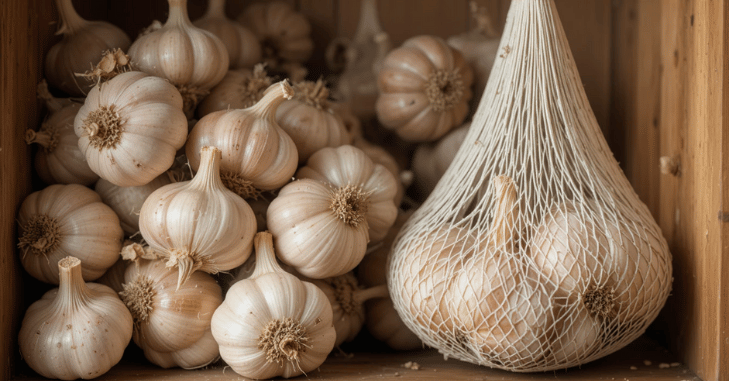
Storing garlic in a pantry or cupboard is the most common method for whole bulbs. A cool, dark, dry place with good air circulation is ideal. Avoid sealed plastic bags, as trapped moisture accelerates spoilage. Mesh bags, paper bags, or loosely woven baskets work best.
- Whole bulbs: Typically last 3–5 months.
- Tips: Inspect bulbs periodically. Remove any cloves that are soft, shriveled, or moldy to prevent affecting the rest of the bulb.
Pantry storage is excellent for everyday cooking because garlic remains firm and flavorful without refrigeration.
How Long Does Garlic Last on the Counter / at Room Temperature?
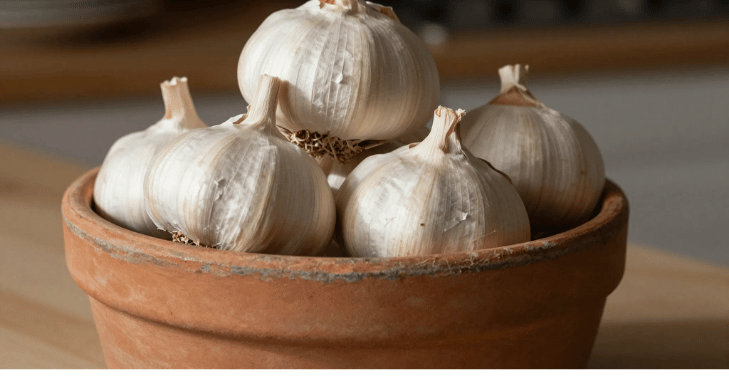
If you keep garlic on the kitchen counter, it will typically last for about one month, depending on the conditions. While room-temperature storage is convenient, it has some limitations. Garlic should be kept away from direct sunlight to prevent sprouting and stored in a cool, dry place to reduce the risk of mold.
Proper air circulation is also essential, so airtight containers are not recommended. Counter storage works best for whole bulbs you plan to use relatively quickly, whereas cloves used less often are better stored in the pantry or fridge.
How Long Does Garlic Last in the Fridge?
The fridge is generally better for peeled cloves or minced garlic, but whole bulbs can also be refrigerated if you live in a very hot or humid climate.
- Unpeeled whole bulbs: Up to 6 months in a paper bag or perforated container.
- Peeled cloves: About 1 week in an airtight container.
- Minced/chopped garlic: 1 week in a sealed container.
Pro tip: Keep garlic away from strong-smelling foods in the fridge, as it can easily absorb odors.
How Long Does Garlic Last in the Cupboard?
A cupboard functions similarly to a pantry. If it’s dark, cool, and dry, garlic stored in a cupboard can last 3–5 months. Avoid placing cupboards near heat sources, such as ovens or radiators.
For best results, store garlic bulbs in mesh or paper bags to allow air circulation, keep them in a single layer to prevent moisture buildup, and inspect them weekly for any signs of sprouting or decay.
How Long Does Garlic Last in Olive Oil?
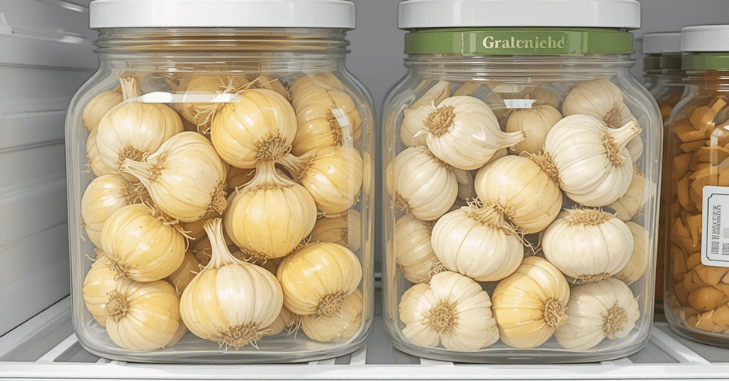
Garlic in olive oil is delicious for cooking, but comes with safety considerations:
- At room temperature, garlic in oil can develop dangerous botulism bacteria. Never store at room temperature.
- In the fridge, garlic in oil lasts 2–3 weeks. Store in a clean, airtight jar.
- For more extended storage, freeze garlic in oil in small portions using ice cube trays.
Tip: Label the container with the date to ensure it’s used safely within the recommended timeframe.
How Long Does Unpeeled Garlic Last in the Fridge?
Unpeeled garlic in the fridge is ideal if you want to extend its shelf life without losing flavor. Appropriately stored in a paper bag or breathable container, unpeeled bulbs can last up to 6 months. This method keeps cloves firm and reduces the risk of sprouting compared to room-temperature storage.
Pro tip: Avoid plastic bags in the fridge, as trapped moisture can cause cloves to soften or mold.
Signs Your Garlic Has Gone Bad
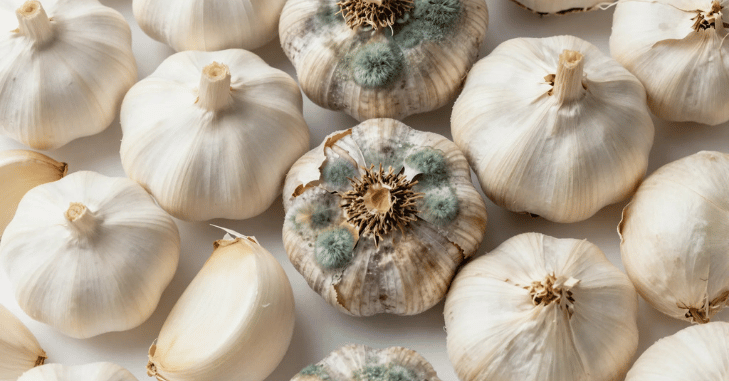
It’s important to know when garlic is no longer safe or flavorful. Common signs include:
- Sprouting: Green shoots indicate the garlic is still edible but more bitter.
- Soft or shriveled cloves: Dry or soft cloves are past their prime.
- Discoloration: Yellow, brown, or black spots indicate decay.
- Mold: White or gray mold on the skin or cloves means it should be discarded.
- Off smell: A sour or musty smell indicates spoilage.
If you notice any of these signs, remove affected cloves immediately to protect the rest of your garlic supply.
Tips to Extend Garlic Shelf Life
To extend the shelf life of garlic, it’s essential to keep it dry, as moisture accelerates decay. Avoid storing whole bulbs in airtight containers, since proper air circulation helps prevent mold. Separate cloves from any damaged bulbs to stop spoilage from spreading.
For long-term storage, minced or peeled cloves can be frozen for several months. Using paper or mesh storage is also recommended, as it prevents condensation that can lead to rot.
Creative Ways to Store Garlic
- Braiding: Traditional method of hanging bulbs in braids in a cool, dark area.
- Pickling: Preserves cloves in vinegar for several months.
- Freezing in oil: Chop garlic, mix with oil, and freeze in portions.
- Roasting in bulk: Roasted garlic keeps in the fridge for up to 2 weeks and is perfect for spreading or cooking.
Cooking with Fresh vs Older Garlic
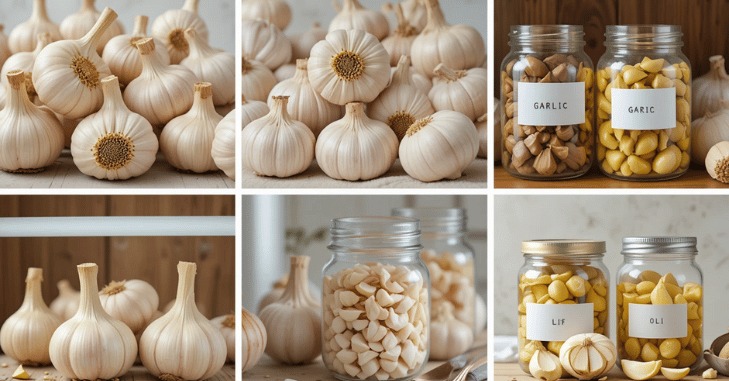
Fresh garlic has a strong, pungent flavor and a firm texture, making it ideal for raw applications like dressings or salsas. Older garlic may be softer and milder, better suited for slow cooking or roasting. Adjust your recipes based on garlic freshness to maintain the desired flavor profile.
Conclusion
Garlic may be a humble kitchen staple, but understanding how long garlic lasts under different storage conditions makes a real difference in freshness, flavor, and food safety. Whether stored in the pantry, cupboard, fridge, on the counter, or preserved in olive oil, each method affects garlic’s shelf life in its own way.
Whole bulbs last longest in cool, dry, well-ventilated spaces, while peeled or minced garlic should be refrigerated or frozen for best results. By following proper storage tips and recognizing signs of spoilage, you can reduce waste, maintain quality, and always keep fresh, aromatic garlic on hand to enhance everyday cooking.
Want to know about Easy Cheesy Leeks Recipe UK – Creamy One-Pan Dish Inspired by BBC Good Food & Jamie Oliver Check out our Food category.
FAQs
Garlic should not be stored with green sprouts from the top of the bulb. The cloves themselves should be tight and white or ivory after peeling; brown or mushy patches indicate aging and diminished flavor.
The bulbs can remain in the refrigerator or freezer for up to 6 months, and even longer, if the proper temperature, airflow, and container are used. This gives you plenty of time to flavor pasta, poultry, salad, and other dishes.
The first thing you should do when you enter your kitchen, if you’re going to use garlic in a meal, is take the back of your knife and chop or smash it. After that, give it ten minutes to sit.
To prevent mold from growing on garlic bulbs, store them in paper or mesh bags in a superb, dark location