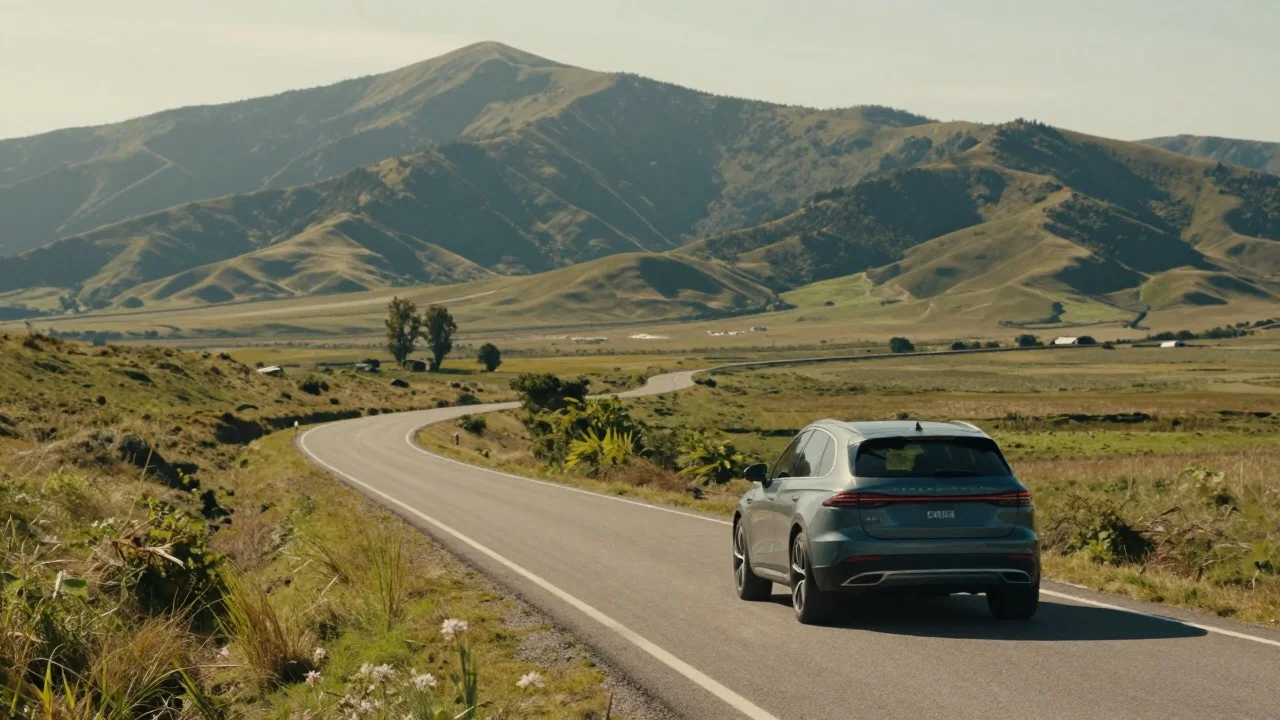
When most people think about rest, they imagine slowing down completely: sleeping late, clearing the calendar, spending a quiet weekend at home, or doing as little as possible. That kind of downtime can certainly help, but it does not always provide the mental reset we expect from it. Physical inactivity is not the same as mental rest, and sitting still does little to quiet a mind that is still replaying work problems, unfinished tasks, financial worries, or the endless stream of small responsibilities that build up during an ordinary week.
Sometimes, what the mind needs is not complete inactivity but a change of environment. That is where a road trip can be surprisingly effective. Driving somewhere unfamiliar introduces movement, novelty, flexibility, and just enough stimulation to pull attention away from the routines that often keep us mentally stuck. You are still active, but you are no longer operating within the same pattern of obligations. For many people, that combination can feel more restorative than simply staying home and trying to switch off.
Why Doing Nothing Does Not Always Feel Restful
There is a familiar frustration in reaching the end of a quiet weekend and realizing that you do not feel much more refreshed than you did on Friday evening. You may have technically rested, but your mind has remained in the same environment, surrounded by many of the same cues that are associated with everyday responsibilities. The laptop is still nearby, work notifications may still arrive, household jobs remain visible, and your usual routines are only a few steps away.
With fewer distractions, the mind can easily return to the very things you were trying to escape. Instead of relaxing, you may find yourself mentally rehearsing conversations, planning the week ahead, checking emails, scrolling through your phone, or worrying about tasks that still need to be done. A change of setting can interrupt that cycle far more effectively than simply removing activity.
A road trip creates that interruption almost automatically. Your attention shifts toward immediate, low-pressure decisions: where to stop, whether to take the scenic route, what to eat, which town looks worth exploring, or whether to continue driving for another hour. None of these choices is particularly demanding, yet together they give the mind something new to engage with. Rather than forcing yourself not to think about work, you naturally begin thinking about something else.
Novelty Can Make Time Feel Different
One of the strongest appeals of travel is novelty. Daily life is built around repetition: the same roads, the same rooms, the same shops, the same schedule and, often, the same sequence of decisions. Routine is useful because it makes life efficient, but it also means that much of the day passes without demanding much attention. When your surroundings are predictable, there is more mental space for familiar worries to take over.
Travel changes that dynamic. An unfamiliar landscape, a new town, a winding road through the countryside, or an unexpected stop at a roadside café requires you to notice what is happening around you. Your attention becomes more outward-facing. The experience feels richer because there is more to process, more to observe and more to remember.
This is one reason even a short trip can feel longer and more substantial than an ordinary weekend at home. Familiar days tend to blend together, while new experiences create clearer mental landmarks. You may barely remember what you did three Saturdays ago, yet still remember a small restaurant, a mountain view or a wrong turn from a trip years earlier.
Interestingly, it is often the unplanned moments that become the most memorable. A café discovered by accident, a viewpoint that was not on the itinerary, an unexpected conversation, or a detour that led somewhere better than the original destination can become the stories people continue telling long after the trip ends. Road travel creates more opportunities for those moments because not every part of the journey has to be predetermined.
The Freedom to Change Your Mind Matters
A major part of the appeal of a road trip is not simply where you are going, but the freedom to alter the plan. Many conventional holidays are surprisingly structured. Flights have fixed departure times, hotel reservations dictate where you need to be each evening, attractions operate on schedules, and restaurant bookings can divide the day into a series of deadlines. It is possible to spend a significant amount of money on a holiday only to discover that you have recreated the same time pressure you were trying to escape.
Road travel allows for more flexibility. You can leave later than expected, spend longer somewhere you like, skip a destination that no longer seems worthwhile, or take a route simply because it looks interesting. The ability to change your mind may seem like a small luxury, but it is one that everyday life rarely provides. Most working weeks are dominated by fixed commitments, appointments and deadlines. A trip that gives you back control over your time can therefore feel unusually liberating.
This is also one reason campervan and motorhome travel has become so appealing to people who value flexibility. Traditional road trips still require you to reach accommodation at a particular place, while travelling with your own sleeping space removes another layer of scheduling. For people who want to experience that style of travel without owning a vehicle, motorhome rental can provide a practical way to try a more flexible trip for a weekend or short break.
The attraction is not simply the novelty of sleeping in a vehicle. It is the ability to adjust the journey without reorganizing an entire chain of hotel bookings every time your plans change.
The Journey Itself Can Be Part of the Reset
Modern travel often treats the journey as something to minimize. We look for the fastest flight, the shortest connection and the quickest route because arriving sooner is generally considered better. Road trips operate differently. The journey is not merely something to tolerate before reaching the destination; it is part of the experience.
That slower transition can have its own value. As familiar streets turn into motorways, towns give way to open countryside, and the scenery gradually changes, everyday life begins to feel more distant. There is no abrupt jump from a normal working day into “holiday mode.” Instead, the mind has time to adjust.
Long stretches of driving can also create something that is increasingly rare: uninterrupted time without an expectation of productivity. You may listen to music, talk with someone travelling with you, watch the landscape change or simply sit with your thoughts without having to turn them into an action item. You are going somewhere, but you are not required to accomplish anything while getting there.
Of course, driving should never be romanticized at the expense of safety. Long distances, fatigue and heavy traffic can quickly turn a relaxing trip into an exhausting one. The restorative element comes from keeping the journey manageable rather than trying to cover the greatest possible distance in the shortest time.
You Do Not Need to Travel Far
A road trip does not have to involve crossing a country or spending two weeks on the road. In fact, making the trip too ambitious can easily undermine the reason for taking it in the first place. Driving for ten hours a day, rushing between destinations or attempting to see every attraction along a route simply replaces work-related pressure with travel-related pressure.
A short trip can be enough to break routine. Even two or three days in a different environment can create a meaningful sense of separation from normal life, particularly when the itinerary is deliberately kept light. Instead of measuring the success of the journey by the number of places visited, it can be more useful to think about how much space the trip gives you.
Choose a broad direction rather than planning every kilometre. Pick one or two places that genuinely interest you and allow the rest of the trip to develop around them. A quiet town a few hours away, a national park, a stretch of coastline or a rural route can provide just as much of a mental reset as a much longer journey.
The distance is not the important part. The break in routine is.
Leave Enough Space for the Unexpected
Planning is useful, particularly when it comes to safety, accommodation, parking rules, weather and fuel. But there is a point at which preparation begins to remove the very flexibility that makes road travel appealing. If every restaurant, stop, activity and hour of the day is predetermined, the trip becomes another schedule to manage.
Leaving some empty space creates room for discovery. You can stop when somewhere looks interesting rather than because it appears on a list. You can stay for another coffee, spend longer at a viewpoint or take an unplanned detour without feeling that you are falling behind. If a place turns out to be disappointing, you can simply move on.
This also removes some of the pressure people often place on themselves during holidays. There is a tendency to believe that expensive or limited vacation time must be “maximized,” which can result in overpacked itineraries and constant movement. Yet the moments that feel most restorative are often the least productive ones: a long lunch, an afternoon beside a lake, a quiet evening at a campsite or an hour spent doing nothing except watching the landscape change.
A Road Trip Is Not a Cure-All
It is important not to turn road travel into a simplistic solution for serious stress or burnout. A weekend away cannot fix an unsustainable workload, ongoing anxiety, relationship problems or other issues that require more direct attention. Travel can provide breathing room, but it does not automatically resolve the problems waiting at home.
A badly planned road trip can also be stressful in its own right. Traffic, unrealistic driving distances, arguments, poor sleep, mechanical problems and excessive scheduling can leave you more tired than when you started. The benefit comes from the style of travel rather than the fact that a car is involved.
Done well, however, a road trip offers a useful combination that ordinary weekends often lack: movement without urgency, stimulation without constant demands, and structure without a rigid timetable. It creates enough distance from routine for the mind to change gears without replacing one form of pressure with another.
Final Thought
If weekends spent doing very little are no longer leaving you refreshed, the answer may not be to rest harder. You may simply need a different kind of break.
Changing your surroundings, introducing a little novelty and giving yourself permission to travel without an overloaded itinerary can provide the mental separation that staying at home sometimes cannot. The trip does not have to be long, expensive or meticulously planned. It only needs to take you far enough outside your usual routine that your attention has somewhere new to go.
Sometimes the most effective form of rest is not sitting still. It is choosing a direction, leaving some space in the plan, and allowing the journey itself to become the reset.