


The Volkswagen T-Roc has a practical, well-finished interior for a compact SUV: a raised driving position, a digital instrument display, a touchscreen with Apple CarPlay and Android Auto, room for two adults in the back on shorter trips and a boot of around 445 litres in front-wheel-drive versions. Its weak spots have been cabin plastics on earlier cars (improved at the 2022 facelift) and a rear seat that is fine for children and average-height adults but tighter than a Skoda Karoq or VW Tiguan. The all-new second-generation T-Roc, revealed in 2025, moves the cabin on again with bigger screens and a larger boot.
Below is a section-by-section look at comfort, infotainment, materials, space and family usability, with notes on which generation and trim you are looking at, because that makes a real difference when you are buying new or used in the UK.
Which T-Roc are you looking at?
There are three broad versions of the T-Roc cabin on UK roads and forecourts, and most online reviews do not say which one they mean.
| Version | Years (approx.) | Cabin character |
|---|---|---|
| First generation, pre-facelift | 2017 to 2021 | Colour-coded dash panels, mostly hard plastics on the dashboard, screen set into the dash, older infotainment |
| First generation, facelift | 2022 to 2025 | Soft-touch dashboard top, freestanding touchscreen, touch-sensitive climate panel, digital dials standard |
| Second generation | From late 2025 | New platform with larger screens, revised controls and more boot space according to Volkswagen’s launch information |
If you are buying used, the facelift is the one most owners and reviewers consider the sweet spot for interior quality. If you are buying new, check the brochure for the exact specification of the current model, as equipment and trim names change between model years.
Comfort: seats, ride and noise
Front seats and driving position
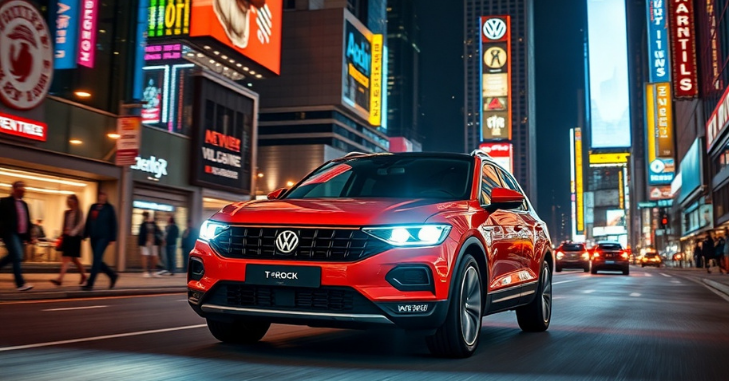
The T-Roc sits you higher than a Golf but not as high as a Tiguan, which many drivers find a good middle ground: easy to get in and out of, with a clear view forward. The seats have plenty of height and reach adjustment and the steering wheel adjusts for rake and reach on every version. Adjustable lumbar support, heated front seats and sportier bolstered seats appear on higher trims such as R-Line, so it is worth sitting in the exact trim before you buy if you have back problems.
Ride and refinement
Ride quality depends a lot on wheel size. Versions on smaller alloys with higher-profile tyres ride more gently over broken UK road surfaces, while R-Line cars on larger wheels and the performance T-Roc R feel firmer. At motorway speeds the cabin is reasonably quiet for the class, with some tyre noise on coarse surfaces. If comfort matters more than looks, ask for the smallest wheel option and take a test drive on a rough B-road, not just a smooth ring road.
Rear seat comfort
Two adults of average height fit in the back with enough knee room for short and medium journeys. Headroom is fine for most people despite the sloping roofline. The middle seat is narrow and has a raised floor section, so the T-Roc is best thought of as a four-seater for adults and a five-seater for a family with children. Rear air vents are fitted on many versions, which helps in summer.
Infotainment and technology

Touchscreen and smartphone connection
Facelifted first-generation cars use a freestanding touchscreen of around 8 inches on lower trims, with a larger navigation screen on higher trims. Apple CarPlay and Android Auto are available across the range, wireless on many versions, along with Bluetooth and USB-C sockets. The second-generation car moves to a larger central screen. Whatever the version, test the system yourself: some owners find the touch-sensitive climate controls and steering wheel buttons on recent Volkswagens less intuitive than physical switches.
Digital Cockpit
Volkswagen’s Digital Cockpit replaces analogue dials with a screen behind the steering wheel that can show speed, navigation, driver-assistance status and trip data. Facelift cars have it as standard, with a larger “Pro” version on upper trims. It is one of the features that makes the T-Roc feel more modern than some rivals of the same age.
Driver assistance and convenience
Depending on year and trim, you can expect autonomous emergency braking, lane assist, adaptive cruise control, parking sensors and a reversing camera, with keyless entry, wireless phone charging, a premium sound system and a 360-degree camera on higher specifications or option packs. The Euro NCAP rating is worth checking on the Euro NCAP website for the specific model year you are considering, as ratings and test protocols change over time.
Cabin materials and build quality

This is the area where the model year matters most. Early first-generation cars were criticised by many reviewers for hard, scratchy plastics across the dashboard, softened a little by colour-coded trim panels. The 2022 facelift added a padded, soft-touch top to the dashboard and a more upmarket look overall, although lower door panels and the centre console still use harder plastics, which is normal in this class.
- Entry trims: cloth seats, simpler trim inserts, smaller screen.
- Mid trims: upgraded upholstery, ambient lighting on many versions, larger wheels.
- Top trims: sports seats, part-leather or microfleece upholstery options, sportier detailing.
When viewing a used T-Roc, check the driver’s seat bolster for wear, the steering wheel rim for shine, and the touchscreen and climate panel for dead spots. These tell you more about how the car has been used than the mileage alone.
Space and boot capacity
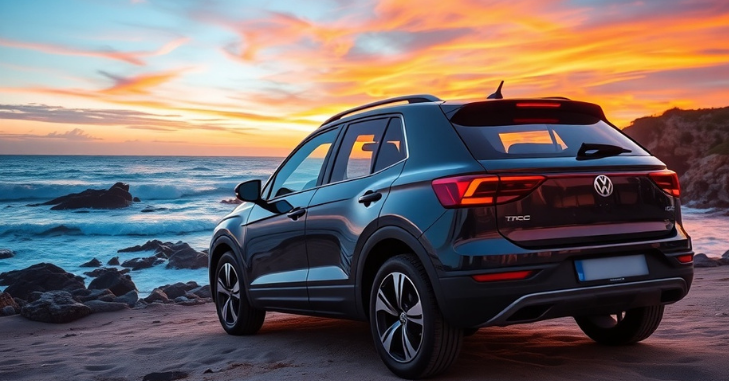
The first-generation T-Roc hatchback offers around 445 litres of boot space in front-wheel-drive form, which is competitive for a compact SUV and bigger than a Golf’s. Four-wheel-drive 4Motion versions lose some space to the rear suspension, and the T-Roc Cabriolet has a much smaller boot. Volkswagen says the second-generation model offers more luggage room than before. The rear seats split 60:40 and fold to create a longer load area, although the floor is not completely flat.
| Compared with | How the T-Roc cabin stacks up |
|---|---|
| VW Golf | Higher seating and a bigger boot, similar rear legroom |
| VW T-Cross | More upmarket feel and more power options; the T-Cross has a sliding rear bench |
| VW Tiguan | Noticeably smaller in the back and in the boot, but cheaper and easier to park |
| Skoda Karoq | The Karoq is roomier and more practical; the T-Roc feels more stylish |
| Kia and Renault compact SUVs | Closely matched on space; rivals often offer longer warranties or hybrid options |
Storage around the cabin is sensible: decent door pockets, cupholders in the centre console, a phone tray (with wireless charging on many trims) and a reasonably sized glovebox.
Family usability

For families with young children, the T-Roc works well. The rear doors open wide enough to lift a child seat in, ISOFIX points are fitted on the outer rear seats, and the raised seat height saves your back when buckling children in. The limitations are the narrow middle seat, which makes three child seats across the back impractical, and a boot that will take a folded pushchair and shopping but needs careful packing for a week-long holiday.
A quick family checklist for a test drive
- Bring your own child seats and fit them, including behind the driver’s seat set to your position.
- Put your pushchair in the boot with the parcel shelf in place.
- Connect your phone and try navigation and music through CarPlay or Android Auto.
- Adjust the climate controls while driving to see whether the touch panel suits you.
- Sit in the back behind a tall front passenger to check real-world knee room.
New drivers in the household may also find our guide to the Highway Code for learner drivers useful, as the T-Roc’s size and visibility make it a reasonably easy car to learn in.
Pros and cons of the T-Roc interior
| Pros | Cons |
|---|---|
| Raised, adjustable driving position that is easy to get in and out of | Earlier cars have hard, scratchy dashboard plastics |
| Digital Cockpit and smartphone mirroring make it feel modern | Touch-sensitive climate and wheel controls can be fiddly on the move |
| Boot of around 445 litres in front-wheel-drive form beats a Golf | 4Motion and Cabriolet versions have noticeably less luggage space |
| Comfortable for two adults in the back on most journeys | Narrow middle rear seat; not ideal for three across |
| Strong choice of trims and option packs | Ride is firmer on larger wheels and the T-Roc R |
Interior checks when buying a used T-Roc
A used T-Roc can be good value, but interior condition and equipment vary a lot between cars of the same age. Spend ten minutes on these checks before you talk about price:
- Confirm the specification: run the registration through the dealer’s records or ask for the original build sheet, so you know which screen, seats and driver aids are actually fitted.
- Test every screen function: navigation, Bluetooth, CarPlay or Android Auto, reversing camera and the Digital Cockpit display modes.
- Check the electrics: windows, heated seats, wireless charging pad, USB sockets and ambient lighting if specified.
- Look for damp: lift the boot floor and check for water around the spare wheel well, and feel the carpets in the footwells.
- Ask about software updates: infotainment glitches on recent Volkswagens are often addressed by updates at a franchised dealer, so service history matters.
- Smell the cabin: persistent smoke or pet odours are expensive to remove properly and affect resale.
If the car has been used as a family runabout, inspect the rear seat backs and door cards for scuffs from children’s shoes, and check that the ISOFIX covers and parcel shelf are present.
Living with it day to day
Small details make a difference over years of ownership. The high-set boot floor on many versions reduces the lip you lift shopping over, while the 60:40 split rear seat lets you carry a long item and still seat one passenger in the back. Check whether the car has a height-adjustable boot floor or a space-saver spare, as this affects both capacity and practicality on a long trip.
Who the T-Roc interior suits, and who should look elsewhere
The T-Roc suits couples, small families and drivers who want a Golf-sized car with a higher seat, a modern-looking dashboard and a strong resale reputation. It is less suited to families who regularly carry three people in the back or need a large boot every day, where a Karoq, Tiguan or a larger rival makes more sense. If you are cross-shopping, our breakdowns of the Kia K4 and the Renault Symbioz hybrid SUV cover two alternatives with different strengths on value and efficiency.
Bottom line on the Volkswagen T-Roc interior
The Volkswagen T-Roc offers a comfortable, modern cabin with a raised seating position, good technology and a boot that beats a Golf, making it a strong choice for couples and small families. Aim for a 2022-onwards facelift car if interior quality matters to you, test the touch controls on a real drive, and fit your own child seats and pushchair before you commit. If you regularly need three people in the back or a much bigger boot, look at a Karoq or Tiguan instead.
FAQs
How big is the Volkswagen T-Roc boot?
The first-generation front-wheel-drive T-Roc has around 445 litres of boot space, which is more than a Golf hatchback. 4Motion four-wheel-drive versions and the T-Roc Cabriolet have less. Volkswagen says the second-generation model offers more luggage room than before.
Is the T-Roc comfortable for long drives?
Yes for most drivers. The seats are supportive with plenty of adjustment and the cabin is fairly quiet at motorway speeds. Versions on larger wheels, including R-Line and T-Roc R models, ride more firmly over rough UK roads.
Does the T-Roc have Apple CarPlay and Android Auto?
Yes. Both are available across the range, with wireless connection on many facelift and newer models. Older cars may need a cable, so check the specific car on a test drive.
Did the facelift improve the T-Roc interior?
Yes. The 2022 facelift added a soft-touch dashboard top, a freestanding touchscreen and standard digital dials, addressing the main criticism of earlier cars. Lower door panels and the centre console still use harder plastics, which is typical for the class.
Can you fit three child seats in a T-Roc?
Not easily. ISOFIX points are on the outer rear seats and the middle seat is narrow with a raised floor section. Two child seats is the practical limit for most families.
Is the T-Roc bigger inside than a T-Cross?
The T-Roc has a more upmarket cabin and a larger boot in most configurations, while the T-Cross offers a sliding rear bench that helps flexibility. Rear passenger space is broadly similar, so the right choice depends on whether you value quality or versatility more.

