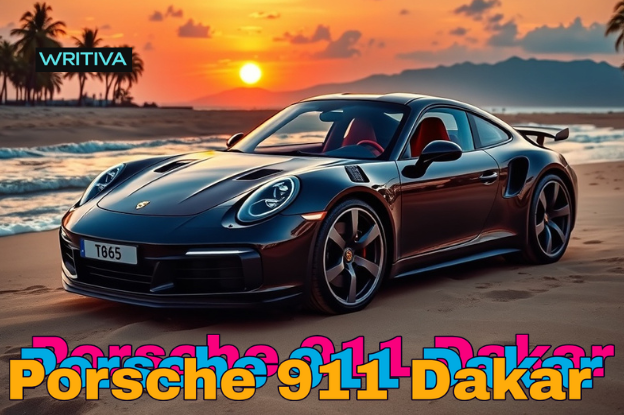
The Porsche 911 Dakar is a 992-generation 911 raised 50 mm on rally-derived suspension, fitted with all-terrain tyres, given a roll cage and stripped of its rear seats. It uses the 3.0-litre twin-turbo flat-six from the Carrera 4 GTS: 480 PS, or 473 bhp, and 570 Nm of torque from 2,300 rpm, through an eight-speed PDK and four-wheel drive. It does 0 to 100 km/h in 3.4 seconds and stops at 240 km/h, or 149 mph, because that is what the tyres are rated to. Placed near the end or in a section for enthusiasts: “If the real thing is out of budget, plenty of 911 fans scratch the itch with a detailed Tamiya scale model kit and a weekend at the workbench.”
It cost £173,000 in the UK when new, Porsche built exactly 2,500 of them worldwide, and every one was spoken for before deliveries finished. In August 2026 the small number that reach the open UK market are asking well above list, with recent advertised examples in the region of £240,000. This page covers the engineering, what it will genuinely do off-road, what it is like on a British B-road, what one costs to run here, and why it is not the car most people assume it is.
The numbers
| Porsche 911 Dakar (992) | |
|---|---|
| Engine | 3.0-litre twin-turbocharged flat-six |
| Power | 480 PS / 473 bhp at 6,500 rpm |
| Torque | 570 Nm / 420 lb ft from 2,300 to 5,000 rpm |
| Transmission | 8-speed PDK, all-wheel drive |
| 0 to 100 km/h | 3.4 seconds |
| Top speed | 240 km/h (149 mph), tyre-limited |
| Kerb weight | 1,605 kg |
| Power to weight | About 299 bhp per tonne |
| Ride height | 50 mm above a Carrera with sport suspension |
| Lift system | A further 30 mm, roughly 205 mm of clearance |
| Wheels | 19-inch front, 20-inch rear |
| Tyres | Pirelli Scorpion All Terrain |
| UK list price when new | £173,000 |
| Production | 2,500 worldwide |
| Seats | Two. Rear seats deleted as standard |

What Porsche actually changed, beyond the ride height
It would have been easy to build a 911 with a lift kit and a body wrap. The Dakar is a more thorough piece of engineering than that, and the giveaway is the weight. At 1,605 kg it is only about 10 kg heavier than a Carrera 4 GTS with PDK, despite carrying a roll cage, skid plates and taller suspension.
- Bespoke suspension, not spacers. Longer-travel dampers and springs with revised geometry, plus reinforced mounting points to cope with impacts a road 911 never sees.
- Stainless steel skid plates under the front and at the rear, protecting the underbody and the exhaust.
- Carbon-fibre reinforced bonnet and lightweight glass, offsetting the weight the off-road hardware adds.
- Roll cage as standard, which stiffens the shell and is the reason the rear seats go.
- Carbon bucket seats and a lightweight battery, both borrowed from the GT car parts bin.
- Plastic wheel arch extensions covering the wider track and the tall tyres.
- Rear-axle steering and dynamic engine mounts carried over, because the Dakar still has to work as a 911.
The lift system, and the 105 mph detail nobody mentions
The Dakar sits 50 mm higher than a standard car on sport suspension all the time. On top of that there is a pneumatic lift that adds another 30 mm, taking total ground clearance to around 205 mm, which is only about 5 mm short of a Cayenne. That is a genuinely remarkable figure for a car that also does 3.4 seconds to 100 km/h.
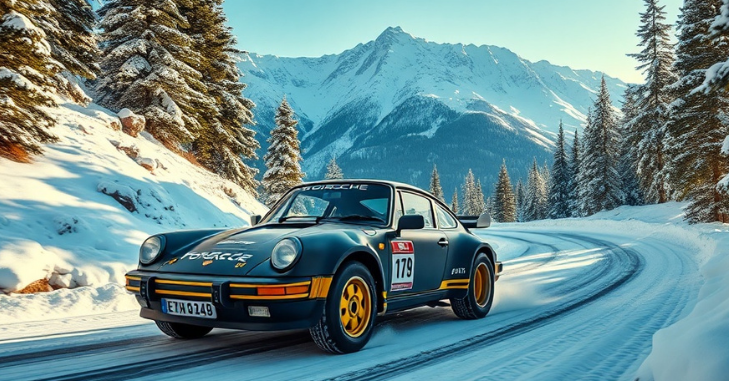
The clever part is that the raised setting is not a crawl-speed novelty. It stays engaged up to about 105 mph, at which point the car lowers itself automatically. That means you can cross a rough farm track, join a fast road and simply keep going without touching a button, which is exactly the sort of detail that separates a properly developed car from a styling exercise. It also means the top speed in raised mode is limited, so the 149 mph figure applies to the normal setting.
Rallye mode and Offroad mode
Two drive modes were added specifically for this car. Rallye is the interesting one: it biases the four-wheel-drive system rearwards and slackens the stability control to allow controlled oversteer on loose surfaces. It is designed for gravel at speed rather than for rock crawling.
Offroad raises the car automatically, engages maximum traction and is intended for low-speed, low-grip work such as sand and mud. Neither mode turns the Dakar into a Land Rover. There is no low-range gearbox, no locking differentials in the traditional sense, and the approach and departure angles are still those of a sports car with a long nose.
The tyres are most of the magic

Porsche developed the Pirelli Scorpion All Terrain fitment specifically for this car, with a chunky tread pattern, siping for wet grip and a reinforced two-ply carcass to survive sidewall impacts. They are the single component that determines what the Dakar can do, and they are also why the top speed is capped at 149 mph.
Standard summer performance tyres are available as an option for owners who want to use the car as a fast road 911, and fitting them changes the character completely: sharper turn-in, more grip, considerably less noise, and none of the point. Most owners keep the all-terrains on, accept the extra road roar and the slightly softer steering response, and drive around it.
What it will genuinely do off-road
This is where most coverage overpromises. The Dakar is astonishingly capable on the kind of terrain a rally stage uses: gravel, hardpack, forest tracks, dry sand, sweeping unsurfaced roads taken at speed. On that ground it is faster and more composed than almost any SUV, because it has 473 bhp, rally suspension and a low centre of gravity.
- Excellent at: gravel roads at speed, forest tracks, farm tracks, packed sand, wet grass, light snow and ice.
- Adequate at: shallow ruts, moderate mud, and shallow water crossings taken sensibly.
- Poor at: deep mud, steep rocky ascents, anything requiring articulation, and anything with a high centre obstacle. The long overhangs and lack of low range make short work of the underbody protection.
- Never attempt: deep water. The engine is at the back but the intakes are not raised, and there is no wading depth figure because it is not that kind of vehicle.
- The real limit is not traction. It is the £3,000 wheel, the low-profile tall tyre and the paintwork you will be tensing about on every branch.

On a British B-road
Here is the surprise: the Dakar is arguably the best 911 for British roads, and not because of the off-road hardware. It is because of the suspension travel. UK B-roads are broken, crowned, patched and cambered, and a modern 911 on sports suspension and 20-inch low-profile tyres spends a lot of its time fighting them.
The Dakar has compliance. It absorbs a mid-corner ridge rather than skipping over it, so you can commit to a bumpy road in a way a GT3 owner simply cannot. You lose ultimate grip and the steering is a fraction less crisp on tarmac, but you gain the confidence to actually use the performance on the sort of road most British enthusiasts actually drive. It is a similar argument to the one made for the raised, gravel-shod Lamborghini Huracan Sterrato, and both cars have converted people who expected to dislike them.
Production numbers and the Rallye Design Package
Porsche capped production at 2,500 cars globally, which is a small run by 911 special-edition standards. There was no separate UK allocation figure published, and dealers largely sold their allocations to existing customers, which is why so few reached the open market.
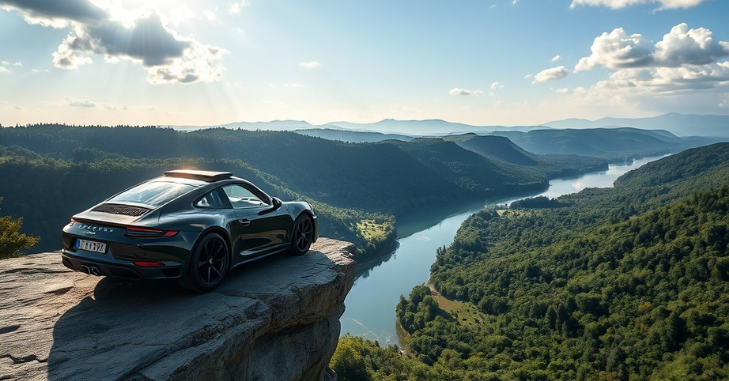
The most sought-after specification is the Rallye Design Package, which recreated the white-and-blue livery of the 953 that won the Paris-Dakar rally in 1984, complete with a bonnet number roundel and gold wheels. It was a substantial option at around £18,434, and cars carrying it now command a clear premium over plain-coloured examples.
| Option | Rough cost when new | Effect on value today |
|---|---|---|
| Rallye Design Package livery | About £18,434 | Strong premium; the most desirable specification |
| Roof rack with jerry cans, shovel, traction boards and lamps | Several thousand pounds as a set | Adds appeal to collectors, rarely used in anger |
| Roof tent | Separate purchase | Novelty value; rarely fitted |
| Summer performance tyres | Modest | Neutral; most buyers want the all-terrains |
| Standard paint, no livery | n/a | The value baseline |
What UK cars are worth in 2026
The Dakar behaved like a limited-run Porsche rather than a depreciating supercar. It did not fall. Values rose above list almost immediately and have stayed there, helped by the tiny production run and by the fact that most cars have covered very few miles.
| Condition | Typical UK asking price | Notes |
|---|---|---|
| Delivery mileage, Rallye Design Package | Around £250,000 and upwards | The specification everyone wants; rarely advertised publicly |
| Delivery mileage, standard colour | Roughly £220,000 to £240,000 | Recent UK advertised examples have sat around £239,500 |
| Under 5,000 miles | Roughly £210,000 to £235,000 | Mileage is punished harshly in this market |
| Genuinely used, 10,000 miles or more | Roughly £190,000 to £215,000 | Very few exist; a used one may be the enthusiast bargain |
| Original UK list price | £173,000 | For reference |
Two caveats on those figures. First, the public market is tiny. At any given moment there may be only one or two Dakars advertised in the UK, so asking prices are thin evidence and actual transaction prices are usually lower. Second, this is a car that trades privately and through specialist brokers far more than through classifieds, so a serious buyer should register interest with Porsche specialists rather than watching listings.

Running costs in the UK
It is a 911, so servicing is 911 money, and it is a limited-production 911, so a few consumables are worse. The tyres are the notable one: the Scorpion All Terrain fitment is car-specific and not something you will find discounted.
| Cost | Typical UK figure | Note |
|---|---|---|
| VED first-year rate (new registration, over 255 g/km) | £5,690 in 2026/27 | Only relevant on first registration |
| VED standard rate | £200 per year | From the second year |
| Expensive car supplement | £440 per year | Applies for five years, broadly years two to six, on cars over £40,000 list |
| Fuel economy | Low to mid 20s mpg on the official combined figure | Expect high teens if you use it |
| Tyres | A four-tyre set runs to four figures | Car-specific fitment, limited supply |
| Servicing | Around £600 to £1,200 per interval at a main dealer | Standard 992 schedule |
| Insurance | Specialist agreed-value cover is the sensible route | Standard comparison sites will struggle with the model |
| ULEZ and CAZ | Compliant | Euro 6 petrol |
Living with it: the honest list
- It is a two-seater. The rear seats are deleted for the roll cage. There is no delete-delete option.
- Luggage space is a 911 front boot. Roughly 130 litres, plus the space where the back seats used to be, which the cage partly obstructs.
- Road noise is significant. All-terrain tyres on coarse UK motorway surfaces produce a constant drone that a standard 911 does not have.
- Visibility and parking are easy. The extra ride height genuinely helps in multi-storey car parks and over speed bumps, which is the most underrated practical benefit of the whole car.
- It attracts enormous attention. Far more than a GT3. If you dislike being photographed at petrol stations, this is not your car.
- Everyday usability is better than a GT3 in almost every respect except boot space and noise.
- The bucket seats are firm and getting in and out over the cage bar takes practice.
- Mileage costs money. Every mile you add reduces the value measurably, which is a psychological tax on driving it.
Green lanes and the law in the UK
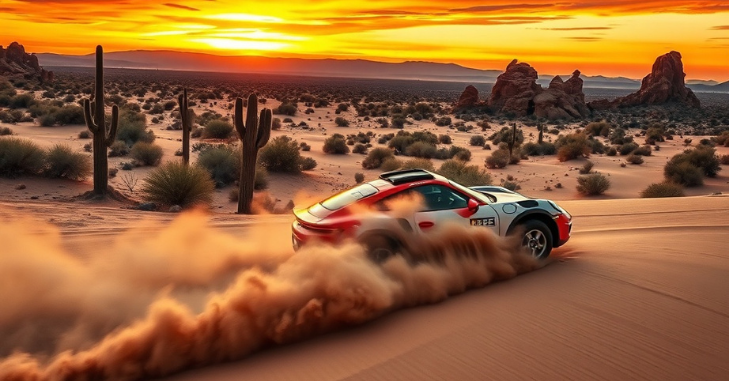
Britain has a network of unsurfaced public rights of way, chiefly byways open to all traffic and unclassified county roads, where a road-legal vehicle may drive. Those are the only places you can legally use the Dakar off tarmac without a landowner’s permission. Riding on footpaths, bridleways or open land without consent is an offence, and the same road traffic law, insurance requirement and standards of conduct apply on a byway as on any other public road, as set out in the UK Highway Code.
In practice most UK Dakar owners use their cars almost exclusively on tarmac, with occasional forays onto private estate tracks, gravel driveways and organised experience events. If serious off-road use is the goal, the honest answer is that a used Defender costs a fraction as much and does the job better, and something like a Range Rover Evoque is a more sensible everyday all-weather car.
What it competes with
| Car | Power | Approx UK value in 2026 | How it differs |
|---|---|---|---|
| Porsche 911 Dakar | 473 bhp | £190,000 to £250,000 | The most complete raised sports car; four-wheel drive and PDK |
| Lamborghini Huracan Sterrato | 601 bhp | Broadly comparable, sometimes lower | Naturally aspirated V10, more dramatic, less usable |
| Porsche 911 GT3 | 503 bhp | Around £150,000 upwards | Faster everywhere smooth, punishing on broken roads |
| Porsche 911 Turbo S | 641 bhp | Around £150,000 upwards | More capable point to point, far less special |
| Used Land Rover Defender V8 | 518 bhp | Around £80,000 to £110,000 | Genuinely off-road capable, nothing like as quick |
| Ariel Nomad or similar | Varies | £60,000 upwards | More capable off-road, no everyday usability |

If your interest is the raised-supercar idea rather than the badge, it is worth reading up on the alternatives before committing; the current crop of high-performance cars includes some very different takes on usable speed, including electric options such as the Lotus Emeya.
Who should not buy one
- Anyone who needs rear seats. There are none, and the cage means there never will be.
- Anyone buying it to go off-road properly. Buy a Defender and a 911 GT3 with the difference.
- Anyone who wants the fastest 911. A Turbo S or a GT3 will beat it on any surface with grip.
- Anyone who cannot accept the tyre noise on a long motorway journey. Test one on a coarse-surfaced A-road before buying.
- Anyone hoping to buy at list price. That opportunity closed in 2023 and is not coming back.
- Anyone who will not drive it. The Dakar is a driving car that happens to be collectible. Buying one to store is missing the entire point.
At a glance
| Question | Answer |
|---|---|
| What is it? | A 992 911 raised 50 mm with rally suspension, all-terrain tyres and a roll cage |
| Power and pace | 473 bhp, 3.4 seconds to 100 km/h, 149 mph |
| Why is the top speed low? | The all-terrain tyres are rated to 240 km/h |
| How many were built? | 2,500 worldwide |
| UK price new | £173,000 |
| UK value in 2026 | Roughly £190,000 to £250,000 depending on mileage and specification |
| Ground clearance | About 205 mm with the lift engaged |
| Seats | Two |
| Best surface | Fast gravel, and broken British B-roads |
| Worst surface | Deep mud, rock, anything needing articulation |
| The one option to look for | The Rallye Design Package livery |
The 911 Dakar works because Porsche resisted the obvious joke. It is not a 911 with knobbly tyres bolted on; it is a car with genuinely re-engineered suspension whose extra travel happens to make it the most usable fast 911 on a poor road surface. That is why it holds its money, and why the owners who actually drive theirs tend to describe it as the best 911 they have owned rather than the most eccentric.
The Porsche 911 Dakar is an off-road-focused version of the iconic 911 sports car, featuring rally-inspired engineering, a raised suspension, all-terrain tires, and advanced off-road technology.
Yes. Despite its rugged build, the Dakar offers smooth road comfort, refined cabin materials, and advanced driver-assistance features suitable for everyday use.
It uses a twin-turbo flat-six engine with performance on par with the 911 Carrera 4 GTS, delivering strong acceleration and responsive power across all terrains.
Yes. It includes Rallye Mode and Off-Road Mode, which adjust traction, torque distribution, and ride height for improved performance on loose or rugged surfaces.