

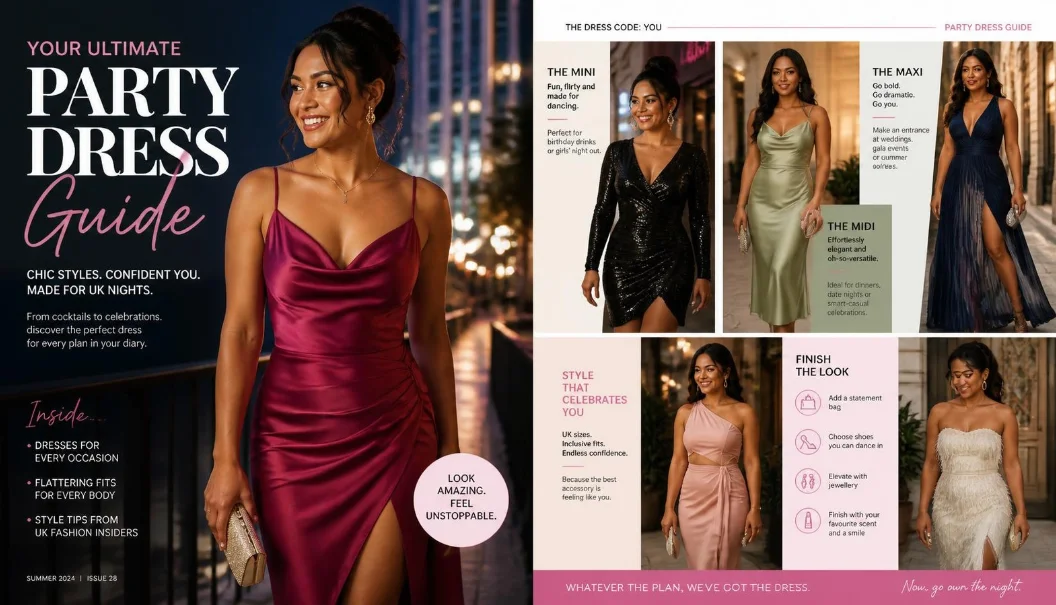
Finding the right party dress becomes easier when you start with the event, not the latest trend. Consider the venue, dress code, season, and how long you will wear the outfit. The best choice should look polished while letting you sit, walk, and enjoy the occasion comfortably. More from us: Knee Length Shorts for Women.
Quick answer: Choose your dress by matching its length, fabric, and formality to the occasion. Midi styles suit the widest range of UK events. Minis work well for relaxed evenings, while maxi dresses suit formal celebrations. Always consider comfort, weather, footwear, and rewear potential before buying.
| What to consider | Practical choice |
|---|---|
| Most versatile length | Midi |
| Relaxed parties | Mini, wrap, slip, or fitted styles |
| Formal occasions | Refined midi or maxi |
| Winter fabrics | Velvet, satin, crepe, heavier knits |
| Summer fabrics | Cotton blends, lighter satin, chiffon, broderie |
| Easy colours | Black, navy, burgundy, emerald |
| Statement finishes | Sequins, metallics, lace, embellishment |
| UK weather essential | A suitable coat, tights, or removable layer |
| Best buying rule | Choose for fit, comfort, and likely rewear |
Key Takeaways
- Start with the invitation and venue before choosing a silhouette.
- Midi dresses provide the easiest balance between smart and practical.
- Satin, velvet, crepe, lace, and sequins create different levels of formality.
- Fit matters more than following a particular body-shape rule.
- Plan shoes, underwear, outerwear, and accessories before the event.
- Spend more only when improved construction or rewear value makes sense.
- UK weather can change the practicality of an otherwise attractive outfit.
How to Choose a Party Dress That Fits the Occasion

Start by choosing a party dress that matches the formality of the event. A birthday dinner calls for something different from a hotel reception or black-tie celebration. The invitation, venue, starting time, and guest list usually provide enough clues to help you choose the right party dress.
Cocktail events normally sit between casual evening wear and full formal dressing. A knee-length or midi silhouette often works because it looks smart without resembling an evening gown. Writiva’s guide to cocktail dresses explains the dress code in greater detail.
House parties and relaxed birthdays leave more room for personality. Minis, slip dresses, fitted knits, and playful prints can all feel appropriate. Choose something that remains comfortable when sitting, standing, eating, or moving between rooms.
Formal evening celebrations usually need greater structure or length. A sophisticated midi can work, while maxi dresses suit many black-tie settings. Fabric quality and careful styling often matter more than adding excessive decoration.
Mini, Midi or Maxi: Which Length Works Best?
Choosing a length becomes simpler when you consider movement and formality together. Each length has strengths, but none suits every occasion. Your shoes and outerwear also affect how the final proportions look.
| Length | Best for | Main advantage | Watch for |
|---|---|---|---|
| Mini | Nights out, birthdays, informal parties | Fun and easy to style | Weather and seating comfort |
| Midi | Cocktails, dinners, weddings, work events | Highly versatile | Hem placement with footwear |
| Maxi | Black tie and formal evenings | Creates a dressed-up finish | Hem length and movement |
Our recommendation: choose a midi when the invitation gives little guidance. It bridges several dress codes and works with heels, boots, or refined flats. You can also change its formality quickly through jewellery and outerwear.
A mini works best when the occasion allows a more relaxed or nightlife-focused look. Check its length while sitting before committing to the outfit. Tights and boots can make shorter styles more practical during colder UK months.
A maxi creates impact without requiring excessive embellishment. The hem should clear your shoes safely and allow easy walking. Try the complete outfit before the event, especially when wearing unfamiliar heels.
Choose Fabric Before Chasing Trends
Fabric determines how a dress moves, photographs, and feels after several hours. It also changes how formal the same basic silhouette appears. A simple cut in velvet can look richer than an elaborate cut in casual jersey.
Satin suits dinners, weddings, cocktail evenings, and festive events. Its reflective surface already attracts attention, so simple accessories often work well. Writiva’s satin maxi skirt styling guide offers useful ideas for balancing satin with matte textures.
Velvet is particularly useful during autumn and winter. It brings visual depth while pairing naturally with coats, tights, and closed footwear. Dark green, burgundy, navy, and black can work across several evening dress codes.
Broderie anglaise creates a lighter mood for spring and summer occasions. Its embroidered eyelets can look decorative without relying on sequins or metallic finishes. Read Writiva’s broderie anglaise guide if you are considering this fabric for warmer events.
Pick Colours That Work Beyond One Evening
Black remains useful because accessories can change its character quickly. Gold jewellery can make it warmer, while silver accessories produce a cooler finish. Colourful shoes or a textured bag can prevent the outfit from feeling predictable.
Jewel tones suit evening events because they carry colour without looking overly casual. Burgundy, emerald, navy, plum, and deep red work particularly well with satin or velvet. These shades also pair easily with neutral coats and footwear.
Metallics and sequins make sense when celebration is part of the dress code. Christmas events and New Year’s Eve provide obvious opportunities for extra shine. Keep other pieces quieter when the fabric already creates a strong focal point.
Use Fit, Not Body-Shape Rules, as Your Main Test
A flattering outfit should sit properly rather than force you into a labelled body category. Check the bust, waist, hips, shoulders, straps, and hem independently. Clothing proportions vary too much between brands for one rule to suit everyone.
Use a simple three-movement test in the fitting room. Sit normally, raise your arms, and walk several metres at your usual pace. Any pulling, riding, slipping, or repeated adjustment deserves attention before you buy.
Check the garment from the side and back as well. Good fit should remain consistent from several angles rather than working only from the front. Proper underwear can also change how satin, jersey, and fitted fabrics sit.
Plan for British Weather
UK party dressing rarely ends with the dress itself. Rain, wind, cold pavements, and temperature changes between venues can alter what feels practical. Plan the journey as carefully as the indoor outfit.
For winter events, consider opaque tights, closed shoes, and a coat long enough to complement the hemline. Velvet and heavier satin can feel more seasonal than lightweight summer fabrics. Writiva’s winter wedding guest guide offers further ideas for formal cold-weather layering.
Summer still requires some planning because evenings can become cool quickly. A lightweight blazer, cropped cardigan, or wrap can prevent discomfort later. Choose a layer that looks deliberate rather than something added after the outfit is complete.
What Should You Spend?
There is no single correct budget because construction, fabric, brand, and occasion differ. Current UK examples range from affordable high-street pieces to styles costing several hundred pounds. Spend according to expected wear rather than assuming a higher price guarantees a better result.
A useful buying test is cost per realistic wear. A £120 dress worn six times can offer better value than a £45 dress worn once. Rewear matters most when you have weddings, work events, dinners, or seasonal celebrations throughout the year.
Check seams, lining, zips, hems, and fastenings before paying more for decorative details. A simpler garment with better construction can look more polished than one covered in embellishment. Budget for alterations when a small adjustment would improve an otherwise strong choice.
Shoes and Accessories Should Support the Dress
Shoes affect both comfort and the apparent length of your outfit. Block heels provide greater stability, while refined flats can suit many smart occasions. Boots can work during colder months when their shape complements the hem.
Treat heavily embellished clothing as the main feature. Simple earrings, a compact bag, and restrained footwear can provide enough finish. Minimal dresses allow more freedom for statement jewellery or stronger accessories.
Try everything together before the event. Different shoes can change where a midi hem appears to finish on the leg. Your coat and bag can also shift an outfit towards casual or formal.
Common Mistakes to Avoid
Buying only for the photograph is a frequent mistake. An outfit must also survive sitting, travel, changing temperatures, and several hours of movement. Comfort problems become harder to ignore as the evening continues.
Another mistake is wearing every statement piece together. Sequins, metallic shoes, oversized jewellery, and a decorated bag can compete rather than coordinate. Choose one main visual feature and let the remaining pieces support it.
Last-minute shopping also creates avoidable problems. Online sizing varies, and a dress may need exchanging or adjusting. Leave enough time to test the complete outfit with underwear, shoes, and outerwear.
A Simple Buying Checklist
Before checkout, confirm these points:
- Does the outfit match the invitation and venue?
- Can you sit and walk comfortably?
- Does the length work with your chosen shoes?
- Is the fabric appropriate for the season?
- Can you wear your preferred underwear underneath it?
- Do you already own suitable outerwear?
- Can you imagine wearing the dress again?
- Have you allowed time for exchanges or alterations?
This checklist prevents trend excitement from replacing practical judgement. It also makes comparing several options easier when shopping online. The strongest choice usually satisfies most of these questions without needing compromises.
How to Build a More Rewearable Occasion Wardrobe
Start with one versatile option before buying several highly specific pieces. A black, navy, burgundy, or dark green midi can cover dinners, work celebrations, birthdays, and cocktail events. Different accessories can make the same base feel noticeably different.
Your second purchase can fill a clear gap. You might choose a summer print, formal maxi, or festive sequinned style. This approach reduces panic purchases before every invitation.
Separates can also extend your options. A satin skirt paired with different tops can move between dinners and seasonal celebrations. Rewearing strong pieces usually creates better value than building a wardrobe around single-use outfits.
Make the Final Choice Around the Event
The strongest outfit is not necessarily the newest or most dramatic option. It is the one that matches the occasion while allowing you to forget about your clothes. Good fit, appropriate fabric, useful layering, and comfortable footwear matter throughout the evening.
Start with the invitation, then narrow your choices by length and fabric. Complete the outfit before deciding whether anything needs changing. That process produces better results than buying one striking item and solving practical problems later.
For more UK styling ideas, explore Writiva’s Fashion section before your next celebration. Use its occasionwear guides to plan fabrics, layers, and accessories together. A considered wardrobe makes future invitations much easier to dress for.
FAQs
What should a woman wear to a party in the UK?
Choose according to the dress code, venue, and time of day. A polished midi is a safe option when the invitation is unclear. Add appropriate shoes and outerwear for the season.
What is the most versatile party dress length?
Midi is usually the easiest length to adapt across different events. It can look relaxed, smart, or formal depending on its fabric and accessories. It also works with more footwear choices than many floor-length styles.
Can you wear black to a party?
Yes, black works for most evening celebrations unless the invitation states otherwise. Texture, neckline, and accessories determine whether it looks understated or dramatic. Velvet, satin, crepe, and sequins can all create different effects.
Can a satin dress work during winter?
Yes, especially when you add practical layers. A tailored coat, tights, and closed footwear can make satin suitable for colder conditions. Heavier satin may also feel more appropriate than thin summer-weight fabric.
What shoes work best with a midi dress?
The answer depends on the venue and season. Heels create a more formal finish, while flats can suit longer events. Boots can work well during autumn and winter when their proportions suit the hem.
How can I make an affordable dress look more expensive?
Focus on fit, pressing, simple accessories, and clean proportions. Avoid details that look poorly finished or uncomfortable. Good shoes and a structured coat can also improve the complete outfit.

