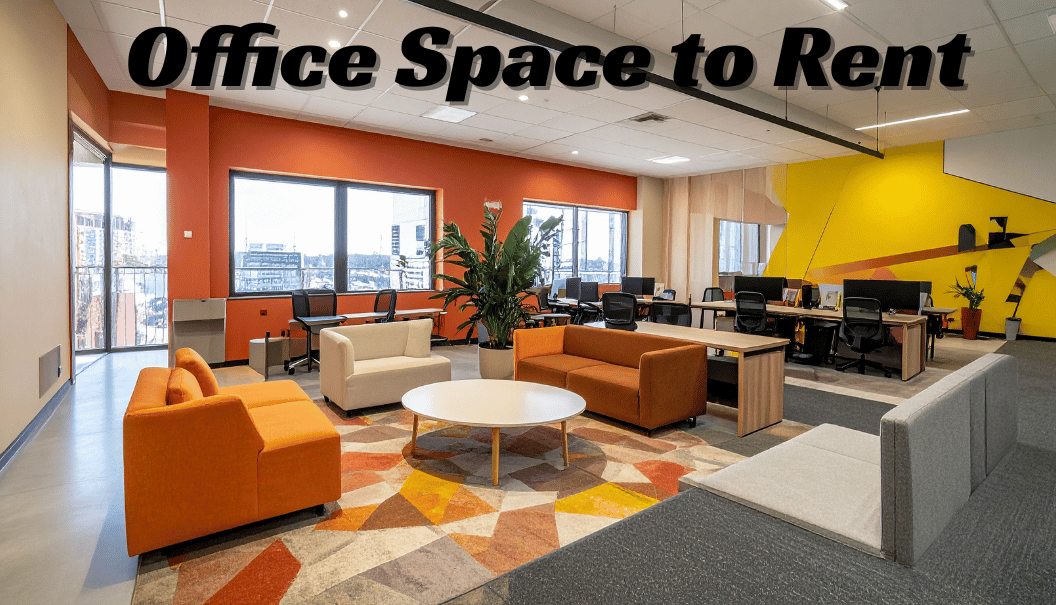
Renting an office in the UK in 2026 costs roughly £45 to £52 per sq ft a year in the major regional cities and £130 to £165 in central London, before you pay a penny of business rates, service charge or electricity. Add those and the honest all-in figure lands somewhere between 1.6 and 1.9 times the advertised rent.
The rent is the easy part. What separates a sensible deal from an expensive five-year mistake is the structure around it: whether you sign a lease or a licence, whether you keep security of tenure, how tightly the break clause is drafted, and who pays to strip the place back when you leave. Those are the decisions this page works through, with the numbers to budget against.
What an office actually costs per square foot in 2026
Headline rents hit new records in several UK cities during 2026, driven by a shortage of good-quality refurbished space rather than by a boom in demand. Birmingham and Bristol both reached about £52 per sq ft, while Glasgow prime refurbished stock is forecast to touch roughly £48 by the end of the year. London remains in a category of its own.
| City or market | Prime headline rent (£ per sq ft per year) | Typical flexible workspace (£ per desk per month) |
|---|---|---|
| West End, London | Around £165, with top deals near £201 | Around £840 |
| City of London | Around £131, with top deals near £160 | Around £675 |
| Birmingham | Around £52 | Around £370 |
| Bristol | Around £52 | Around £350 |
| Glasgow | Around £45, forecast near £48 by end of 2026 | Not separately published |
| Leeds | Around £46 | Around £322 |
| Edinburgh | Around £46 | Not separately published |
| Manchester | Around £45 | Around £379 |
Two warnings about that table. First, these are prime rents, meaning the best building in the best location. A decent second-hand suite in Leeds or Glasgow is more realistically £28 to £35 per sq ft. Second, headline rent is not effective rent: after a rent-free period the figure you actually pay over the term can be 10 to 20 per cent lower.

The cost stack: rent is barely half the bill
Landlords quote rent. Finance directors budget for the stack. On a modern multi-let London building the service charge alone runs £12 to £18 per sq ft, and business rates on a good floor can add more than £30 per sq ft on their own.
| Cost line | Typical £ per sq ft | Basis and notes |
|---|---|---|
| Headline rent | £45 to £52 regional, £130 to £165 central London | Per year. What agents advertise |
| Business rates | Rateable value multiplied by 0.430 to 0.508 | Per year. Paid direct to the council |
| Service charge | £12 to £18 London, often £6 to £10 regional | Per year. Higher in buildings with lots of shared plant |
| Utilities and broadband | £3 to £8 | Per year. Varies with occupancy density and opening hours |
| Insurance | £1 to £3 | Per year. Landlord buildings cover is normally recharged |
| Fit-out | £250 to £500 or more | One-off. Spread over a five-year term this adds £50 to £100 a year |
| Dilapidations | £10 to £25 | One-off at exit. Provision for it from year one |
The fit-out line is the one that surprises people. A category B fit-out is a capital project with a lead time, and on a short lease you are amortising it over very few years. If the term is three years, a £300 per sq ft fit-out is costing you £100 per sq ft per year, which on regional rents is more than the rent itself.
How much space do you actually need?
Space is the multiplier on every figure above, so getting the area right matters more than shaving £2 off the rent. Standard planning densities in the UK sit in a fairly narrow band.
- Dense, mostly in-office teams: around 70 sq ft (6.5 sq m) per desk. Workable, but tight on meeting space.
- Typical open-plan office: 80 to 100 sq ft (7.5 to 9.5 sq m) per desk including circulation and a couple of meeting rooms.
- Hybrid teams sharing desks: plan on headcount multiplied by your genuine peak-day attendance, not total staff. A 40-person team at 60 per cent peak needs about 24 desks.
- Add for the extras: a decent kitchen, a comms room and two meeting rooms will absorb 200 to 400 sq ft before anyone sits down.

Business rates: the multipliers changed in April 2026
The 2026 rating list came into force on 1 April 2026, based on rental values as at 1 April 2024, and it arrived alongside a new five-tier multiplier structure. Offices fall into the non-retail bands. Your bill is the rateable value multiplied by the relevant figure below.
| Property type and rateable value | 2026/27 multiplier |
|---|---|
| Offices and most other property, RV below £51,000 | 0.430 |
| Offices and most other property, RV £51,000 to £499,999 | 0.480 |
| Any property with RV of £500,000 or more | 0.508 |
| Retail, hospitality and leisure, RV below £51,000 | 0.382 |
| Retail, hospitality and leisure, RV £51,000 to £499,999 | 0.432 |
The permanently lower retail, hospitality and leisure multipliers do not apply to ordinary office use, and the surcharge on properties above £500,000 rateable value is funding them. If you are taking a large floor in a prime building, check which side of that £500,000 line the assessment falls, because crossing it costs an extra 2.8 pence in the pound on the whole bill.
Small business rate relief and the £15,000 cliff
Small business rate relief gives 100 per cent relief where the rateable value is £12,000 or below, tapering steadily to nothing at £15,000. Crucially, those thresholds were not uprated for the 2026 list, so a revaluation uplift can push a property that was previously relief-free into a real bill without anything changing on the ground.
You can normally only claim on one property, though additional premises are ignored if each has a rateable value below £2,900 and the combined total stays under £20,000, or £28,000 in London. Relief is not automatic in every case, so check with the billing authority rather than assuming it has been applied. If you occupy a small suite, this single check is worth more than most rent negotiations.
Licence or lease? This decides how fast you can leave
Almost every office decision reduces to this. A licence to occupy is a personal permission to use space, typically bundled with furniture, broadband and rates. A lease grants you an interest in the property, with all the control and all the liability that implies.
| Licence to occupy | Lease | |
|---|---|---|
| Typical length | 1 to 12 months, often rolling | 3 to 10 years |
| Notice to leave | Commonly 1 to 3 months | Only at a break date or at expiry |
| Security of tenure | None | Yes, unless contracted out |
| Business rates | Usually included in the operator fee | Billed to you directly |
| Fit-out | Already done | Your cost, your risk, your timescale |
| Cost at exit | Usually none | Dilapidations, potentially substantial |
| Accounting treatment | Often stays off balance sheet | Usually capitalised under IFRS 16 |
| Suits | Teams under about 20, or under two years of visibility | Settled teams wanting cost control and their own identity |
The pattern in the numbers is consistent: below roughly 15 to 20 people, flexible space is usually cheaper in cash terms once fit-out is counted, and dramatically cheaper in risk terms. Above that, a lease starts to win because the per-desk premium in serviced space compounds. If you are still weighing which format fits, the companion guide comparing serviced, managed, coworking and hybrid office formats works through what each one includes.
Security of tenure, and what contracting out really means
Under the Landlord and Tenant Act 1954, a business tenant has the right to stay at the end of the lease and to demand a new one on broadly similar terms. Landlords frequently ask tenants to give this up, which is called contracting out. It is not a formality: the landlord must serve a warning notice before you commit, and you must sign a declaration acknowledging it.
Giving up security of tenure is not automatically bad. It can buy you a lower rent or a better rent-free period, and if you are confident you will move on anyway it costs you nothing. But it does mean that at expiry you have no right to remain, so a landlord with a redevelopment plan can simply take the space back. Decide deliberately rather than signing whatever the heads of terms say. Our guide to Robot Lawn Mower Guide for UK Gardens in 2026 covers this in more detail.

Rent-free periods: what to ask for and what you will get
Rent-free is the standard currency of UK office lettings. It is granted for two overlapping reasons: to compensate you for the months spent fitting out, and as a discount dressed up in a way that protects the landlord’s headline rent for valuation purposes.
- Rule of thumb: around one to three months of rent-free per year of term committed, more in weak markets, less in the tight prime market of 2026.
- Ask for it in two parts: a fit-out period before you occupy, plus an incentive period after. They are negotiated differently.
- Watch the break interaction: many leases claw back rent-free if you exercise an early break. Read that clause before you value the incentive.
- Capital contribution instead: on larger deals a landlord may fund fit-out directly. This is often better than rent-free because you get the cash when you need it.
Break clauses that actually work
Break clauses are where tenants lose the most money, because they are construed strictly. Miss a condition and the break simply fails, leaving you liable for the rest of the term. Notice is typically three to twelve months, with six months the most common, and breaks are usually set at three or five year intervals to align with rent reviews.
- Serve on time, in the right form, to the right address. A day late is fatal. Diarise it eighteen months ahead, not six.
- Resist a vacant possession condition. It is notoriously hard to satisfy. Push for the weaker obligation to give up occupation.
- Resist full compliance with all covenants. Any trivial disrepair can invalidate the break. Material compliance with rent payments only is the tenant-friendly version.
- Check what happens to overpaid rent. If the break date falls mid-quarter, say explicitly that the balance is refunded, or you will not see it.
- Pay every penny due. Insurance rent and service charge arrears, however small, have defeated breaks.
Dilapidations: the bill that arrives after you leave
Most UK office leases are full repairing and insuring, which means you hand the space back in the condition the lease specifies, usually stripped of your alterations and redecorated. The landlord serves a schedule of dilapidations, and the negotiation that follows can run to tens of thousands of pounds.
Budget £10 to £25 per sq ft as a working provision and revisit it annually. Two things reduce it materially: a photographic schedule of condition attached to the lease at the start, which caps your repairing obligation at the state you found it in, and a licence for alterations that explicitly says you are not required to reinstate. Both are negotiated at the beginning, when you have leverage, and never afterwards.
Deposits, guarantees and the three-times-rent test
A landlord assessing covenant strength typically wants to see net profit before tax of at least three times the annual rent in the most recent accounts. Clear that and you may avoid a deposit entirely. Fall short, which most young companies do, and expect to provide a rent deposit of three to twelve months rent held in a deposit deed, a personal guarantee from a director, or a parent company guarantee. Read whether the deposit reduces over time as your accounts improve, because that clause is often available for the asking and rarely offered.
Stamp duty land tax on a lease
Taking a new commercial lease in England or Northern Ireland can trigger SDLT, calculated on the net present value of the rent over the term rather than on a purchase price. Scotland and Wales operate their own equivalents, LBTT and LTT, with different thresholds.
| Net present value of the rent | SDLT rate |
|---|---|
| Up to £150,000 | 0 per cent |
| £150,001 to £5,000,000 | 1 per cent |
| Above £5,000,000 | 2 per cent |
A five-year lease at £30,000 a year has an NPV a little under £140,000, so it typically escapes entirely. Push the rent to £45,000 and you are into charge. Any premium paid for the lease is taxed separately under the non-residential rates. Confirm current thresholds with your solicitor before completion, as they are set at fiscal events.

A worked budget for a ten-person office in Leeds
Numbers in isolation are not decisions. Here is a realistic annual cost for ten desks at 90 sq ft each, so 900 sq ft, in a good second-hand Leeds building at £32 per sq ft, with a modest £120,000 fit-out amortised over a five-year term.
| Line | Calculation | Annual cost |
|---|---|---|
| Rent | 900 sq ft at £32 | £28,800 |
| Business rates | RV around £27,000 at 0.430 | £11,610 |
| Service charge | 900 sq ft at £8 | £7,200 |
| Utilities and broadband | 900 sq ft at £5 | £4,500 |
| Insurance | 900 sq ft at £2 | £1,800 |
| Fit-out amortised | £120,000 over 5 years | £24,000 |
| Total | £77,910 | |
| Cost per desk per month | Around £649 |
Compare that with the Leeds flexible workspace median of roughly £322 per desk per month, or £38,640 a year for the same ten people, with no fit-out, no dilapidations and one month’s notice. Even stripping the fit-out out of the lease budget entirely leaves £449 per desk. At ten people the lease loses, decisively. That gap narrows as you grow, which is exactly why the crossover sits around 15 to 25 staff.
Mistakes that cost real money
- Budgeting from the rent alone. Rent is typically 50 to 60 per cent of true occupancy cost. Model the stack or you will be 70 per cent under.
- Signing without a schedule of condition. This single omission is the most expensive thing on this page.
- Taking space for the headcount you hope to have. Paying for empty desks for three years is worse than moving once.
- Ignoring the EPC. Commercial property must meet minimum energy efficiency standards to be lawfully let, and sub-standard buildings can become unlettable mid-term, which is your problem if you want to assign or sublet.
- Assuming you can sublet. Many leases restrict underletting to whole floors at open market rent. Check before you rely on it as your exit.
- Forgetting the move itself. Cabling, furniture, signage, insurance changes and updating your registered office all cost money and time.
- Overlooking data obligations. Moving servers and paper files is a processing activity, and the rules on handling personal information still apply mid-move.
When renting your own office is the wrong answer

If your team is under about twelve people, if you cannot forecast headcount eighteen months out, if you have no capital for fit-out, or if attendance is genuinely hybrid at under half of staff on any given day, a conventional lease will almost certainly cost you more and constrain you harder than flexible space. Buying is a different question again, and for some owner-managed businesses a commercial premises bought through a pension can beat both, though it turns a property decision into a financing one. If that is the direction you are leaning, the mechanics of buying property at auction in the UK and of refinancing an investment property are the places to start.
At a glance
| Question | Short answer |
|---|---|
| Cheapest way to house five people | Coworking or a small serviced suite, roughly £250 to £400 per desk outside London |
| Point at which a lease starts to win | Usually 15 to 25 staff, if you can commit to five years |
| Rent as a share of true cost | Roughly 50 to 60 per cent once rates, service charge and fit-out are counted |
| Rent-free you can realistically expect | Around one to three months per year of term |
| Deposit if your accounts are thin | Commonly three to twelve months rent, or a director guarantee |
| Break notice period | Usually six months, occasionally twelve, and strictly conditional |
| Rates relief cut-off | Full relief below £12,000 RV, nothing at £15,000 and above |
| Most underestimated cost | Dilapidations at the end of the term |
Office space to rent is a commercial workspace leased for a fixed period instead of being purchased. It includes private offices, coworking spaces, serviced offices, and virtual offices, providing businesses with ready-to-use infrastructure and professional environments.
Startups, freelancers, SMEs, expanding companies, large corporations, and remote or hybrid teams can all benefit from renting office space, as it offers flexibility, cost efficiency, and access to prime locations without long-term financial commitments.
Key benefits include lower upfront costs, flexibility to scale or relocate, access to central or prestigious locations, reduced maintenance responsibilities, and fully equipped work environments that support collaboration and productivity.
Businesses should consider location, size and layout, lease terms, budget and hidden costs, available infrastructure, and customization options. Legal requirements, zoning laws, and insurance obligations should also be reviewed to avoid potential disputes.